Dr. Palmore Currey’s Legacy includes the gift of fire
By HUDSON OLD
Journal Publisher
He gave us fire.
Not a scout fire, not a bonfire — the woods on fire, a line of flame burning into the night.
The more kids and rakes on hand, the bigger the fire got. Smoke hung like a fog around the house, over the pond and across the highway to the country club.
He gave us the Holiday Inn and its summertime pool stuffed full of exotic people from out of state. Want a job? Presto, I was a bellhop, a bus boy, the maintenance man’s mower operator.
Loaded in his Cadillac we rode to Yellowstone the summer after he took us to Red River, New Mexico. It was 1967, and on the way out I stayed up all night with my older, wiser cousins learning card games in an Amarillo motel room.
Behind Dr. Currey’s house was his milk barn, not a commercial enterprise of pipes and machinery with the antiseptic scent of scrubbed concrete, but a storybook vision of fresh hay, barn cats, and a milk bucket.
“Grandmas and babies!” he called as he stepped from his Cadillac in the afternoons, carrying two buckets of scraps from his hospital’s meal trays. His flock of geese and ducks, the packs of various hounds and poodles came quacking, honking and barking to meet him.
On to the barn.
“Hoooooo! Grandmas and babies!” he’d call again, his voice big enough to cross his fields.
Palmore Currey, D.O. was a country boy, one of 12 children born to Palaski Leonadis and Caroline Palmore-Currey, a Cass County farm family.
At 16, he left for school, never to return. His education was a patchwork of institutions — Mayo College, Draughn Business College, SMU, USC and Columbia among them.
Before enrolling in medical school he earned his living teaching when he wasn’t traveling — he hitch hiked and worked his way through 48 states before he was 30.
Soft spoken, at 60 he seemed unassuming to the point of being dry. He would have seemed less dry in his 20s, feeding himself as an extra in silent movies, arrested once for collecting and selling driftwood along the California coast.
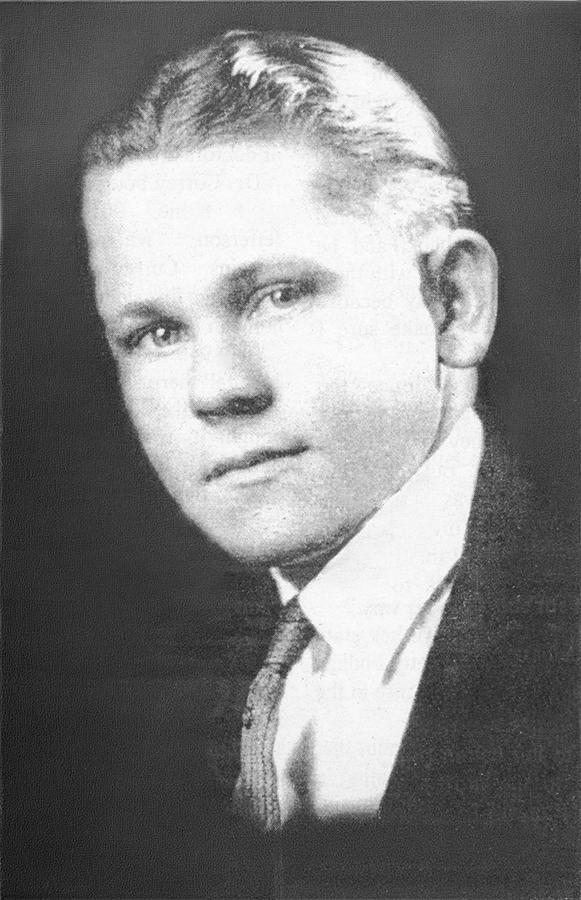
BY THE 1950s, when the state legislature decided to replace the “practical” nurse with Licensed Vocational Nurses, Dr. Currey had his own hospital in Mt. Pleasant.
When he filed to open an LVN school at his 7-room facility, “Medical Doctors” objected.
Palmore Currey studied Osteopathy, becoming a Doctor of Osteopathic medicine, a D.O., as opposed to an M.D. If not opposing theories, the two professions at least practiced different theories of medicine creating a political division in which MDs of the day had the upper hand.
“It took an Attorney General’s ruling to clear the way to open his school,” remembers his widow, Julia Cargile-Currey.
A doctor’s daughter, Mary Leigh Martin-Legg was a registered nurse who later followed her missionary husband abroad, but in 1953 Dr. Currey hired her to teach at his LVN school. She taught the first class in the hospital dining room, had seven students between 17 and 55. After 231 hours of instruction, the first graduating class ranked fifth among 43 schools in the state.
The next year, his school was the first in the state to integrate.
“I graduated from that second class,” said Betty Phillips, who today is executive director of Villa Residential Care in Mt. Pleasant. “I was straight out of high school, a little old spindly, 85-pound sickly thing. Dr. Currey’s family still lived at the hospital then, in the back, and he made me come eat with them three meals a day because he wanted to make sure I was eating.
“I remember once the police brought in an old hobo they’d found somewhere out in the county. He was about on his last leg. Dr. Currey kept him in the hospital three weeks, nursed him back to health and sent him on his way.”
When she took her state boards in 1957, Betty Phillips made the highest score in the state.
“I never had any doubt that I got the finest training a nurse could get,” she said. “We learned everything, things that today aren’t even a part of any nursing school curriculum.”
Dr. Currey was the first D.O. appointed to the Texas Board of Vocational Nurse examiners. In 1962, Texas Governor Price Daniel recognized him for “improving nursing care in behalf of the citizens of Texas.”
A surgeon, he graduated Kirksville College of Osteopathy in Missouri before setting up practice at Wolfe City in Hunt County.
“I met him at a wedding,” Aunt Julia said. She was a 25-year-old school teacher then in the doctor’s native Cass County. They married in 1942 and lived in Wolfe City.
His was a beautiful home, white frame with brick columns along the porch and a garage apartment for his driver.
“That was all cotton country,” Aunt Julia said, “black land. The paved roads didn’t reach many of his patients. During the rainy season, the unpaved roads turned to gumbo and a doctor on his rounds needed a resourceful country boy driver.”
Coming to Mt. Pleasant was a business move, a bigger town with a shortage of doctors.
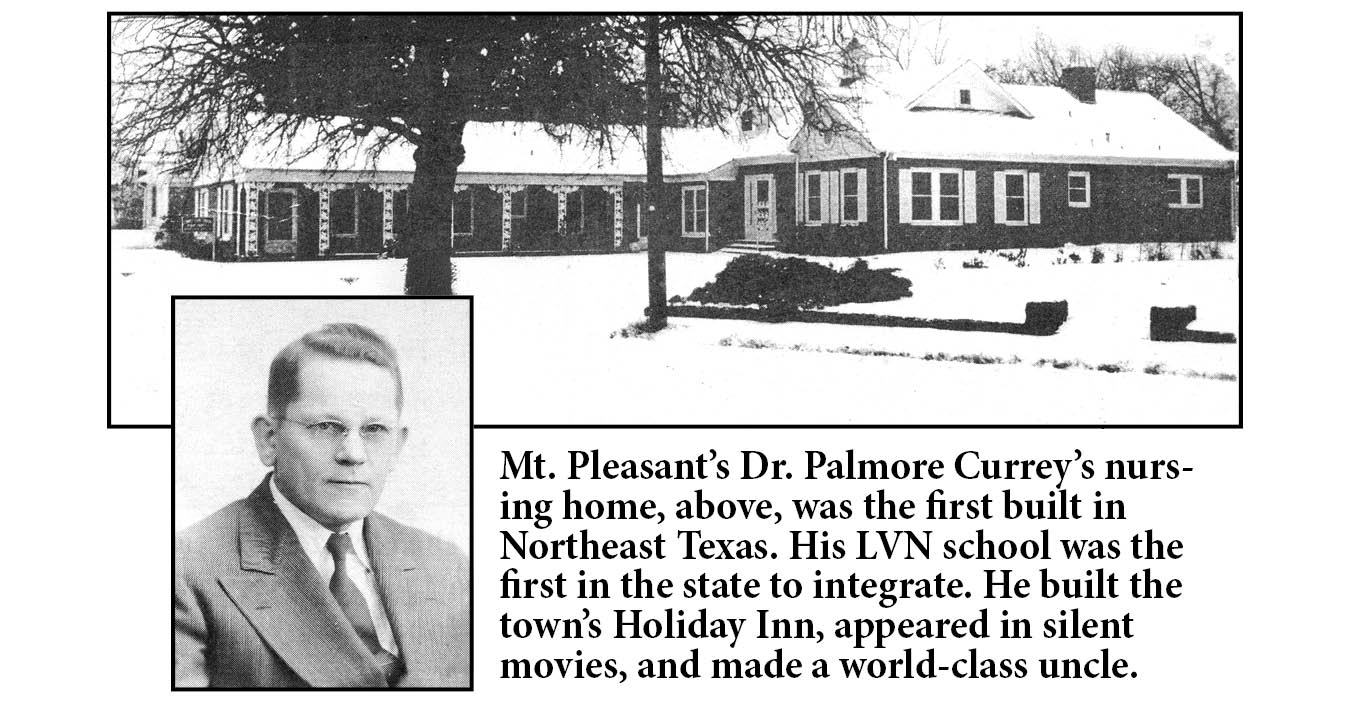
Dr. Currey bought the old Cass home, 901 North Jefferson, where today remains Currey Nursing Home, the first skilled nursing home in Northeast Texas.
In 1949 he opened his hospital there.
Behind the home, when he bought it, were a series of ramshackle rent houses for blacks, this being the era of segregation. He built a central bath with running water.
His three sons and his daughter were my cousins, Pal, Bob, David and Cathryn Grail.
She was so tough, in part, because her three brothers — Pal, Bob and David — could be lively. Medical attention was sometimes required in the wake of the brothers’ brawls.
Pal, the oldest, drove a Cushman Eagle and was as tough as anybody I’d ever known.
One day Dr. Currey sent him shinnying up a dead tree leaning over the barn. The objective was to tie off a rope high enough that as the tree was cut, we could pull it away from the barn. Each time he stopped to tie off the rope, Dr. Currey, standing on the ground shelling peanuts, ordered his son higher, wanting more leverage on the pull.
Ordered yet higher, Pal looked down — “Daddy, I’m scared,” he said, a shocking admission.
“That shows your good sense,” said the doctor, shelling a peanut. “Now up just a bit more.”
In his early days here, his family lived in the back of the Cass house, the front being converted to his 7-room hospital.
After building his country home, a long, low-slung brick whose wings angled around the swimming pool between the carport and the milk barn, he built his nursing-home wing onto the hospital.
I remember the lab, the operating room, labor and delivery all as a 1950s movie set.
The kitchen backed up to the examination room attached to his office and between patients he’d go in for coffee, sitting at the head of the linoleum table in a metal hardbacked chair.
As plain as he was in some ways, he was extravagant in others.
In 1965 he took his biggest business gamble, building a Holiday Inn alongside the yet-to-be completed right of way of Interstate 30.
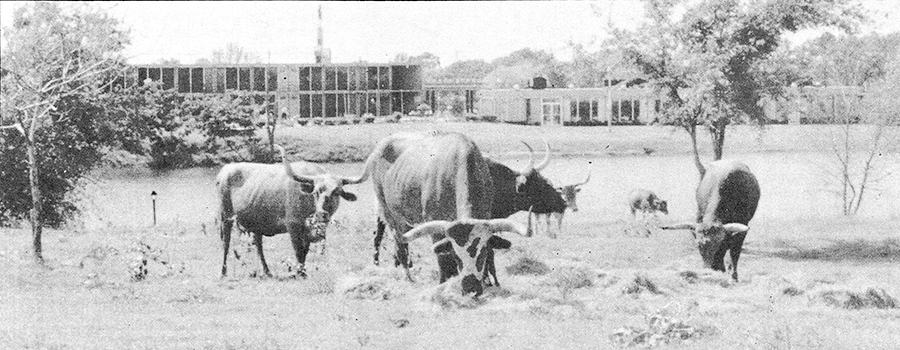
“He always drove the biggest Cadillac known to man,” remembers Larry Cox, “and he’d drive out across any pasture, over any creek branch on his place.”
His motel’s rooms ran parallel to a lake behind the inn; the restaurant’s glass wall overlooked the lake and a hilltop pasture beyond where he stocked Longhorn cattle in the late 60s, when the breed was near extinction. He brought in animals from the Longhorn refuge in Oklahoma, from the Marks family Ranch out of Houston and Charles Shriner’s Y.O. Ranch at Kerrville. His prize steer, Tex, had been on exhibit at the World’s Fair in ’67.
The Holiday Inn became a local tourist stop. Dr. Currey grew watermelons by the pool, got in trouble with the United States Department of Agriculture for planting cotton in the flower beds.
His ducks and geese glided out on the lake.
“Dr. Currey’s motel put Mt. Pleasant on the map as the place to stop in Northeast Texas,” said Don Deadman, a motel consultant currently working here with the Best Western Motel.
Behind his back we poked fun at his peculiarity for being frugal.
He had the motel’s maids save unused portions of soap bars — some were used to make a spray cleaning solution, the rest were melted down, molded into a cake pan, then cut into bars at home.
“He was just as interested in teaching you how to make something from nothing as he was in making something himself,” said Wally Freeman, who headed the motel’s housekeeping department. “No matter how much you might have thought you knew, he could always teach you something new.”
I remember the night I first thought of Dr. Currey as something besides a regular uncle with the oddity of being called by a title and last name.
Obie, my big-jawed yellow yard dog, didn’t come when I called. Finding him in the storeroom, too weak to move, eyes glowing green in my flashlight’s beam, I called my doctor.
“Dr. Currey?” my mom was surprised a half hour later when he rapped on the door, doctor bag in hand.
“He’s back here,” I said, leading the doctor back to my room, having hauled my ox of a dog through the basement window and stretched him out on my bed. “Obie’s sick,” I explained. Mom’s jaw dropped and she looked from me, apologetically turning to the doctor, then back to me.
“Hudson Old,” she said, “Dr. Currey’s a physician.”
After doctoring the dog, Dr. Currey went to the kitchen table where there was fresh coffee and a table set with cups and saucers — the everyday ones.
The visit was a part of his normal house call.
Ruby White, his nurse, remembers her first time with the doctor making a house call at a rural black home, remembers the simplicity with which the doctor boiled away generations of segregation’s protocol.
“The greens are ready,” the lady of the house announced and when the doctor sat down to eat, his nurse joined him.
I grew up thinking of medicine as a God-given right since Dr. Currey gave us ours free, being kin.
He bought an existing Holiday Inn in Paris. Between motels and nursing homes, I recall pieces of real-estate dealings in three counties.
He served school boards in two towns in his life, once set up a free neighborhood rabies vaccination clinic and built his practice in the house-call days.
He died in the summer, 20 years ago.
. . .
After two solid days of January rain, followed by a day of gentle wind and cool sun, a friend came to visit.
For entertainment I broke out rakes and a gas torch, igniting a line of fire beneath a stand of pine.
All day long we steered the creeping blaze, cleaning the forest floor. By the end of the second day my bride, my son and a nephew were tending the fire line.
Watching the flames burn into the night I listened to voices I love calling through the dark, my thoughts drifting like smoke back to Dr. Currey’s gift of fire.