Dallas attorney buys ’80 acres of Prozac’ of Franklin County land
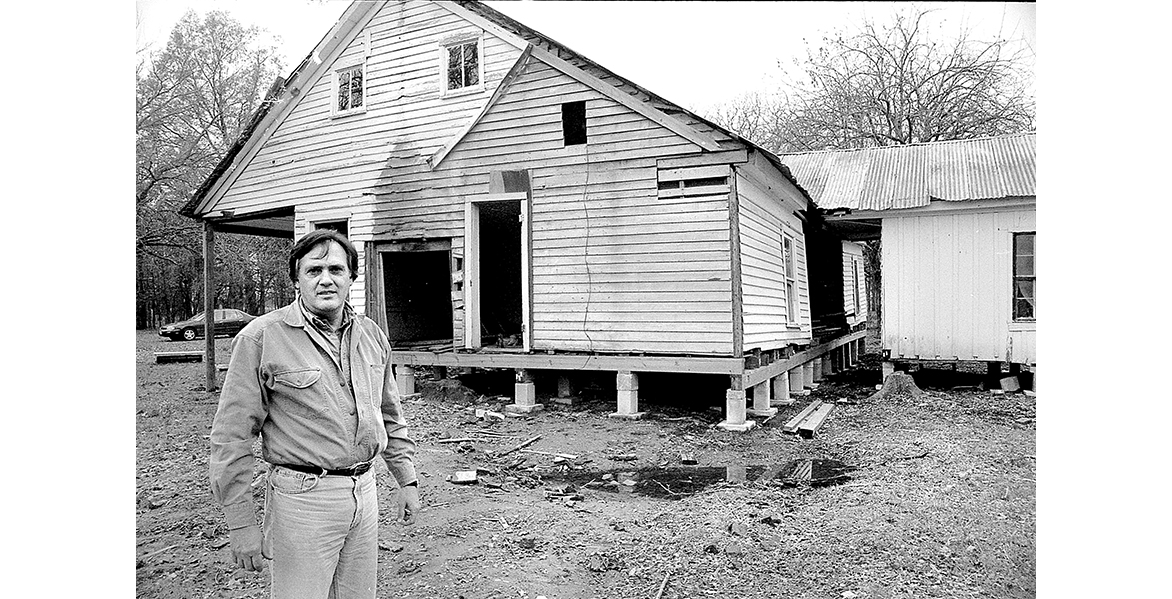
Above Photo: Since buying a tract of Franklin County land with an old farmhouse, David Weatherbie’s research has introduced him to ghosts of the first Anglo generation to settle here.
From The East Texas Journal, January 1995
By Hudson Old, Publisher
MT. VERNON, TEXAS — David Weatherbie works in the fast lane. A Dallas real-estate lawyer, he weathered the boom and bust of the 80s, “crazy world,” he recalls. “It was like they were printing money in the back rooms of the Savings and Loan,” he said. “The boom was on and everybody was building. Nobody did market surveys — they just built, and they built offices based on $60 to $80 per square foot rent. The reality came to be $35 per square foot rent — the reality now is $12 per square foot in the same building.”
It’s rough and tumble business that frequently defies logic — a lot like Mr. Weatherbie’s membership in a consortium of a half dozen buyers investing in a 320 acre tract north of Mt Vernon, stretching out into Daphne Prairie.
Buying the land made no business sense at all, in spite of the fact that in some areas, it’s rich with timber. “We didn’t buy it to sell the timber.
” Mr. Weatherbie said. “As a matter of fact, if I had to make a living from that land the way so many people here are capable of doing — I’d be at a loss.”
They bought the land to preserve the hardwood timber. They bought it to have a place of their own to sit in solitude and watch sunsets.
“What I got for my money was 80 acres of Prozac and an old home with an uncertain history,”
Mr. Weatherbie said.
At home in Dallas, he relaxes playing chef in his kitchen.
At home on his new 80-acre slice of Franklin County, he relaxes fishing his new pond, or scouring the forests for mushrooms he identifies with the help of an Audubon Field Guide. But as much as anything, the magic of his land’s somewhat uncertain history entertains him.
“I grew up in Idaho and Salt Lake City — most of the places I lived as a child, I had the opportunity to play in mountains and forests, but this is something different.”
The 320 acre tract was a part of the estate of the late district Judge Sam Williams of Titus County.
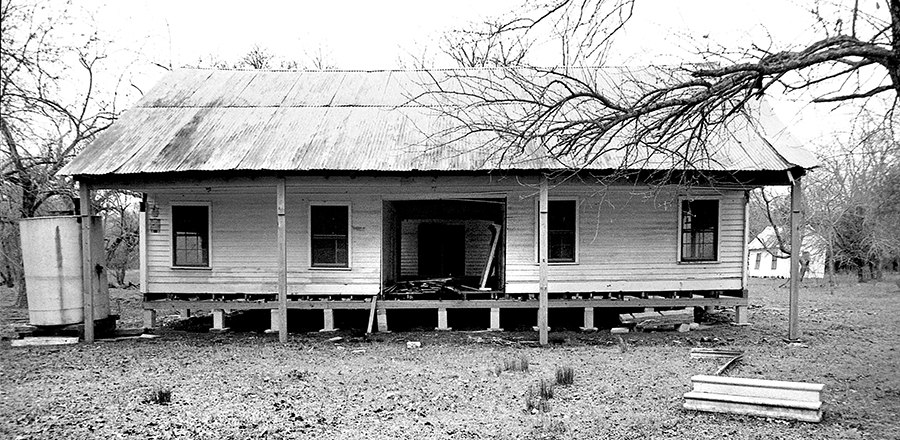
The old dogtrot home on the part of the land Mr. Weatherbie has was the home of a pair of local bachelors, Aubrey and Chester Gregg.
Oral history more of less died right there — the Gregg brothers were just another pair of local old timers.
It was his curiosity about the age of the home that started David Weatherbie tracking back across the deed history, digging for the sovereignty of the soil.
Gregg family tics, he discovered, reach back to Republic of Texas days.
“The first great Anglo migration to Texas began as soon as Texas won its independence from Mexico,” he explained. “Land was cheap and it traded fast.” The legislature of the new republic granted a section of land to veterans of the Battle of San Jacinto, where a frontier army defeated Santa Anna. Two other statutes granted up to 320 acres to those who were residents of Texas before the new nation declared its independence in May of 1836.
An allowance was made for those coming to Texas after the revolution, granting them up to 320 acres.
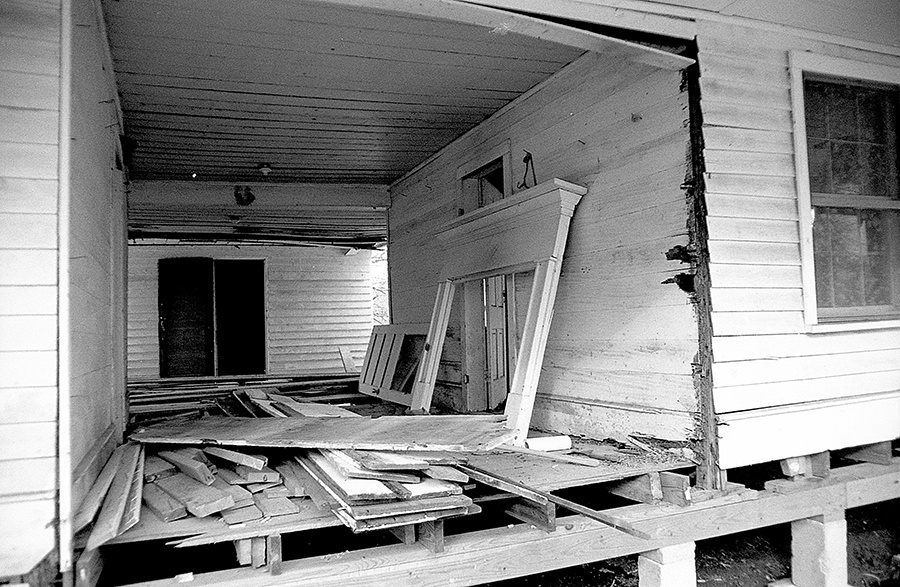
A headright filed by W.S. Clifton shows that he was in Texas by 1837, if not before. A later deed, also filed during the Republic days, shows the sale of the property from Mr. Clifton to Milton Gregg. Milton was a brother to Sam Gregg, who was married to Mr. Clifton’s daughter, Cinderella.
The history of legal transactions concerning the land gets hazy — during the Civil War years, W. S. Clifton’s heirs patented the land with the then state of Texas and deeded it to the Greggs.
Following the Civil War, a carpet bagging Texas legislature in 1866 passed a law allowing for preemption of all land in the state to which residents couldn’t claim perfect title.
The northern half of the land that Mr. Weatherbie bought was surveyed under that act — it was the 44th survey of its kind done in Titus County.
In 1867, Thomas Carter patented land in the Carter Survey, land making up what’s now the northern part of the 320 acre tract Mr. Weatherbie and company bought.
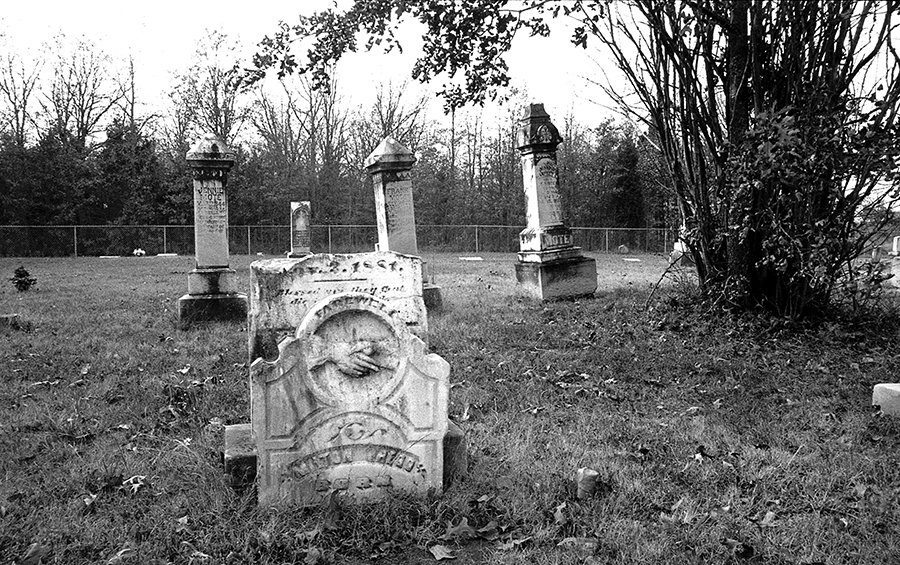
Mr. Carter sold that land to Frank Mote, a man listed in; the 1860 Census report as a day laborer originally from Alabama. Frank Mote was living, at the time, with a widow named Mary Koonce — in the same census report, a 15-year-old girl named Mary Koonce — was living in the home of Milton Gregg.
“It wasn’t unusual in those times for a girl of 15 to move away from home to work for Aubrey and Chester Gregg — the old bachelors locally recalled as the home’s last Gregg occupants — inherited the land after the death of W.M. Gregg’s second wife.
All of that research doesn’t prove anything, much, about the central question in his research — when the old Gregg home he’s slowly restoring was built.
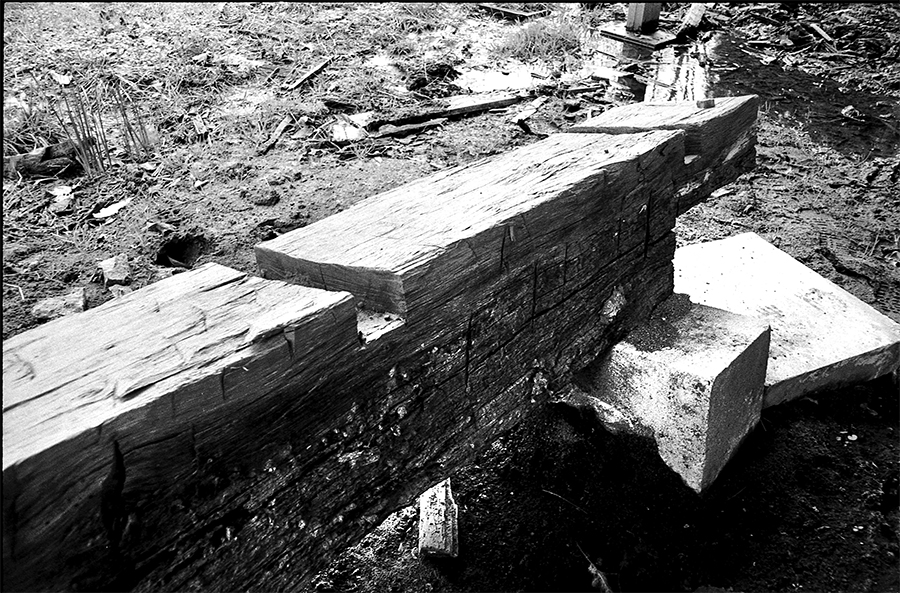
Judging from the construction of the home’s original beams — solid oak spans fitted together with notches, it was built at a time when steel nails were precious.
Rather than being nailed into place, floor joists rested on notches cut in the beams – its construction could date back to Texas Republic days.
At this point, its a mystery David Weatherbie will probably never be able to factually solve, barring new evidence.
He’s traced many of the Greggs, Cliftons and Carters to their graves — the passing years have scattered their heirs to the winds.
“It would be nice to be able to another family,” Mr. Weatherbie notes.
While the Gregg family lived on the southern part of the 320 acre tract, Frank Mote married Margaret Koonce and they lived put together a concrete puzzle, but puzzles aren’t always meant to be solved, “he said. “Sometimes, they’re just fuel for your imagination. What seems important to me now is just getting to be a bit player, for a while.” on the northern part of the land until 1889 when they, sold it to Wilson Marion Gregg, putting all 320 acres in the Gregg family.