‘I didn’t kill anybody,’ said defendant Cheyenne Bigelo who risked death penalty
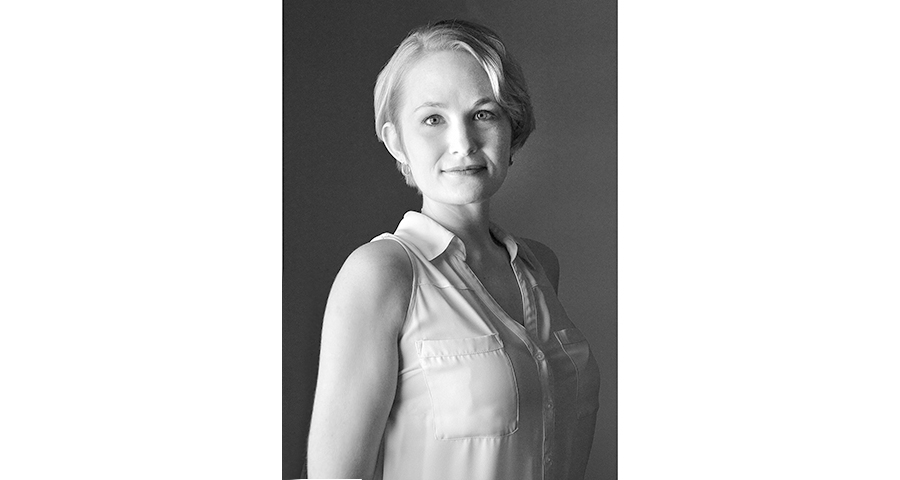
Cheyenne Bigelo
Above photo, coming out of a bummer year of radiation, chemo and the loss of her mentor and law partner when Mark Lesher died with covid, trial lawyer Laura McCoy has come back with a vengeance, winning an acquittal in her first capital murder trial.
From The East Texas Journal, June 2022
By Hudson Old, Publisher
She was indicted before court was suspended during the pandemic. Unable to post a million dollar bond, by the time Cheyenne Bigelo came to trial she’d been in jail for five years, charged with capital murder.
Three people died.
The state’s case was a cinch. Additional charges included aggravated robbery and drug possession.
The only factual disputes concerned the time line of events from two different crime scenes through the afternoon and evening of March 7, 2017. It ended in a shootout in which 30-year-old Michael Laplace was killed. Hours earlier, he’d used a belt as a ligature to strangle his grandfather, Sylvester Harnden, 79.
Suffering multiple stab wounds, Johnny B. Burleson, his uncle, died on the operating table later in the night, said Titus County Sheriff’s Office Investigator Chris Bragg. A second uncle, Jerry Brent Burleson, survived being shot in the stomach before firing the shot that killed Mr. Laplace.
Ms. Bigelo was charged under the “law of parties,” said Laura McCoy, the public defender appointed to represent her.
“In a nutshell, you’re charged under the law of parties if you help or assist the primary actor,” said Ms. McCoy, who argued that her client acted under duress.
Immediately before trial, the state offered to talk about a plea bargain if Ms. Bigelo would agree to a life sentence with the possibility of parole, said Ms. McCoy, who relayed the offer to her client.
“She said, ‘Absolutely not. I didn’t kill anybody’” said Ms. McCoy. Conviction in a capital case comes with either a death penalty or life without the possibility of parole.
Ms. Bigelo gambled instead on a lawyer who’d never tried a murder case.
“It was my first affirmative defense,” Ms. McDoy said. “What that means, you’re saying, ‘yea, I’m guilty as charged by the letter of the law, but here’s why I did it.”
Arriving in Mt. Pleasant after law school but before she’d taken her bar exam, Ms. McCoy opened the office where she was later named partner, Lesher and McCoy. Personal injury and product liability cases were the hallmark of Mark Lesher’s practice. Ms. McCoy was second chair in cases that went to trial.
When she came home for the last summer before graduating law school, she gave up waiting tables at Weezy’s in Blossom in favor of a paid internship in Mr. Lesher’s Clarksville office. He had a second office in Texarkana. A member of the Clarksville High School class of 2004, after Ms. McCoy graduated law school in 2010, Mr. Lesher sent her to Mt. Pleasant.
“Before I took my bar exam I’d show Mark’s bar card and my ID when I went to the jail to interview clients,” she said, a period during which she developed a preference for criminal defense.
“As opposed to a family law practice, one way or the other, criminal cases are resolved,” she said. “There’s no end to family law. The fight drags on over things that people ought to be able to work out.”
Graduating fifth in her high school class, she garnered enough scholarship money to get in the door at UT Arlington, but not enough to avoid 40-hour work weeks behind the bar at Shady Oaks Barbecue to finance an aggressive three and a half year fly pattern on a degree in criminal justice.
Law school was more demanding. She cut her work schedule back to weekends back home at Weezy’s, a chicken-fried blue plate diner heavy with farming and ranching clientele. On a good shift, she’d pocket a hundred and a half.
That tenacious work ethic that marked her collegiate years served her client well in her first murder trial. Going through 20,000 pages of phone records, Ms. McCoy was able to establish a connection casting a shadow over the testimony of a state’s witness who said Ms. Bigelo told her she’d helped kill her boyfriend’s grandfather.
“It comes down to telling a story that’s believable and easy for the jury to understand,” said Ms. McCoy, whose mindset going in was having absolute confidence in her client’s version of events.
“In five years, her story never changed,” she said.
Her backstory was one of limited opportunity. She quit school at 16 to work in her grandmother’s daycare. Her mother introduced her to Michael Laplace in 2016.
“He was her first date and her first boyfriend,” Ms. McCoy said. At trial, Ms. Bigelo testified that she went along with the increasing violence that began with tying up and robbing Mr. Laplace’s grandmother because she feared for her life.
The critical element of the story Ms. Bigelo told when she was put on the stand happened in November, 2016, three months after she’d been introduced to Mr. Laplace. Driving his car, she’d had a fender bender.
“He beat her black and blue with a belt,” Ms. McCoy said. By that time, she’d known of her boyfriend’s drug issues. He’d done some prison time.
She filed charges and he was indicted.
In December they were talking of reconciliation. By the first of the year, they were back together. She went to then District Attorney Chuck Bailey’s office to ask him to drop charges.
“That’s how domestic violence works,” Ms. McCoy said. “Prosecutors see it all the time.” Ms. Bigelo testified that when she couldn’t get in to see the DA, she left a note.
By March, the couple had moved into a travel trailer in the driveway of his grandparents, Sylvester and Mary Harnden, said Sheriff’s office investigator Chris Bragg.
“He had a drug habit,” Mr. Bragg said. “His grandmother was trying to help him. His grandfather didn’t want him there in the first place.”
That was the domestic situation when Mr. Laplace got the court summons with a notice of his trial date on the assault charges.
He was furious. The letter touched off a drug-fueled binge. By the evening of the murders, he was out of money and had been up for three days. Around 4:30 that afternoon, the couple went in the house, attempted to rob Mary Harnden and tied her up in a bedroom, Mr. Bragg said.
Mrs. Harden refused to provide her grandson numbers accessing her bank account.
When Sylvester Harnden came home and complained about where Mr. Laplace had parked, Mr. Laplace strangled him unconscious, and then choked him to death with a ligature made from a belt, Ms. Bigelo testified.
Some three hours later, they went to the home of Johnny Burleson, an uncle “just up the road.
“They all lived within close proximity,” Mr. Bragg said. They drank and listened to music. When Mr. Burleson stepped out of the house, he came back in looking down the barrel of his own pistol.
He was robbed and tied. Now flush with cash, the couple’s getaway was thwarted when they backed into a ditch and got stuck at the edge of the driveway.
They walked up the road to the home of a second uncle, Jerry Brent Burleson.
“He was going to help them pull the car out,” Mr. Bragg said. “They returned in his truck and when they pulled in the driveway Johnny had managed to get loose. He came out of the house with a rifle.”
At that point, Mr. Laplace attacked Jerry Burleson in the cab of the truck. A shot was fired. He was stabbed repeatedly. Mr. Burleson managed to escape the still rolling truck, calling repeated warnings to his brother as he went down in the driveway.
Mr. Laplace fired the pistol, hitting Johnny Burleson in the belly; Mr. Burleson’s shot dropped Mr. Laplace.
“He hit him square in the chest,” Mr. Bragg said. Ms. Bigelo called 9-1-1.
Five years later, the jury found her not guilty on the capital murder charge. She was sentenced to time served plus probation on the aggravated robbery charge.