Price of salt in Titus County saw ten-fold increase when drought dried up the river
From The East Texas Journal, October 2013
By Hudson Old, Journal Publisher
PORT JEFFERSON, TEXAS – One summer in the 1850’s, the price of salt went from $1 to $10 in Titus County because there was a drought so severe and so widespread the riverboats coming up from New Orleans could get no closer than Gainesville, Mississippi. That year everything usually funneled through Port Jefferson had to be hauled from Mississippi on wagons.
Transportation costs ate the rich alive, starved the poor to bones and everybody understood that as turned the economic life of Jefferson, so turned the livelihood of the first generation of Northeast Texas settlement.
Enough of that.
It stunk, Mary Rose declares.
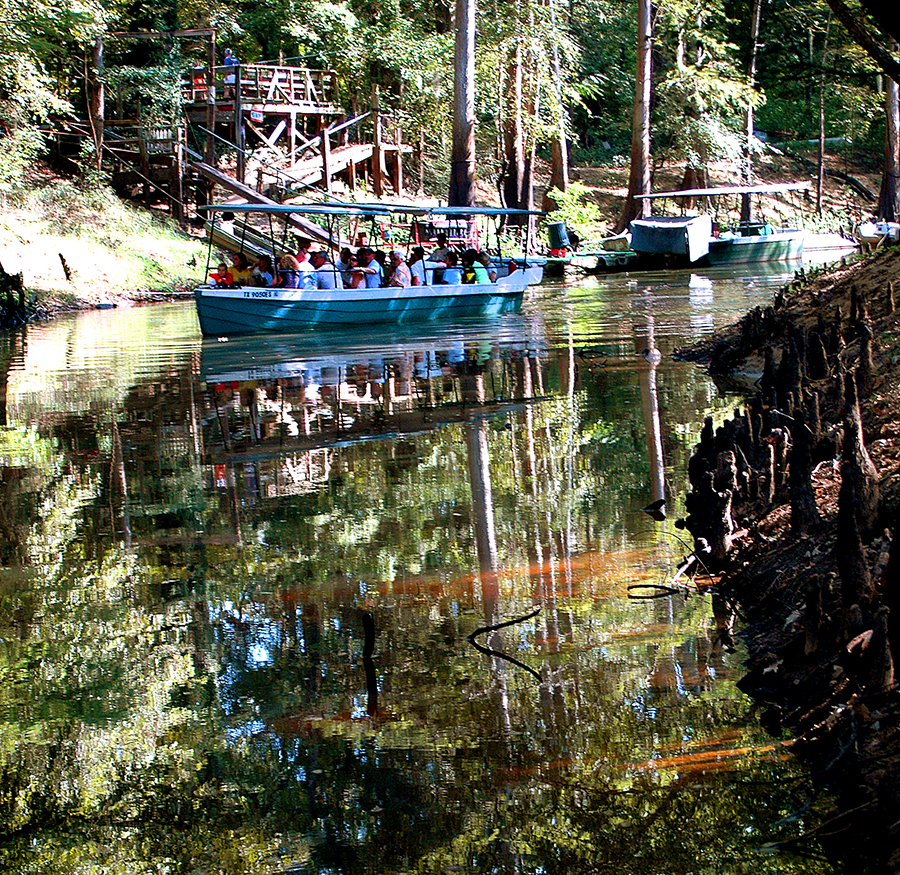
Slaughter houses and all the raw manufacturing that went with the bi-products lined the river’s edge and nobody regulated what ran off in the stream. Passing slow on the tour boat, when the river’s low she points out the molten spoils turned to a bed of iron rock, runoff from the earliest crude smelters making iron from native ore.
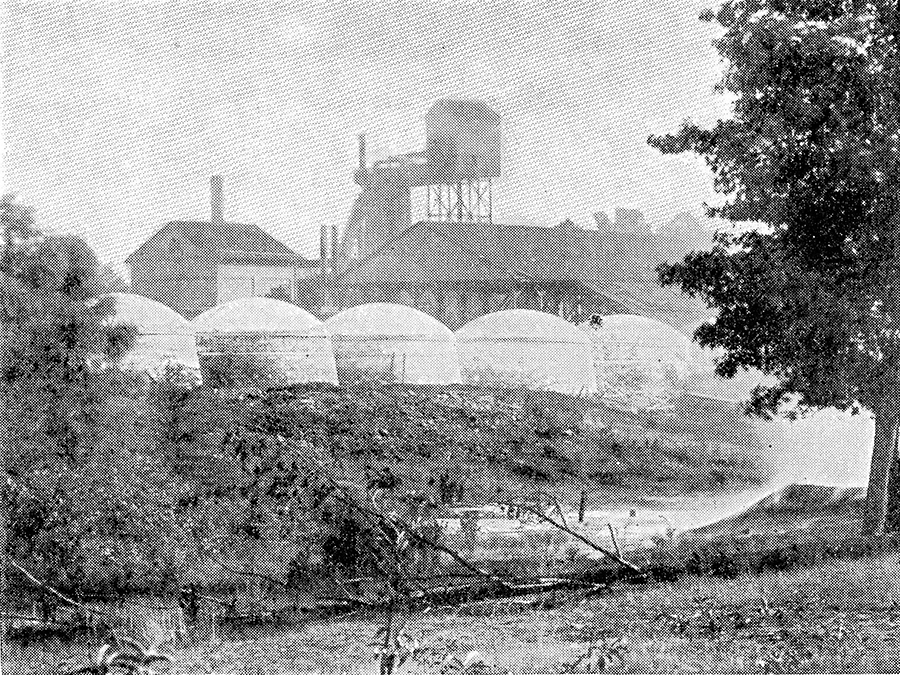
“Back then,” she says of the town’s early industrial base, “everything was bayou degradable.” Logically lining the riverbank to be as close as possible to shipping were a soap factory, a candle factory, a tannery and boot factory that she knows of.
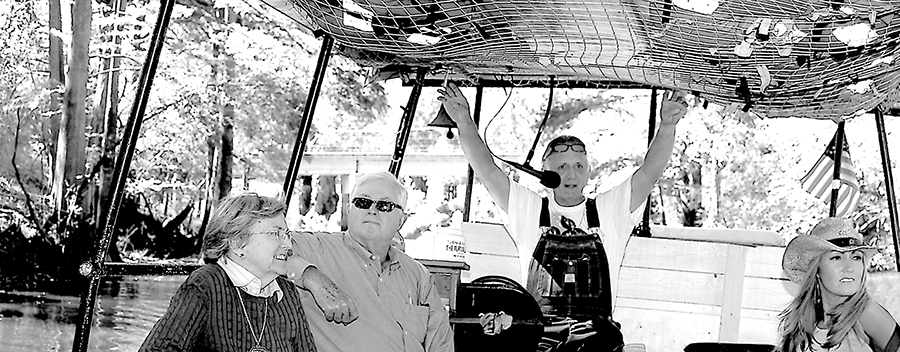
She learns a lot from Johnny Nance, who for nearly 30 years has been reading and driving the last public riverboat, taking to heart what he hears in river stories.
He says that when outbreaks of lice were perhaps rightfully attributed to passengers arriving with the influx of shipping from the downstream port at New Orleans, the paddle wheelers were required to dock downstream for all aboard to be deloused before coming to the town wharfs.
The spin on the tales told on the river tour differ from the carriage ride narrative in town where demure Antebellum Belles in the shade of parasols once watched for the arrival of their Riverboat Captains from any of the balconies of the Mansion of Four Seasons.
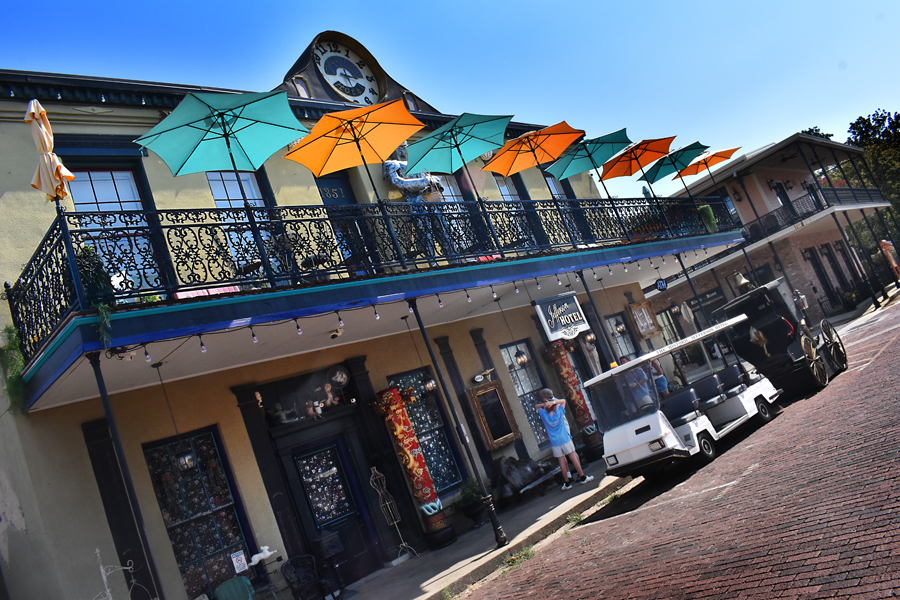
Both takes have the added advantage of being true.
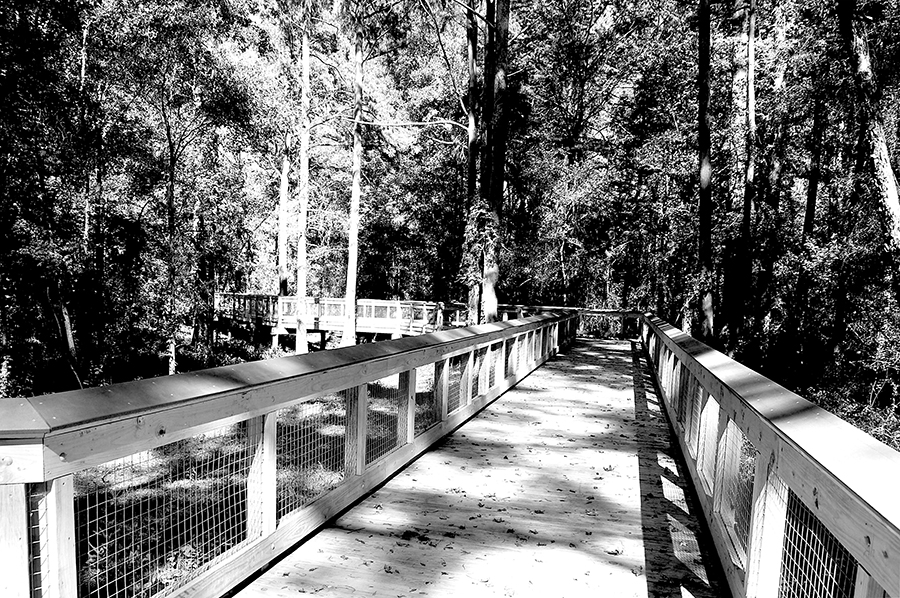
The government has invested $5 million-plus in a 38-acre park featuring a boardwalk leading right past the cabin where Mary Rose lives.
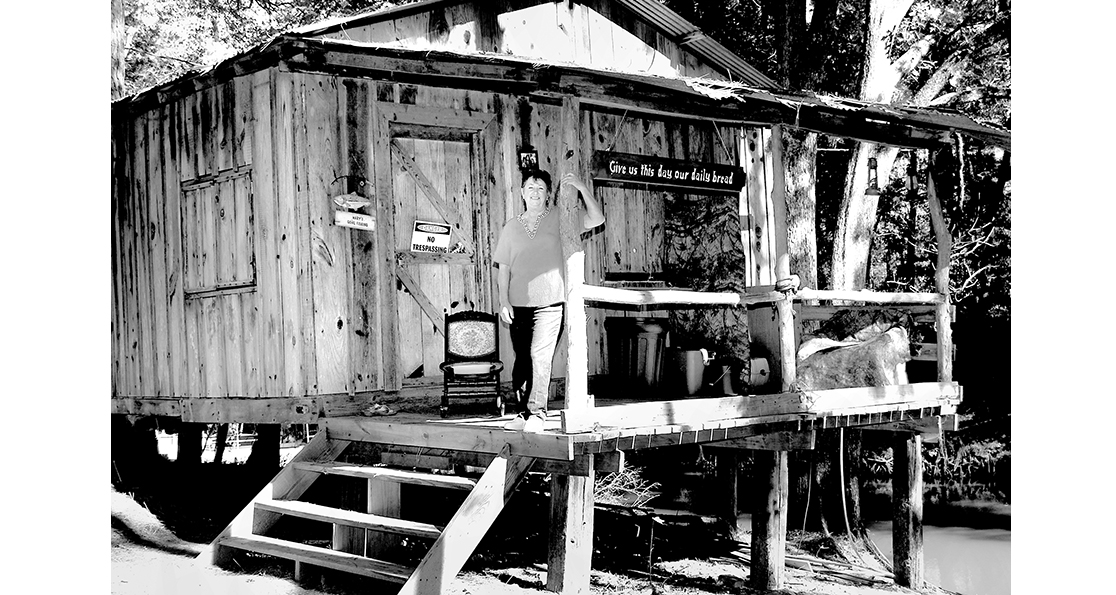
Up until the park and the walk cut off access, she could drive right up to her one-room cabin perched on stilts on the river’s high bank. The cabin stands where for 20 years from the 1980’s up until Billy died, Mary Rose opened the door into the river for anybody wanting to go.
She can still get to town by boat, which is how her family got anywhere they needed to go when she was growing up anyway, so it’s but a trifling inconvenience.
The cabin wasn’t there when she started her riverbank canoe livery by herself.
“Billy Humphrey was against anything that meant spending money,” she said and her husband’s rule over their family savings wasn’t a thing to be bucked just because she loved the river so much she started dreaming how to make a living from a bayou, like her daddy did.
Up until they outlawed it, and maybe for a few years after, her father Mr. Rose hunted alligators on Bateman Island, back in Louisiana.
In response to her husband’s position on their family savings, she reminded Billy exactly whose daughter he’d married.
She cashed in her school-bus driving retirement and bought her own fleet of red boats.
She shuttled river floats, rented canoes. From scout troops to women’s groups, she invited people to the river and she mixed in guitar playing friends for camp nights roasting hot dogs in fire and moonlight.
Billy Humphrey may have been tight fisted with family finances, but he was anything but dumb. Seeing his willful bride making a go of “Mary Rose Canoe Rental and Shuttle Service,” he found her customers logically assuming he was “Mr. Rose” when he started coming down to help.
He bore her name with long suffering silent dignity, maybe just because he loved her and it tickled her so. He generally avoided conversation with strangers anyway.
They had five children and in the summer days of the early years she often enough worked with one on her hip until they were old enough to run the river’s banks without direct supervision.
The new multi-million dollar Port Jefferson History and Nature Center was established to advance the cause of “natural science and cultural history,” through educational programs. In September, the first such program featured a falconer whose birds have been on TV and a “Go Native” lecture featuring “the region’s leading master gardener.”
Before that, Mary Rose gave kids a “jumping tree” that leaned out over a swimming hole upstream of her livery.
Cinched up in life jackets during high water, they’d walk as far out on the tree over the river as their courage allowed, drop to the water and ride the current downstream.
Seeing such fun, the children of tourist parents demanded justice – if Mary Rose let her children swim riding a current of a free river, they likewise deserved liberation.
“We baptized a slough of city kids,” Mary Rose says with satisfaction.
Billy’s been gone for years now.
“I wish I hadn’t had such fun picking at him about being Mr. Rose, being mean to him,” she said, but she smiled because “he liked a little spunk in his women and his coon dogs.”
After Billy died, she followed a daughter to Houston and she said she lost five years trying to quit remembering because it hurt. When it dawned on her love isn’t a thing that should be forgotten she let it be more of what she is anyway and she brought that back when she came back to her cabin.
She went to work for Johnny Nance, the easy going and bookish man with the river boat tour.
“He’s as smart and good hearted as any human you’d hope to find,” she said.
More than an opinion, it’s something she’s seen.
They share duty piloting his tour boat, a ride with a lineage going back to an old mercenary soldier turned commercial fisherman, Mr. Nance said.
“When he wasn’t fishing, Roy Butler took people out on his boat,” Mr. Nance said. Before that, he was an air show daredevil walking the wings of flying planes. He was a veteran of wars abroad and there’s an older story still of his escaping execution in Mexico.
“You could still fish with nets when he got here,” Mr. Nance said, so that was what he did before they outlawed that.
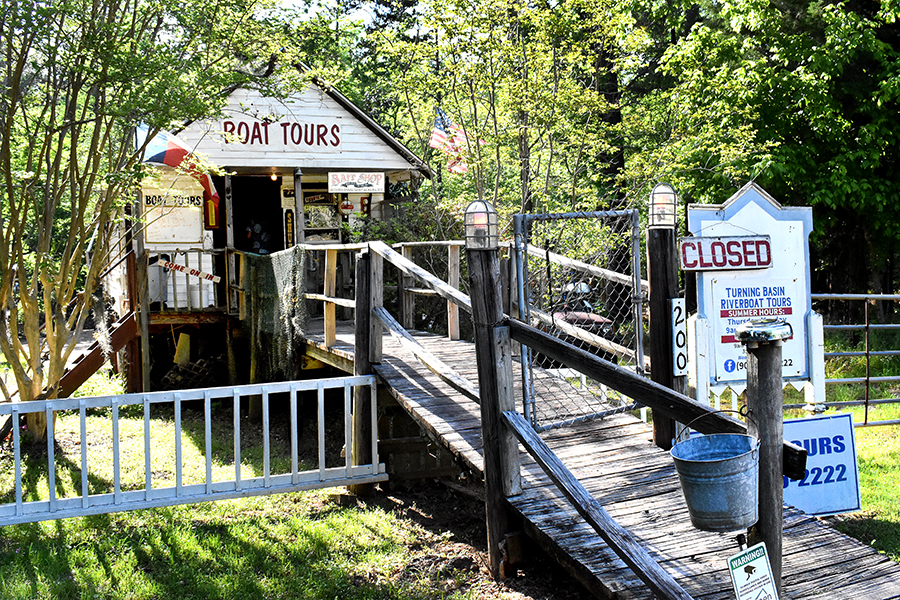
On the tour boat they’ve got a picture of an alligator gar old Elijah “Lidge” Albright caught in his nets. Story is, his fish bottomed out the 300-pound scales at the meat market. It was Elijah Albright who built the house on a little river-bank knoll that Roy Butler bought after he quit wing walking. Johnny Nance owns it now and he’s made it a used book store along with being the offices for his Turning Basin River Tours.
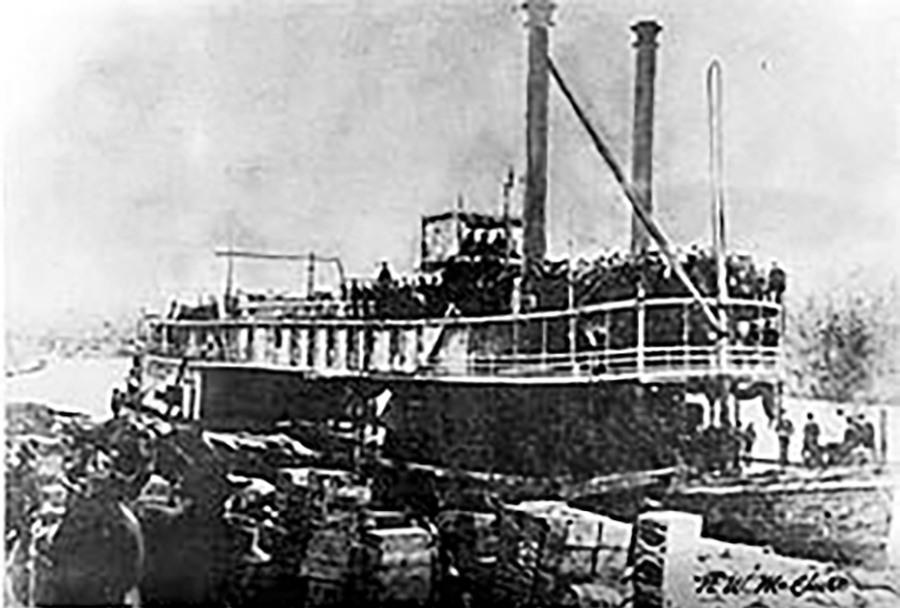
They’ve got another picture of a 19th-century paddle wheeler at the Jefferson Wharf, its decks stacked with a thousand 400-pound bales of cotton harvested one season during the brief flare of East Texas plantation years. The ship’s deck was 45 feet wide and 150 feet long, Mary Rose said. It was so finely engineered it drew but four feet of water carrying 200 tons.
Thirty-odd years have passed since Mr. Nance’s brother bought Roy Butler’s place.
A musician, for a while Johnny Nance drifted into and out of town, crashing on his brother’s couch and singing at the first of the taverns to open in town after beer and wine sales were un-outlawed. When his brother wanted to move on, Johnny Nance bought him out.
Laws are quirky and the ones implemented in the creation of the new boardwalk bisecting a nice swath of trees between the river and the courthouse stirred Mr. Nance in a way Mary Rose had never seen.
It’s a perfectly lovely boardwalk, Mary Rose said. By contractual agreement with the city, its operators can’t charge anybody for walking it. Sometimes when she leaves her cabin, Mary Rose slips over the fence and strolls the boardwalk into town.
“You can walk through a beautiful forest and never touch the earth,” she said.
As described by the Port Jefferson History and Nature Center Park’s assistant manager, the Corps of Engineers gave standing to the city’s right of eminent domain to acquire its high-bank river frontage “to restore habitat that had dried out and become a waste area since the construction of the upstream dam at Lake O’ the Pines.”
Mary Rose faced a forced sale of her cabin.
Hearing of these things, Mr. Nance suggested that he and Mary Rose seek further counsel.
Whether her cabin in the dried out waste area deemed worthy of more natural preservation was a trifling issue or whether bucking city hall was too demanding, “Before we found anybody to take our case we called every lawyer we knew and more we didn’t,” Mary Rose said.
That was how they found Marshall Attorney Pinky Palmer.
Mr. Palmer found a number of procedural issues resulting in delays giving time for reconsideration of the value of preservation accomplished by tearing down a cabin.
Up until then, Mary Rose used the cabin Billy built for her canoe livery office as a seasonal retreat, a Spartan second home where she lived for extended periods when spring and autumn weather are moderate.
No less willful and no less notional than she’s always been, maybe it was Johnny Nance’s code plunging him into the legal ruckus on her behalf that made it seem all the more fitting and reasonable to move full time to the cabin.
She bought a brand new window unit heater and air conditioner.
She hauled what was needed across the river and insulated the walls and got a crock pot and a hot plate so she can cook inside.
EPILOGUE
I was miles and years away from the river when I met Dr. James Harris.
Same for a guy named Jack Canson who told me a Cypress bayou story that’s so crazy you’ve gotta hear it to see it.
Dr. Harris likewise wrote the hardest cutting tale of the river I’ve ever read.
I started thinking of writing this with a thought about the river being my first common link with those guys and a lot of other people of thoughtful or adventurous spirits I’ve known over years.
I went hunting Mary Rose because of a thought about the nature, the character of people drawn to a place academian Margaret McClung described in her master’s thesis as “the haunting beauty of Caddo Lake.”
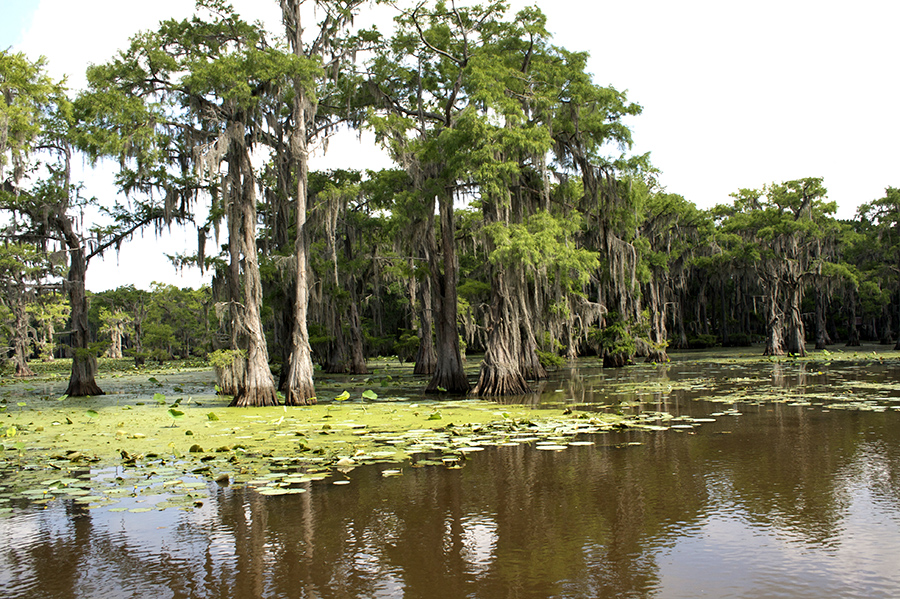
Sculptures, paintings, poems and novels bear witness to the efforts of writers and artists straining to capture something here.
I’m honored to be a sometimes character in the stories Mary tells on the river tour. She talks about the time I painted my canoe sky blue then canoed it out with clouds so nobody could see it flying.
I’ve gone so mainstream I’d almost forgotten that.