Indian Food Brings a New Generation of Truckers to Winfield, Texas
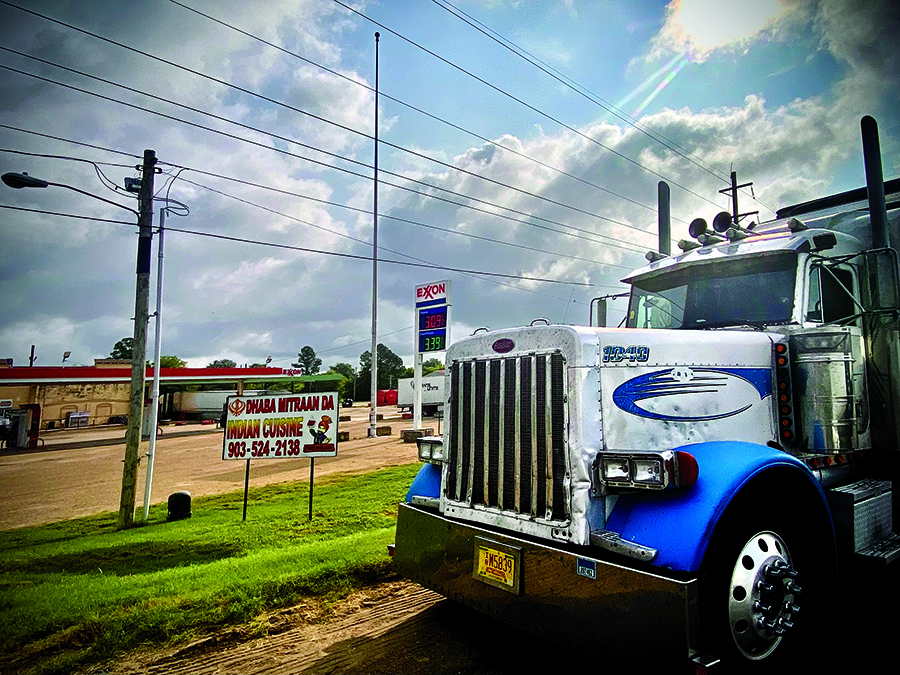
Rolling into sunup on I-30, Canadian truckers a long way from home counted miles down to Winfield where they could order Sags Paneer just like grandma’s.
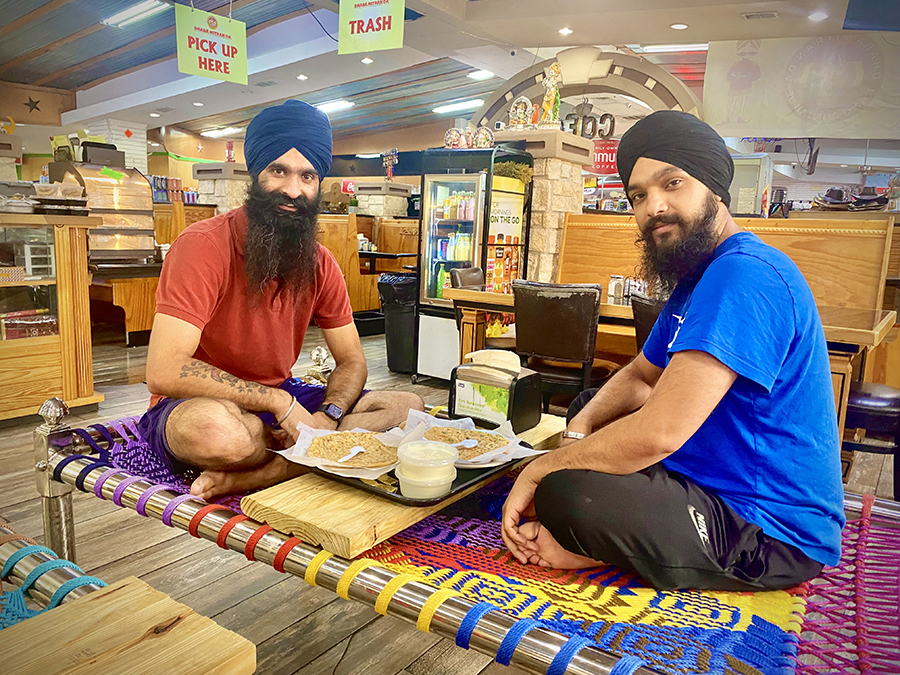
Harpreet Singh and Harpreet Singh are originally from Punjab, back in India.
When I-30 opened the final leg of interstate highway from Dallas to Texarkana in the summer of ’67, Albert Miller’s truck stop advertised on the All-Night Bob Mack Radio Show that first put Winfield on the American truckers’ map.
Today’s marketing differs.
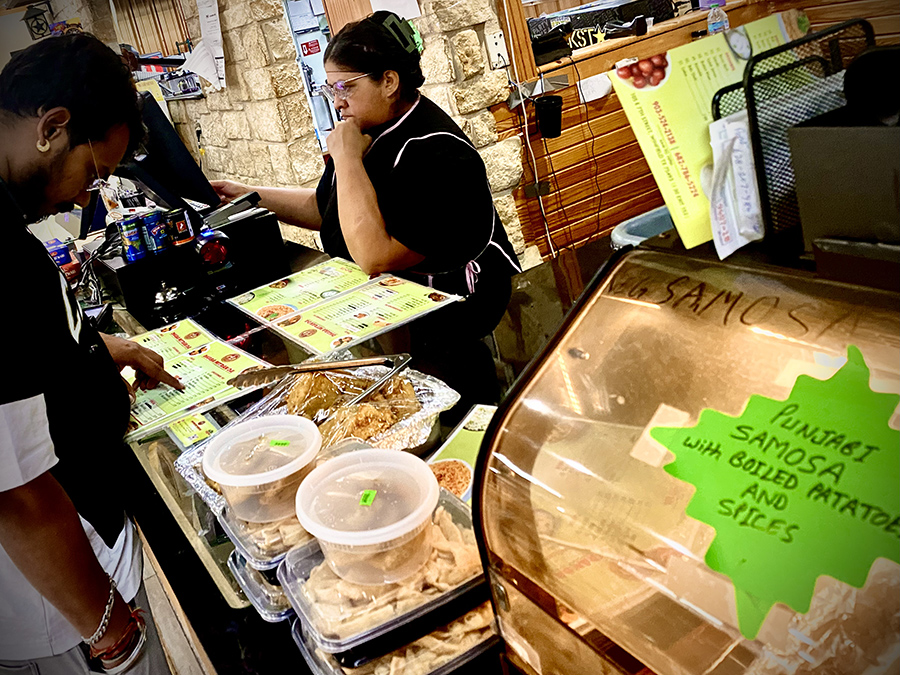
From his medical office in the Woodlands, using an i-phone application called “iExit,” Dr. Tom Sloan selected I-30, typed in “Indian Food,” and was directed to Dhaba Mittran Da Indian Cuisine in Winfield, the catalyst for a travel agenda booking his arrival the same morning the Canadian driving team of Harpreet Singh & Harpreet Singh wheeled in.
When not practicing medicine, Dr. Sloan logs miles exploring the state. He’s a student of everything Texas.
“They’re Sikhs,” Dr. Sloan observed, tipped off by the turbines Harpeet and Harpeet were wearing when they hit the truck stop door. Sikhs don’t cut their hair, so they wear a turban to help keep it clean. There’s a spiritual aspect to good hygiene in their tradition.
“They carry a wooden comb as well,” he added, “for grooming. Statistically, they’re likely Punjabi,” Dr. Sloan guessed before we knew, since the Punjab region of the Indian subcontinent is where Sikhism originated in the 15th century. It’s still where the vast majority of the world’s Sikhs live, wedged between Muslim Pakistan and the majority Hindu population of the Indian sub continent.
In recent years, there has been significant Sikh migration to the Americas. The Canadian link dates back to the colonial era during which the English ruled both Canada and the Indian sub continent, that part of Asia later partitioned along ethno-religious lines into an independent India, Pakistan and Banladesh.
In Canada, Harpreet Singh and Harpreet Singh worked as dairymen before being licensed as a commercial trucking team.
Harpreet is a common first name, the taller Harpreet explained by way of introduction.
The last name “Singh,” which translates as “lion,” is taken by traditional Sikh men. Going back to their rejection of names associated with traditional Hindu castes, Sikh women likewise take a common last name.
“Kaur” translates as “princess.”
Sikhs are monotheists whose beliefs separated them from the greater Hindu population.
The guys in turbans swinging long curved swords in the great cavalry charge when they rode with the British in the Lawrence of Arabia movie about the last days of colonial empires were Sikh warriors whose faith for 500 years put them at odds with the nature of the Hindu caste system that defined social conventions and limited entry into professions.
While the long swords are gone, in keeping with that element of a faith committed to defense of individual liberties, the modern Sikh’s contemporary attire typically includes a small dagger known as a Kirpan.
“If you’ll notice, the Harpeets are each wearing the Kara as well,” Dr. Sloan observed. The Kara is an iron bracelet, a closed circle representing eternity and strength as well as a constant reminder to avoid unethical practices.
Dr. Sloan’s interest in the movement of Sikhs was sparked by the economics driving an increasing number of Texas truck stops recruiting Indian chefs for their kitchens.
It’s the demand for long-haul truckers that’s opened transportation industry doors for Sikh drivers, he reasons.
Nearly 80 percent of the Free Market’s consumer goods are delivered by truckers and there’s presently a national shortage of drivers wanting long haul work requiring living on the road. Team drivers double the efficiency of trucks.
Beyond new opportunities in the transportation industry, results include the availability of traditional Indian Roti on a menu in Winfield.
Roti’s a flat bread, like tortillas, “but made with different flours,” the doctor said.
If not for Sikhs, there wouldn’t be a bite of Roti within a hundred miles of here.