First vision of coal riches vanished at Nodena
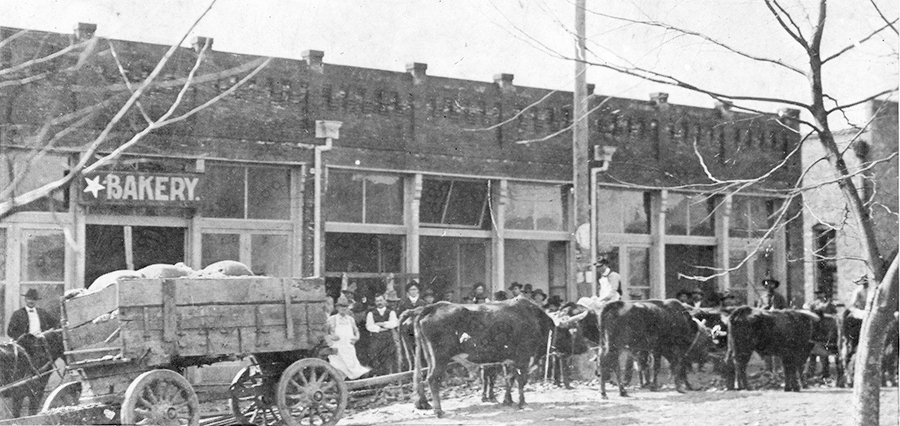
Above Photo: A German immigrant gambled and lost his Star Bakery (at left) betting on the first
commercial attempt to mine lignite in Titus County.
From the East Texas Journal, October 1994
By Hudson Old Journal publisher
The secret road to Nodena was a cozy dream about riches and coal.
It lasted until the first mines in Titus County woke up to 90 cent a ton coal, said Frank Cox, 87.
Nodena was the name for a railroad switch that split off the Cotton Belt line just west of Cookville on the east side of Titus County.
Coal fever caught hold here just after the turn of the century.
There were outcroppings of coal in the creek beds around Cookville, said Mr. Cox, and by 1908, they’d come to the attention of a German immigrant named L. G. Meier and J. M. Burwell.
Mr. Meier’s family fled the kaiser’s military regime in Germany, first settling in Indiana. He filtered on south, settling in Mt. Pleasant where he built the Star Bakery and Candy Company.
He built it as the largest bakery in East Texas, with a capacity for baking 2,500 loaves of bread daily. He had interest in a second bakery in Commerce, but in a letter home to Indiana, he talked of selling both bakeries and going into the coal business.
Coal was the fuel of a rapidly industrializing America, and it wasn’t hard to envision the riches it could bring.
In November, 1908, G. W. Keith traded all mineral rights to a 180 acre tract to Meier and Burwell for the promise of $1,000 in capital stock in a company that they proposed to incorporate.
“I’m not sure they ever got off the ground,” said L. G. Meier II. There was no more talk of coal in 1916, the year his father bought the old Titus County Jail building, tore it down, and used the brick to build a new bakery.
According to a yellowed old contract from the Meier family archives, the Keith lease was to expire in one year.
And it’s 1911 before the paper trail picks up again, this time on the letterhead of the Libby Brick and Coal Company, miners of Nodena lignite and manufacturers of Libby brick.
“They used the coal to fire the kiln that made the brick,” said Mr. Cox.
Born in 1907, he has childhood memories of the spur line and the commissary in the mine fields, where he and some other kids slipped off to dip snuff, the favored form of juvenile rebellion around Cookville back then.
“The men went down in shafts,” he said, “and they used mules to pull coal up in little cars. I remember a man named Butterfield, and he must have been some kind of ramrod. Maybe an engineer, but he new something about mining, and after he left here, he went to Winfield.
The promise of work in Texas coal mines lured Hielo Garcia from Mexico in 1913, said his son, Joe Garcia, 79. It was an elusive dream for his father.
“He settled first in Wood County,” said Mr. Garcia, “where he became a share cropper.”
In 1915, the family left Wood County for the coal mines at Nodena.
“I can barely remember it, but I remember,” said Mr. Garcia, 79. “We didn’t stay there long until we moved to Winfield — most of our neighbors went to Winfield about the same time.”
There was better coal, he said, at Winfield, and it was there that his brother, Jesse, first found work in the coal mines. Jesse worked underground, for the next 20 odd years. The mining companies came and went.
There was the Steve Mine, the Jurnigan mine, and later, the Winfield Lignite Company, which Jesse owned. It was the last of the local mining companies until Texas Utilities Mining showed up in the 1970s.
Compared to the family that left Mexico 80 years ago, Joe Garcia is a man of wealth. He did fine in business, opening a feed mill in Winfield after serving in World War II. Texas Utilities bought the old Garcia family farm, and now Mr. Garcia lives in a fine brick home on a hill, where he tends flower beds full of vegetables. He’s set out a small pecan orchard.
Still, he remembers his family’s first years here.
There were no government social programs to speak of then — all that came 20 years later with the new deal. Many of the families who left Mexico for work in the coal mines became share croppers, like his father. And like his father, some finally bought their own farms.
“We tried to hang on,” Mr. Garcia said. “And our neighbors tried to hang on. People bought farms and lost farms, and we were all together. It was different then — there weren’t all these different classes of people. We were all just people.”
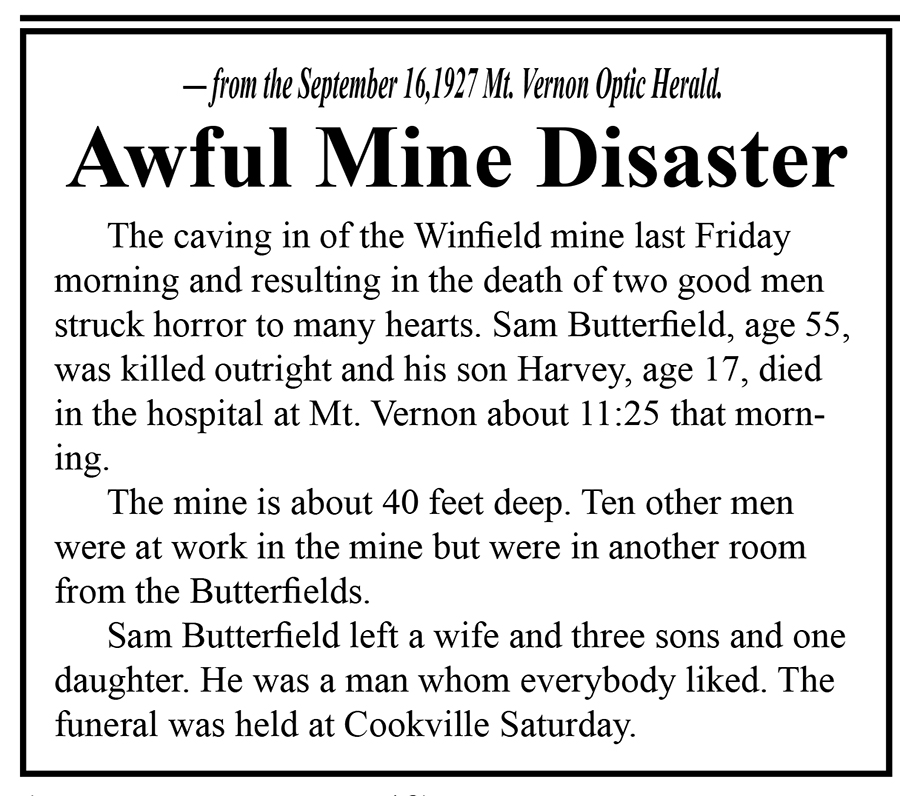
The same coal that fueled his brother’s working life took the life of Sam Butterfield, the man who followed the mines from Nodena to Winfield.
“It must have been the fall of the year, maybe around 1930,” says Mr. Garcia, “because I remember that we were picking cotton in the field over the shaft that caved in on Mr. Butterfield.”
According to documents filed in Titus County by the widow Rebecca Butterfield, Sam Butterfield died in a mining accident while employed by the Titus County Lignite Company in September 1927. The document declares Mrs. Butterfield and her 8-year-old son as legally entitled to collect $7.50 weekly for 360 weeks under provisions of the Texas Compensation law as applied to a policy carried by the mining company with the Texas Employer’s Insurance Association.
The only time Joe Garcia’s ever left Winfield, he found himself armed and trudging through two years of tropical island jungles in the Pacific theater of World War II. Then he came home and built his feed mill and store. Not counting truck stops and beer stores out on the interstate, the store Joe Garcia built is the last place in old Winfield that you can get a cup of coffee.
He never worked in the mines, he said, but he often went down in his brother’s mine.
It was cool there in summer and felt warm in winter.
“The temperature was always the same underground,” he said. The operation here was similar to Mr. Cox’s recollections of Nodena — there were narrow gage tracks leading into the mines and small mules pulled the coal cars up out of the earth.
There were branches off the main tunnel, said Mr. Garcia, and in the pockets of the branches, the miners used dynamite to blast away at the coal seam.
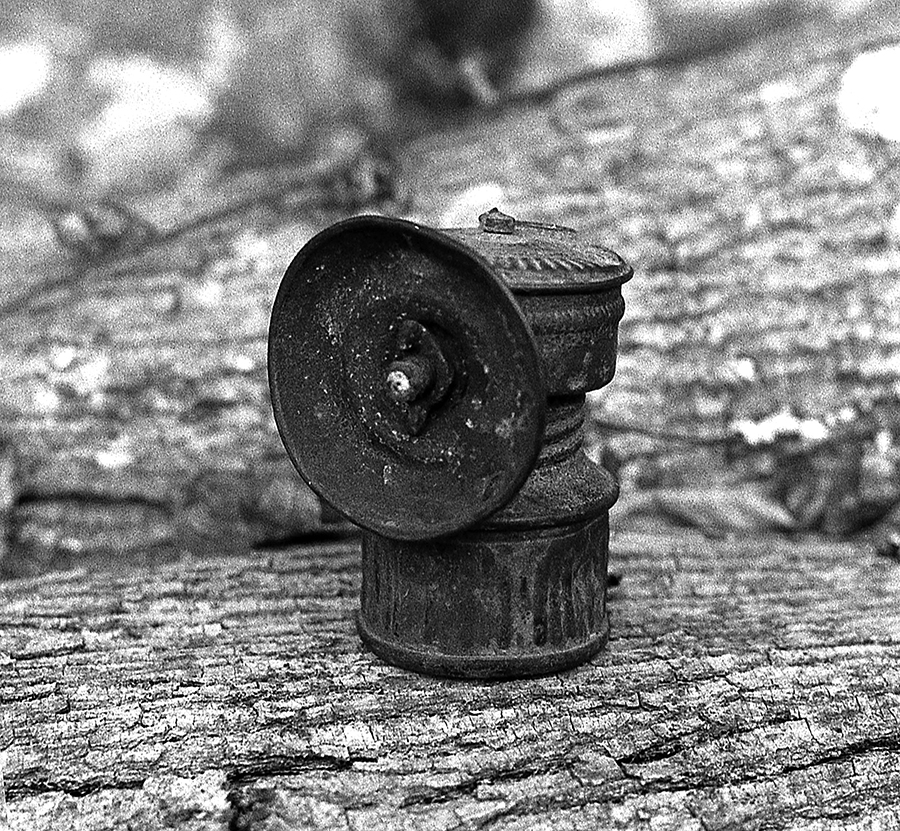
The men worked in the small light of a gas flame in their headlamps, fueled by carbide.
“It was a small light,” said Mr. Garcia, “but for a man who would otherwise be working in total darkness, it was all the light he needed.”
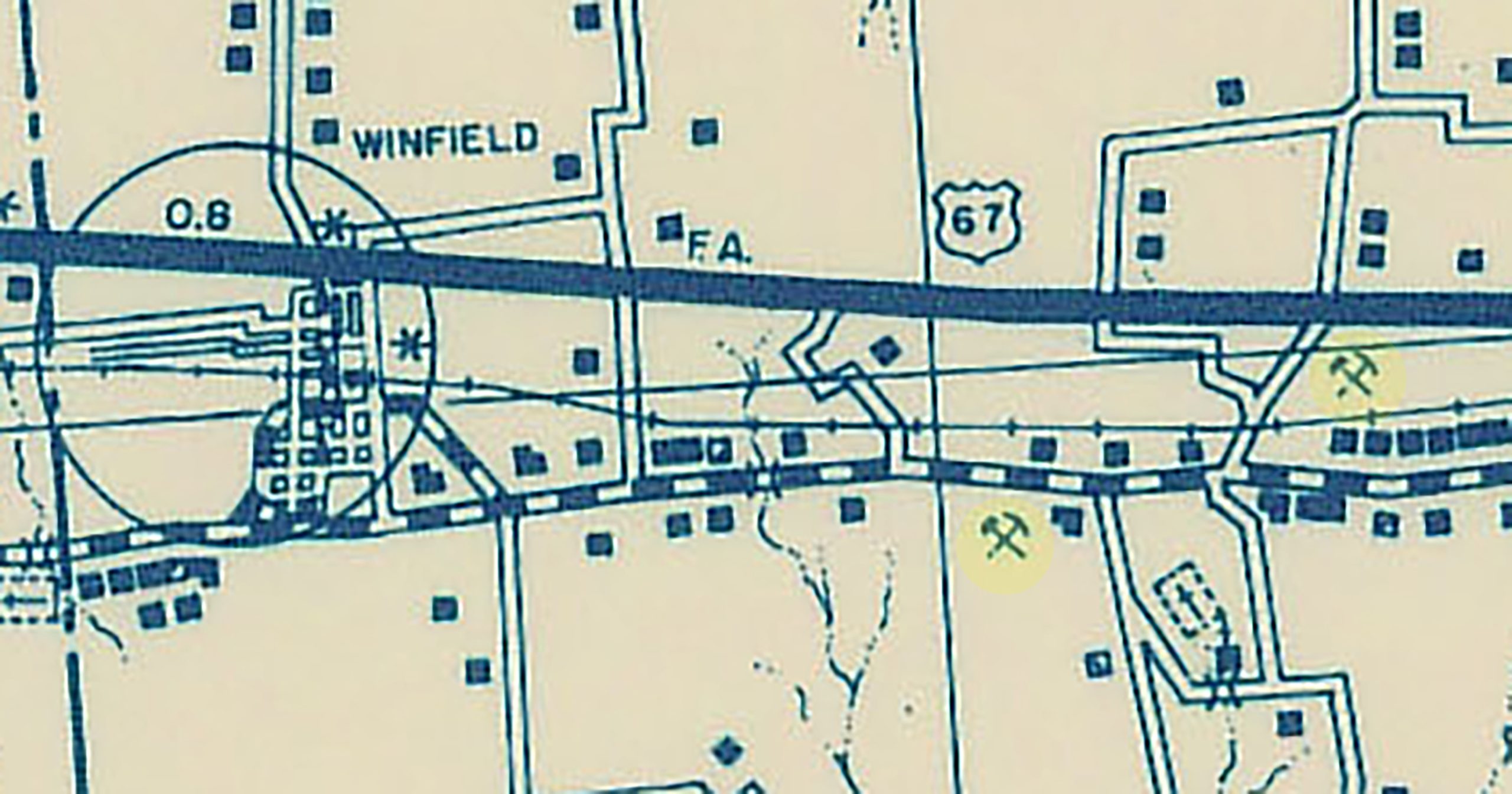
By 1944 Frank Cox found work at Lone Star Steel and bought 700 acres of land rolling back south of highway 67, across the old coal fields. Using old cross ties from the spur line, he built barricades around the last of the mine shafts on his property.
The story of the old mines is a historical stretch half a century later — evidence is down to the recollections of old men and a few yellowed scraps of paper.
But the dates seem to fit.
Mr. Garcia’s recollection of his family’s move from Nodena to Winfield in 1915 would make Mr. Cox a lad of 7 or 8 dipping snuff behind the old Nodena Commissary.
It would have been the year before Mr. Meier remembers his father buying the old county jail for the brick to build a new bakery. That 1916 date fits with the 1917 date on the facade of what’s now the old county jail.
And when I lamented not being able to find any kind of picture to go with a story of old shaft mines, Mr. Garcia excused himself, came back with an old carbide miner’s lamp, and set it on a seasoned pile of sweetgum backlogs.
“There,” he chuckled, “is the best I can do for a picture.”
And there was one other thing.
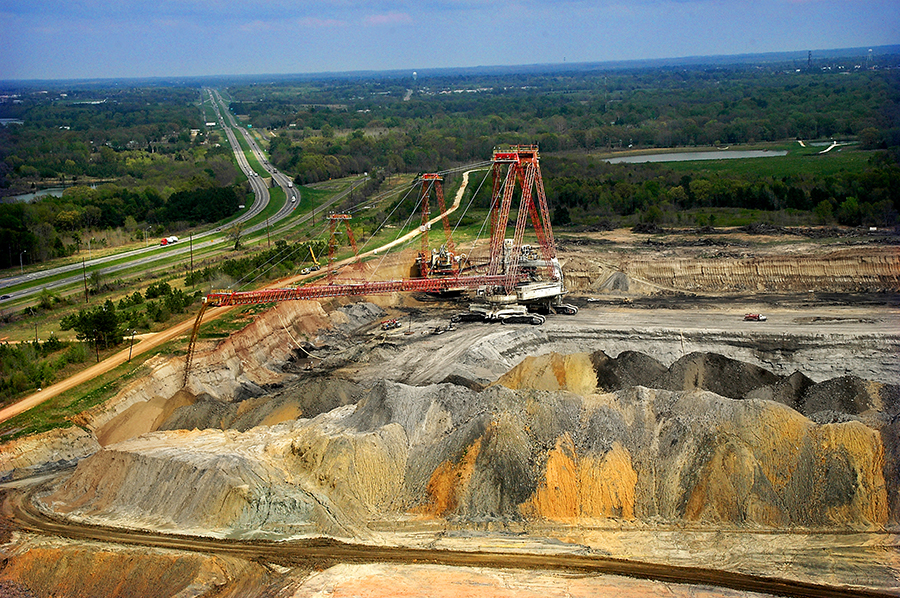
An ex Texas Utilities Mining hand says that one day the big draglines strip mining west of Mt. Pleasant now cut into some old mine shafts near Winfield. They found some timbers, he said, and some small animal bones. The story goes that they then sent for Mr. Garcia who came out to have a look.
He doesn’t remember much Mr. Garcia had to say about that, other than that it appeared they’d found some small animal bones — perhaps a donkey — some timbers, and a shaft that once reached into the coal that brought his family to Texas.