Violence, murder ruled Thunder Road
From The East Texas Journal, July 2012
By Hudson Old, Publisher
FORT WORTH, TEXAS – Dating back to the 1930’s, a six-mile run of Texas 199 between downtown and Lake Worth featured “a mélange of saloons, back room gambling and any type of vice your brain might be able to imagine,” as described by Sean Chaffin in a story posted by Fort Worth Magazine in 2013.
“Highway to Hell,” opined one headline writer.
“Thunder Road,” said the locals, their name honoring the teenage prohibition whiskey runners whose souped up Buicks and Studebakers were expected to outrun the law, the guys who evolved into the Jacksboro Highway patriarchs by their 30’s.
Living was fast and life was cheap when Titus County teen Patsy Ruth Crabtree got there in the 40’s.
In his book “Godfather of Poker” Doyle Bronson remembers a player named Virgil, a slaughter house hand running for days on whiskey and pills in a days-long poker game. He just won a good hand. Reaching for the pot, he dropped face down dead on the table. After the paramedics carried him out, play resumed.
“I knew the kind of people they were,” Mr. Bronson wrote, “but as long as you kept on the straight and narrow with them, you’d be accepted.”
Pandering to the upper crust, the Chateau Club steak house was known for fine dining. There was an escape tunnel and compartments in walls where gambling equipment could be stored or hidden in short order.
The Skyliner Ball Room had a 2,500 square foot dance floor and a 14-piece house orchestra. Louis Armstrong played there. Other nights, for a 10-cent ticket you could get in to dance to Bill White’s Skyliners Band and see Candy Bar’s All Girl Show until a 15-year sentence for marijuana possession cut her act short.
In her book “Gamblers and Gangsters,” between 1943 and 1959 author Ann Arnold documents 19 mostly unsolved murders among players ruling the underworld where Patsy Ruth’s son, Reggie Whitt, believes she met his father.
In a story that took decades for her son to unravel, Patsy Ruth made the Fort Worth Star Telegram front page after shooting his father in July, 1952.
She was in notorious company, following on the heels of the grisly news of the demise of Mr. and Mrs. Nelson Harris in the November 22, 1950 edition. By then, young Patsy Ruth was a veteran on the Jacksboro Highway.
“Gambler and Wife Slain Here in ‘Gangland Assassination,” read the headline of a sensational double homicide that was the beginning of the end.
Like Patsy, “businessman” Nelson Harris came of age working the Jacksboro Highway. As a teenager quick with his fists, Harris worked as a peak easy bouncer during prohibition.
In 1940, a crime story identified him as a “body guard” sentenced to two years after being linked to 21 defendants in “the nationwide Green Dragon narcotics case.”
In 1944, he made news from his Jacksboro Highway cafe, Nelson’s Place. Spurred to action by the poor deportment of four men dissatisfied with the service, he’d “smashed a pistol over the head of one of the men” causing it to discharge, striking the owner of the adjacent tourist lodge.
The day before Thanksgiving, 1950, Nelson and his second wife were killed by a car bomb, the incident that at last drew such outrage that law enforcement could no longer turn a blind eye to nightlife on the Jacksboro Highway.
In Harris’s business records, investigators found evidence unleashing a grand jury investigation into “gaming, bribery and vice” resulting in 60 indictments, said a March 31, 1951 story in the Dallas Morning News.
No-billed in the wake of her husband’s shooting, Patsy Ruth had left her son with Titus County family back in Texas before she skipped town with a gang of safe crackers whose run ended when all were arrested, tried and convicted in Nebraska in 1954.
Argo girl answered Jacksboro Highway call
MT. PLEASANT, TEXAS– From where he’d parked, on the east side of the courthouse, he studied the town square in a place he has either nothing or everything to come back to.
It depends. What matters?
Coming up from the Gulf Coast, it’s a six hour drive he hadn’t found time for in the 20 years since he married Teresa. During the five year courtship, she’d become increasingly curious about who he is. When she became Mrs. Reggie Whitt, she presumed the authority to conduct a full investigation.
“There are lots of gaps in the story,” she said, so she’d been waiting when the courthouse opened to search county records for clues.
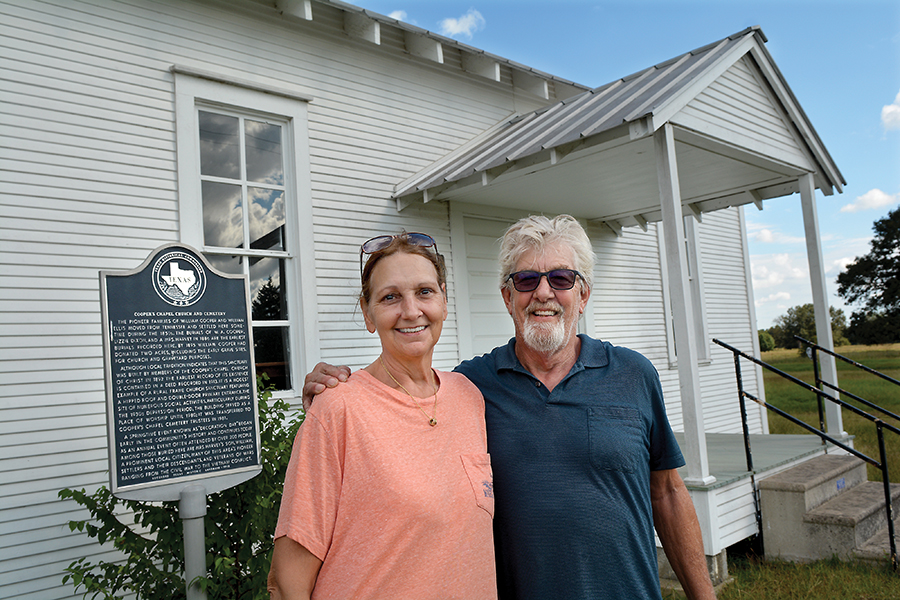
He was 10 in 1962, the last time he passed through Mt. Pleasant on the way to Argo and the church at Coopers Chapel where they buried his grandfather on his mother’s side, James Crabtree.
His great grandfather, Reese Crabtree, died in ’64.
Thinking back to years when his mother’s branch of the family was disintegrating, he studied the square from the same vantage point he’d seen in childhood days when James brought him to town, where the men sat on the shady east side of the courthouse on hot afternoons. There were benches and the men whittled shavings from green sticks.
The courthouse lawn seemed bigger then.
At the Argo store the men sat on stumps in the back around a wood burning stove in winter. Leonard Banks owned the store. In summer, soft drinks were in an ice bath in a box to one side of the door, across from the candy bars. In the back, where trucks or wagons drove up to load feed, he played with the Banks boys. There were stacks of burlap feed sacks.
Somebody had a Nash Metropolitan, an oddly small car then, the first compact sold in America. He’s almost certain that’s what it was, but then he didn’t know what he knows now, which is everything about cars.
In one part of a family story he remembers, the first Crabtrees operated a cotton gin which sat across the road from the store. The gin burned, and its charred remains were still visible in his memories of Argo in the last half of the 1950’s.
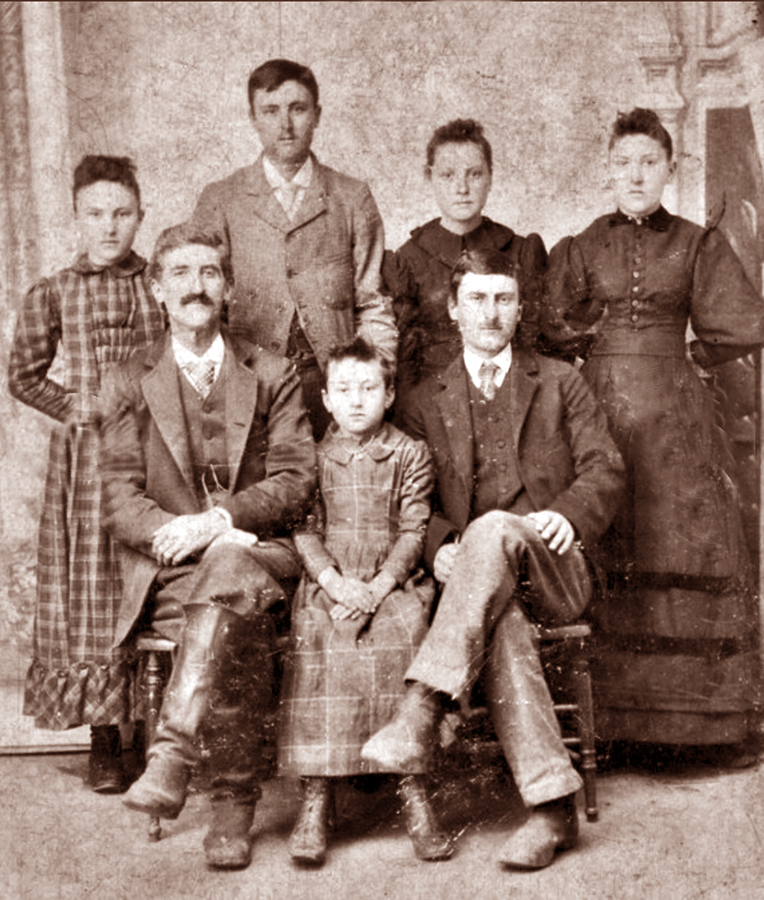
When he was living at the Crabtree place, he was tended by his grandfather and his aunt, a girl named Olivia Ann, his mother’s youngest sister. They called her Jimmie Ann, after her father.
Jimmie Ann played basketball and fed him coins to sit in the back seat and be quiet when she had a date. As young as she was she became the woman of the house after James’s second wife, Ruby Ellen, left.
James’s first wife died.
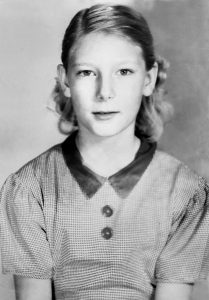
Jimmie Ann seemed grown up then, but now it’s shocking how young she must have been when she first began learning to carry him on her hip because later, when she was killed on the back of a soldier’s motorcycle in Oklahoma, she wasn’t but 16.
That memory’s seared in his skull.
A speeding car ran over them, plowed over the motorcycle from behind.
“It was on a straight stretch of highway where they had drag races,” Reggie said.
Sitting tailgate style outside the courthouse while Teresa worked inside, Reggie kept company with two Pomeranians in the opened cargo hull of a Toyota SUV converted for them to a comfortable kennel, a customized sleeping car that doubles as transportation for their humans.
Being a Pomeranian has its advantages.
A dog curled up at his hip to be scratched behind the ears.
Most of what they know about him, the best available information about who he is, starts here, she said.
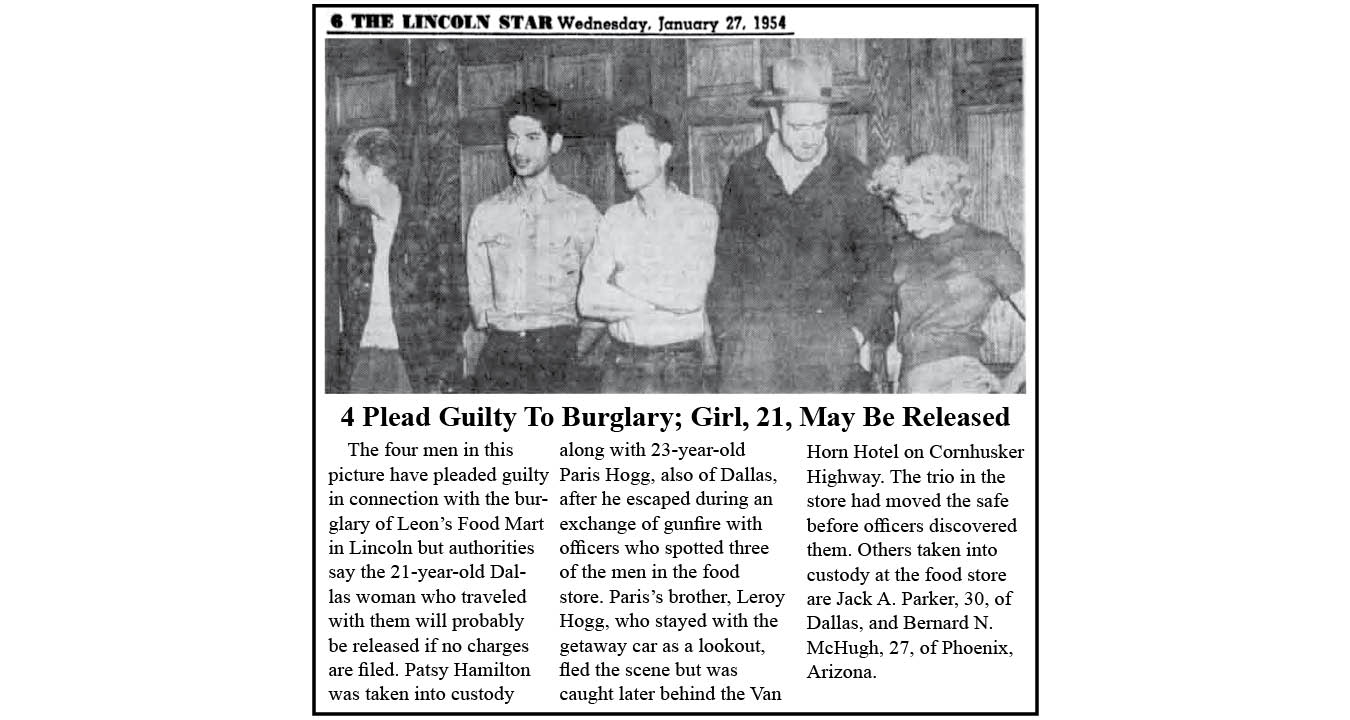
It seems likely the first time he was in Argo coincides with time of his mother’s outlaw months and prison stretch, a crime spree that made newspapers in the Midwest. The men involved were convicted and drew years of time. After some deliberation, authorities booked her and the court convicted her of receiving stolen goods. The Lincoln Nebraska Star account said officers initially questioned whether or not she should have been charged.
“In the short version, the cops followed one of the men back to the hotel and were watching when he knocked on the door. She answered and he passed her some stolen watches,” Teresa said.
The morning she spent in the courthouse, Teresa came up with a new sliver of the family story.
That afternoon, while the dogs played in the shade of the cedar tree by the cemetery gate at Coopers Chapel, she read him the sheriff’s affidavit about heirs and land titles from the 70’s. Years after Reese Crabtree died, there were still questions about his heirs.
“I’m nosy,” said Teresa, a nature that didn’t fit with her extraordinarily private mother-in-law, Patsy Ruth.
When Reggie’s mother was alive, Teresa asked the questions Patsy Ruth left hanging.
Here’s one: In an early version fitting for anybody who might ask, Patsy Ruth Crabtree-Hamilton first told Reggie that his father died when he was two. She left out the part where she shot him. As a matter of fact, he didn’t die immediately, but was left paralyzed from the waist down. He began painting. He lived another nine years.
They eventually found his biological father by a stroke of internet fate. Hamilton was an alias, a name assumed when his father fled Michigan a step ahead of the law and an ex wife who’d filed charges against him for back child support.
When Patsy Ruth died, there were pictures missing from the pages of the albums she kept, dates torn from the corners of newspaper clippings.
Reggie remembers his great grandfather, Reese Crabtree, as the Argo veterinarian, a man whose favorite meal was catfish and sweet potatoes.
“I don’t know if he had a diploma,” said Reggie. There wasn’t an office. He borrowed “Aunt Essie’s” mules to pull his buckboard and whether or not he held any degree, he knew medicine. The people at the places they stopped may have been relatives, friends or customers. In retrospect, Reggie can’t be sure.
From the start, his blood approved of his wife’s curiosity while his heart protected his mother’s shredded virtue, a balancing act whenever push came to shove between the women in his life.
Over time, Patsy Ruth and Teresa became all out, no-holds-barred tolerant of each other.
Besides being a vet, he remembers Reese as a trader. Inventory aboard the buckboard changed over the course of a day’s ride.
Once, Reggie’s mother left him with a family whose older son was an artist.
“I remember drawings he made for a western magazine,” Reggie said. The artist’s father lavished attention on Reggie. “He built a go cart for me. I started getting the idea they planned to keep me.”
Then his mother came back and he was gone again.
Before the trips back to bury his grandfather and great grandfather, the last time he knows his mother came back to Argo was just before his last name was changed to Whitt as the newly-adopted son of an army officer, an instructor at Fort Still, a story remembered with a wry grin. The soldier was his mother’s new husband.
“Maybe she came and got me sometime in the night,” he said. “I just remember waking up one morning and finding out I was in Oklahoma.”
Military records helped Teresa put that new start on a time line with some certainty. Reggie would have been eight, maybe nine the first time he ever went to school, which was in Lawton, Oklahoma.
He’ll turn 70 this year.
The church and cemetery at Cooper’s chapel are alongside a picturesque Farm to Market Road at its intersection with two county roads rising out of the wilds of White Oak bottom, the Titus County southern edge of The Land Between the Creeks.
Reese’s veterinary practice put feathers on the rural economy of the 1950’s when the doctor took chickens for pay.
“I remember that,” said Reggie, strolling the cemetery with Teresa, both of them watching for markers with any of the seven family names she’s found radiating out from the Crabtree lines, marriages creating lots of likely cousins among drivers slowing as they passed the cemetery, making note of visitors with small dogs. Mostly, traffic passing here belongs here.
Traveling by buckboard, he remembers houses along dirt roads that were no more than trails passing through more forests than farms. He remembers more people than names.
A Civil War veteran, Reese’s father was John Thomas, a widower who’d come to Texas with six children and the promise of marriage to a woman who changed her mind when he got to Argo, the story goes. They came from McMinn, Tennessee sometime after 1896 but before 1907 when one of the sons died and was the first of three generations of Crabtrees with markers in a row by the cemetery gate.
Jimmie Ann, the aunt he watched playing basketball in the Argo gym, the girl who fed him quarters to be quiet when she had a date, was taken to Fort Worth to be buried after the motorcycle accident.
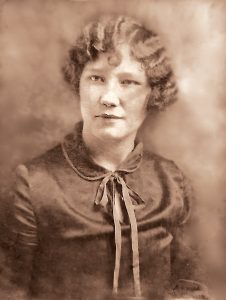
A newspaper account explains the Fort Worth connection. That’s where James Crabtree’s estranged wife, Ruby, was living when he went looking for her after she filed for divorce, hoping to persuade her to come home, according to the first of two newspaper stories about his arrest, trial and conviction.
“Wife Slayer Ordered to State Hospital,” says the follow up story of the trial, a not entirely accurate headline from page 29 of a Fort Worth newspaper account of James shooting his wife as she was leaving work at Convair, where airplanes were built.
The shooting, which wounded but didn’t “slay” his wife, happened about the same time Jimmie Ann showed up in Oklahoma. The date’s missing from the news clipping. The divorce was final in 1960. Mr. Crabtree was sent to the state hospital at Rusk, most likely incarcerated when his youngest daughter was killed in Oklahoma and sent to Fort Worth to be buried.
The first newspaper account of the shooting is sympathetic to James, describing a broken hearted man driven mad by his passion for the woman who left him.
“The way it reads, all he wanted was keeping his family together,” Reggie said, measuring the words of a story from the era of sensationalized crime writing intended to provide the most provocative headlines a news stand hawker could pitch on city street corners.
On the afternoon at Cooper’s Chapel, “I wish Jimmie Ann could have been buried here,” Reggie said.
Ruby, his grandmother and Jimmie Ann’s mother, was buried in Pasadena, Texas.
Teresa’s searching located Reggie’s biological father buried back in Michigan, the place he left when he changed identities and came to Texas.
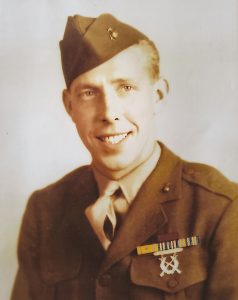
She found Army Sgt. Raymond Whitt, the soldier who adopted and gave Reggie his name, buried in his native West Virginia.
His mother, Patsy Ruth, is in an urn in the rolling home parked at the beach.
In Texas City, there’s another urn with the ashes of his half brother Jimmy, the son of Patsy Ruth and Sgt. Whitt, a man his mother married and divorced three times.
“The family’s so scattered now,” Reggie said, then slipped away into a story from better days, when he was a boy among the men camped on White Oak Creek.
Reggie was whipped for eating their fishing bait.
Not that he was hungry, just curious.
“I was watching worms crawling around the can and I just asked if anybody had ever eaten one,” said Reggie. Finding that nobody had, it seemed to him that he should, so he did, provoking the whipping.
Years later, his mother was likewise intolerant of his wife’s curiosity. Time and again through the years, Teresa used shreds of new information she gathered to leverage more from her mother-in-law.
Reggie grew up street savvy, learning from his mother’s ways. He hustled shoe shines in the bars where she worked.
One time as an adult, when he couldn’t prove up his identity to the satisfaction of the office granting passports, rather than producing records Patsy Ruth delivered a counterfeit passport.
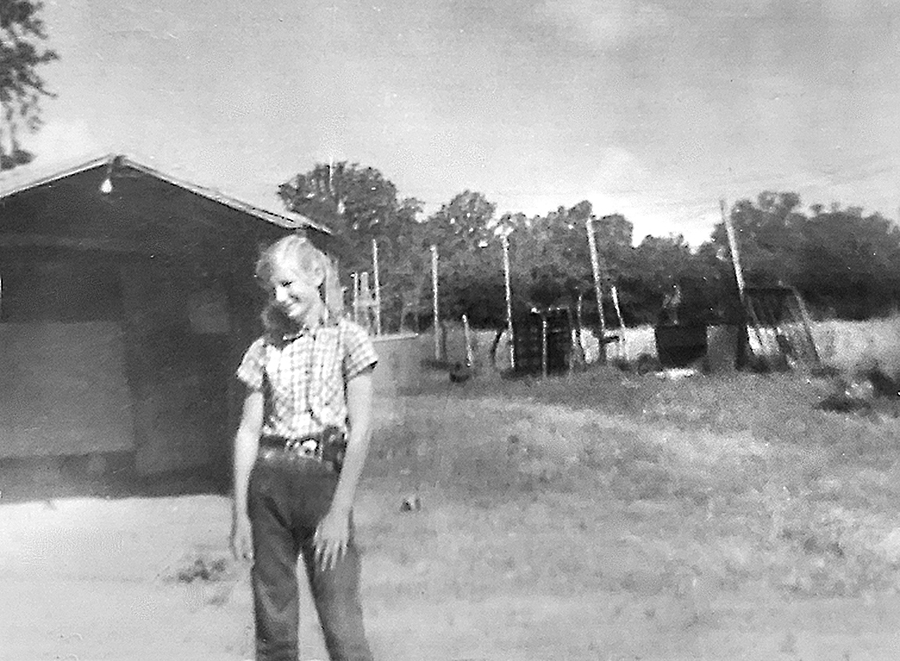
A good looking blonde, Patsy Ruth left Argo at 14 and may have been 15 when she made her way out to the Jacksboro Highway.
Chances of finding trouble and good times in equal parts ran neck and neck in strings of bars on the road running west out of Fort Worth in the late 40’s and 50’s.
When Patsy Ruth was a girl turning woman early on, the Jacksboro Highway was the backdrop for the honky tonks of the Texas underworld, colorfully described in a Dan Jenkin’s novel featuring a cast of bookies, pimps, gamblers and dope dealers swirling around his pure-hearted but street-wise heroine, the woman who held the place together.
In his telling of it, anytime authorities felt a need to feed the media appetite for gangsters and crime stories, there’d be a vice squad raid in headlines making the “Fort Worth Light & Shopper,” a thinly-veiled reference to the Fort Worth Star Telegram from the novelist’s earliest days as a semi-legendary sports writer.
In the novel he wrote about it, the difference in his heroine, Juanita, and Patsy Ruth was that Argo-born Patsy Ruth’s real.
And her story’s darker than Jenkins’s story, a rawhide Texas fairy tale of a single mom working Herb’s on the Jacksboro Highway in his classic novel, “Baja, Oklahoma.” Her benevolent boss, Herb, recognizes her value to the business and willingly passes authority over the till to a woman determined to put a daughter with a genetic bend toward adventure through TCU.
Patsy Ruth’s story lacked a fairy tale edge.
Here we go.
Hang on.
Jailed in Michigan for unpaid child support, the minute he made his $25 bail Elton Apsey skipped town and fled to Texas where he changed his name to Thomas Jefferson Hamilton and met Reggie’s mom.
Fifty years later, after Teresa posted a story a story on line about Patsy Ruth’s marriage to a “cadet” training as a peace officer in Texas who’d been shot by his wife, the children from his first marriage wrote back that the Thomas Jefferson Hamilton in Teresa’s sounded a lot like Elton Apsey, the father they described as a womanizer with a passion for night life. He’d abandoned his family for a time, then come back home paralyzed after being shot by a woman he’d married in Texas. He said they’d had a son named Reggie and they sent photographs that raised goose bumps.
“We had copies of the same baby pictures of Reggie that his mother had kept,” Teresa said.
Elton Apsey, alias Thomas Jefferson Hamilton, most likely met Patsy Ruth somewhere on The Jacksboro Highway, Teresa said. He was 32 and she was 19 when they married.
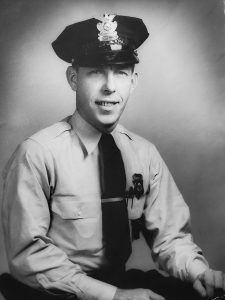
“I think of him as smooth,” said Reggie, who now has a portrait of him in the uniform of a peace officer, almost a good enough con to make the ranks as a Fort Worth lawman, reasons Teresa, who found a helpful historian in the Fort Worth Police Department.
“We came up with a portrait that could have been made when he was training, but no record of him actually serving on the force,” she said.
Before Patsy Ruth’s father made Texas crime-story headlines for shooting his second wife, she made the front page of the Star Telegram for shooting her first husband.
“She never did time for it,” said Reggie. When his half sisters from Michigan came to visit half a century later, they said his father said the shooting was justified.
After shooting him while they were in bed, “I asked him then what he wanted me to do,” Patsy Ruth told the Fort Worth Star Telegram. “He said, ‘Call the police and an ambulance,’ which I did.”
News accounts varied.
“The attractive, 20-year-old blonde told officers her husband came home, put on his best clothes and started to leave,” reported the July 25, 1952 El Paso Herald Post. “I asked where he was going and he told me he was going fishing, she told officers. ‘People don’t put on their best clothes to go fishing. Furthermore, he didn’t have a fishing pole.’”
Patsy Ruth next made news with four members of the safecracking Parker Gang in the January 23, 1954 Fairbury Nebraska Daily News. Those taken into custody in Lincoln were suspected of an earlier heist in Fairbury in which “the same type explosives and wire had been used as in the Lincoln job.”
She served eleven months in prison.
It wasn’t long after the move to Oklahoma that Jimmie Ann came to live with Patsy Ruth’s new Whitt family in Lawton.
“She was killed not long after that,” Reggie said.
There’s a disproportionate amount of violence in the stories Patsy Ruth didn’t tell her son.
Teresa found her second husband, Sgt. Whitt, in a cemetery in West Virginia, not far from the home he left before he was old enough to join the service, but tried anyway, then made his way as best he could until he was old enough to get in. Later, before Patsy Ruth was done with him, they were married and divorced three times in seven years.
After she filed for the last divorce in 1968, he went to war in Vietnam and stayed on for multiple combat tours.
“At Fort Sill, he was a teacher,” Reggie said, remembering Oklahoma. “Fort Sill was the last stop for GI’s on their way to Vietnam. He took me with him when he taught classes.” Training involved exercises in a Vietnam village, or a facsimile of one on the base.
There were lots of explosions, live fire exercises with various sorts of artillery. He remembers parachute jumps.
The soldier who adopted him “was a good guy,” said Reggie. On and off again as it was, depending on marital status, the string of time with Sgt. Whitt was one of the more stable phases of Reggie’s adolescence.
Between her marriages to Sgt. Whitt, he was along for the ride when Patsy Ann pulled out for points east, going as far as Florida before working bars on a trail back to Oklahoma.
“She owned a place in Dallas once, somewhere in old Oak Cliff,” Reggie said.
Home from Vietnam, Sgt. Whitt found Reggie and they talked on the phone. When Patsy Ruth found out she demanded that Reggie not follow up with their plans to meet. Had he known he’d never see him again, he might have defied her.
He didn’t.
Raymond Whitt, Reggie now knows, left West Virginia determined to be a soldier as a way to escape a life sentence working in the coal mines. From relatives Teresa found, he learned that for a time, before meeting Patsy Ruth, who demanded nothing less than all he could give, Sgt. Whitt sent money back home to his family.
The way his life ended, he went back to West Virginia to be buried where he killed himself.
“It was hard to find him because they had the dates of his birth and death reversed on his tombstone,” said Teresa, who worked through the Veterans Administration to have that corrected. They got a new military marker for him. The Veterans Administration searched his war record and sent Reggie his medals. He was a decorated combat veteran.
On a beautiful afternoon on the lawn of a country church, a shadow passed over Reggie, calling back his half brother Jimmy, the son of Patsy Ruth and her soldier, the infant and growing boy he tended the way Jimmie Ann had tended him.
“I left him behind when I married,” Reggie said, a soft voice tinged with confession. “I shouldn’t have done that.” As adults, they reconnected.
The way they were separated, at 18 Reggie was pumping gas in Oklahoma where he met the 16-year-old daughter of a paint and body man who took him under wing, training him.
The girl’s home life was lousy.
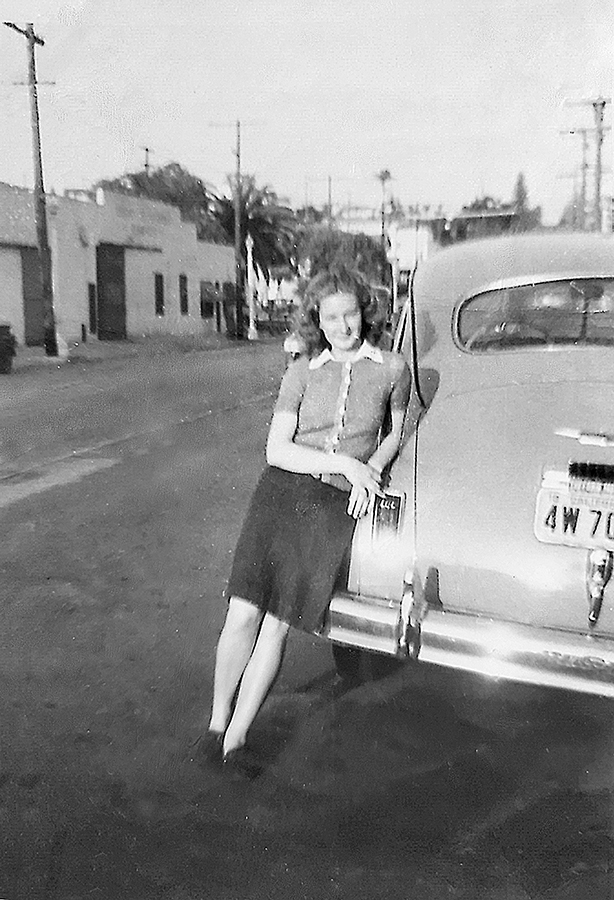
“I was tired of life on the road and she was tired of a step mother who didn’t like her,” Reggie said.
They married and stayed in Oklahoma when Patsy Ruth moved on, taking Jimmy with her.
They stayed together for 13 years, time during which he worked on cars and learned to paint in his father-in-law’s shop. They had children and he maxed out making $65 a week before the marriage evaporated and he moved on, making better money that financed the string of his wild years, a lifestyle he understood.
His mother, he said, brought out the wild side of Sgt. Raymond Whitt.
“They weren’t good for each other,” he said.
During the time he was single Reggie worked days in body shops and nights building dragsters. He raced and painted show cars. He bought and he sold.
In all of the years that Patsy Ruth kept her story to herself, she never imagined, nor did she ever know the extent to which Teresa began unraveling the tale.
“What she never counted on was the internet,” said Teresa, an animal in cyberspace archives, a new arrival studying the family and characters in Reggie’s life from the outside looking in.
In the quarter century since Teresa came, they’ve put it together. In keeping with auto world status where he emerged as a high end painter wheeling in show cars. Drawn into the lifestyle of his customers, he became a big game hunter. There was travel involved.
Teresa evolved into a competitive fisherman, a one-time winner of the Phuket Tuna Tournament there in Phuket, Thailand.
“No kidding,” she said. “I had a friend working in China, we both liked to fish so on one trip after we’d done all the tourist stuff, we went to Thailand and fished a local tournament.”
Meanwhile, back in Texas, Reggie and Teresa put together the dream house, a hunting lodge theme with chandeliers he designed, artwork she selected. When they sold it, his daughter wanted the paintings. His son came for the trophy mounts, which there was no room for in the 38-foot tour bus on a Freightliner frame – he can put you to sleep explaining why the specs on this particular model make it the most practical choice.
It tows along the Toyota when they’re rolling. Its semi-permanent address is beach front. There’s a cozy Pomeranian nook.
It wasn’t that he objected to a return trip to Titus County – when she put it on the schedule, he came willingly along, but same as ever wondering why and what for, big questions lingering while he was sitting on the courthouse parking lot, tailgate style in a Toyota, studying the town square.
It was picturesque, serene, a man and a couple of dogs on the start of a day in no hurry to get anywhere, in particular.
Curious, I stopped to see who he might be.