Gunfight at Naples saloon
By Hudson Old, Journal publisher
Naples, Texas – It was December 3,1898, sometime just after dark. The saloons along Front Street, across from the railroad, entertained a raucous Saturday night crowd.
A.L. Cole, who ran the dinner in back of Caley Mathews testified later that at the time of the shooting, Vista McCoy had just bellied up to the counter and ordered his supper.
He remembered it because Mr. McCoy “made a habit of eating at this restaurant and never paying a cent.”
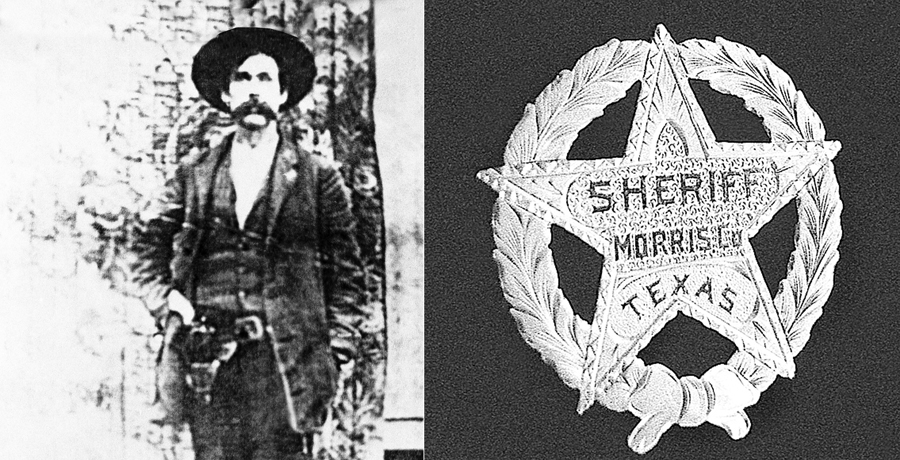
W. C. “Smokey” Kennedy was told all his life that his grandfather, former Morris County Sheriff John High died the night he was shot in a Naples saloon.
Now the story unfolded before him in an aging court transcript.
A.L. Cole said he remembered it all, the way details come into sharp focus at a moment of crises.
McCoy, Cole said, couldn’t have seen the gunfight he claimed to have seen because he wasn’t out on the street. He was standing at the counter and Henry Williams, the cook, was just fixing his plate.
Bill Mays and Bob Lewis were playing billiards. Traffic on the back stair case, up to the gambling room above Mathews Saloon, was brisk.
Testimony summarized by the court reporter mentions at least three saloons open and running along the street that day— there was Mathews Saloon, J. B. Wilder’s Saloon and Sol Davis’ place.
Trouble between John High, the former sheriff, and Joe Thomas, a black man, had been brewing all week testified J.M. Stewart.
Stewart testified that trouble began with a dice game.
On the Monday prior, he said, they had gambled. John High, the ex-sheriff, accused Thomas of shooting with loaded dice. They’d exchanged unpleasantries.
On Wednesday or Thursday, Stewart said, Thomas said High “could not take his money away from him.”
Around mid afternoon on the following Saturday, the men met in the upstairs gambling room. Stewart named others present — Circisco Godfrey, John Nunn and himself.
Ready to shoot, Stewart put his money down and called for someone to fade him. Both High and Thomas reached to put their money up –– throughout the testimony, witnesses struggle to recall if it was a nickel or a dime.
High ordered Thomas to “take down his money,” Stewart said.
“I’m going to fade him,” High said.
” I put my money up first and I’m going to let it stay,” Stewart quotes Thomas as saying, “at which time High told him he was going to cut his throat,” the court record states.
High came out with a knife and the two men struggled over the weapon, Stewart said. When Thomas turned to run, High went for him, catching him where the narrow staircase turned.
High swung his knife, making a two inch gash in Thomas’ scalp, but Thomas managed to escape.
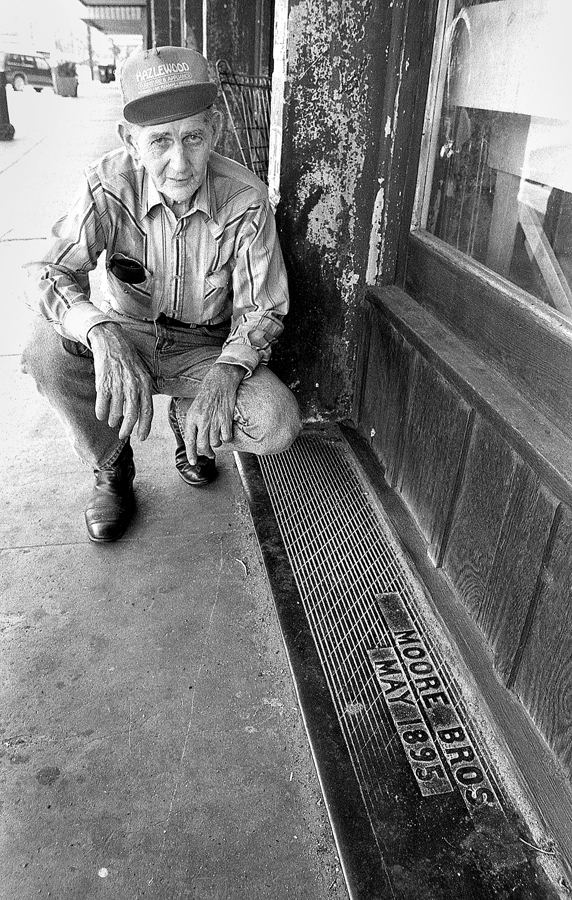
Stewart testified that he followed the defendant out and met him by Moore Brothers Store.
” I told him to leave town because if he returned to the game room, John High would kill him,” Stewart said.
Thomas said he’d done nothing to be killed for and would go when he got ready.
Both men lingered in town until dark. A number of witnesses testified about both men borrowing weapons. Other witnesses impeached the testimony of everyone who put guns in either man’s hand.
High is said to have been armed with a 44 Navy Colt.
Thomas showed his bleeding scalp to a man named Moon who lent him a sidearm of unknown caliber, referred to in court records as “Old Purdy.”
The presiding judge refused the defense’s special charge to the jury that the scalp wound Thomas suffered only hours before the gunfight rendered him incapable of “cool reflection.” It was a key point in the appeal.
After finding him guilty, the Morris County court that heard Thomas’ trial sentenced him to life in prison.
W. C. Singleberry testified that less than an hour before the shooting, he’d heard John High say he would kill Thomas that night. He says he didn’t take High’s threat seriously, but he did have a drink with Thomas to discuss the matter.
But around 7 or 8p.m., a number of witnesses agree, Joe Thomas and a man named Perry Neal were moving from saloon to saloon looking for John High.
Stewart testified that minutes before the shooting, Thomas looked in Sol Davis’ saloon and said, “He is not here,” meaning High was not there. In the appeal, it was questioned whether that was sufficient to determine Thomas was looking for High.
The men found each other in front of Wilder’s Saloon.
The witness Will May said High pulled the 44 colt he’d borrowed and that he and Thomas struggled over the gun and that it discharged.
Thomas then pulled “Old Purdy,” and shot high once, high in the left breast, before turning and running. High returned fire, getting off a number of shots as Thomas fled.
Stewart and McCoy said Thomas was hiding behind a steel pillar in front and to one side of Wilder’s Saloon when High stepped out onto the sidewalk.
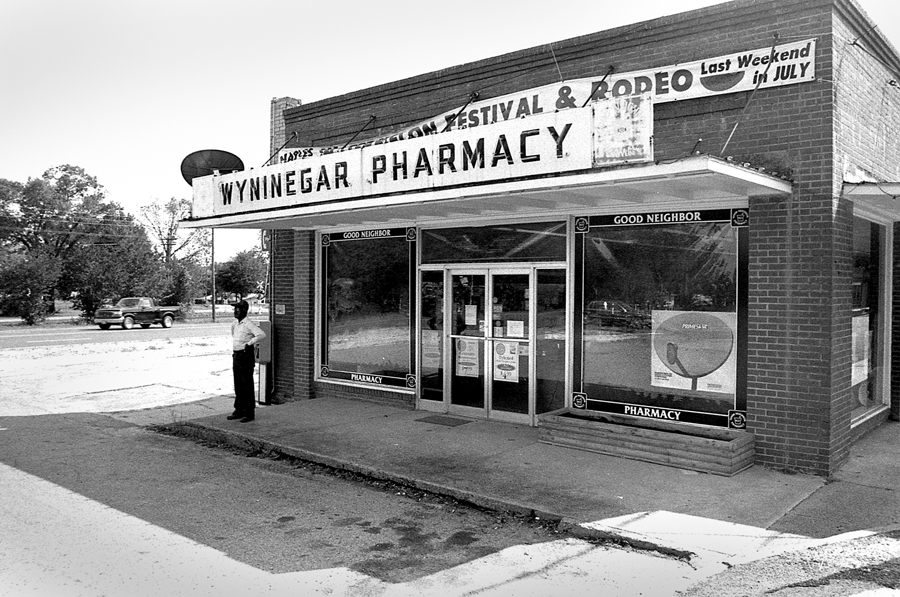
Thomas, they said, stepped from cover, jamming “Old Purdy” against High’s chest and firing.
High, they said, then pulled his pistol, opening fire as Thomas ran, getting off five shots before he turned and walked into Wilder’s Saloon.
“He has shot me,” High said in the account told by McCoy and Stewart.
Looking at Davis, John High said, “I don’t know how bad I am hurt.”
A hundred and twenty-five years ago, the Texas Court of Criminal Appeals nullified the Morris County murder conviction of Joe Thomas in the killing of John High.
In a ruling dated Jan. 24, 1900, the appeal court said Morris County Judge J.M. Talbot “was in error to refuse to instruct” the jury that if they determined Thomas incapable of “cool reflection” at the time of the murder, he could only be convicted of manslaughter.
In writing the appeal, the law firm of Sheppard, Jones and Sheppard argued that the backbone of the state’s case was built on prejudice.
Thomas’ attorney’s pointed out that one of the state’s witnesses helped pay for a special prosecutor.
The appellant argued that evidence showing that Thomas was hunting High shouldn’t have been allowed.
The appeals’ court opinion notes other testimony in which Thomas “was preparing to go home” when High stepped from a saloon and fired the first shot at him.”
And finally, in wrapping up its opinion that the fight between Thomas and High earlier that day made possible a conviction for manslaughter, the court interpreted the letter of the law concerning cool and calm reflection. Sheppard Jones and Sheppard’s arguments that the state’s case was built on prejudice wasn’t addressed.
“We are aware that our statute says that the provocation must arise at the time of the homicide, and must not be the result of a former provocation; yet, in our opinion, the statute includes such provocation… so near in the point of time to the homicide as not to allow the mind of a person of ordinary temper... to become cool and composed before the act of killing…”