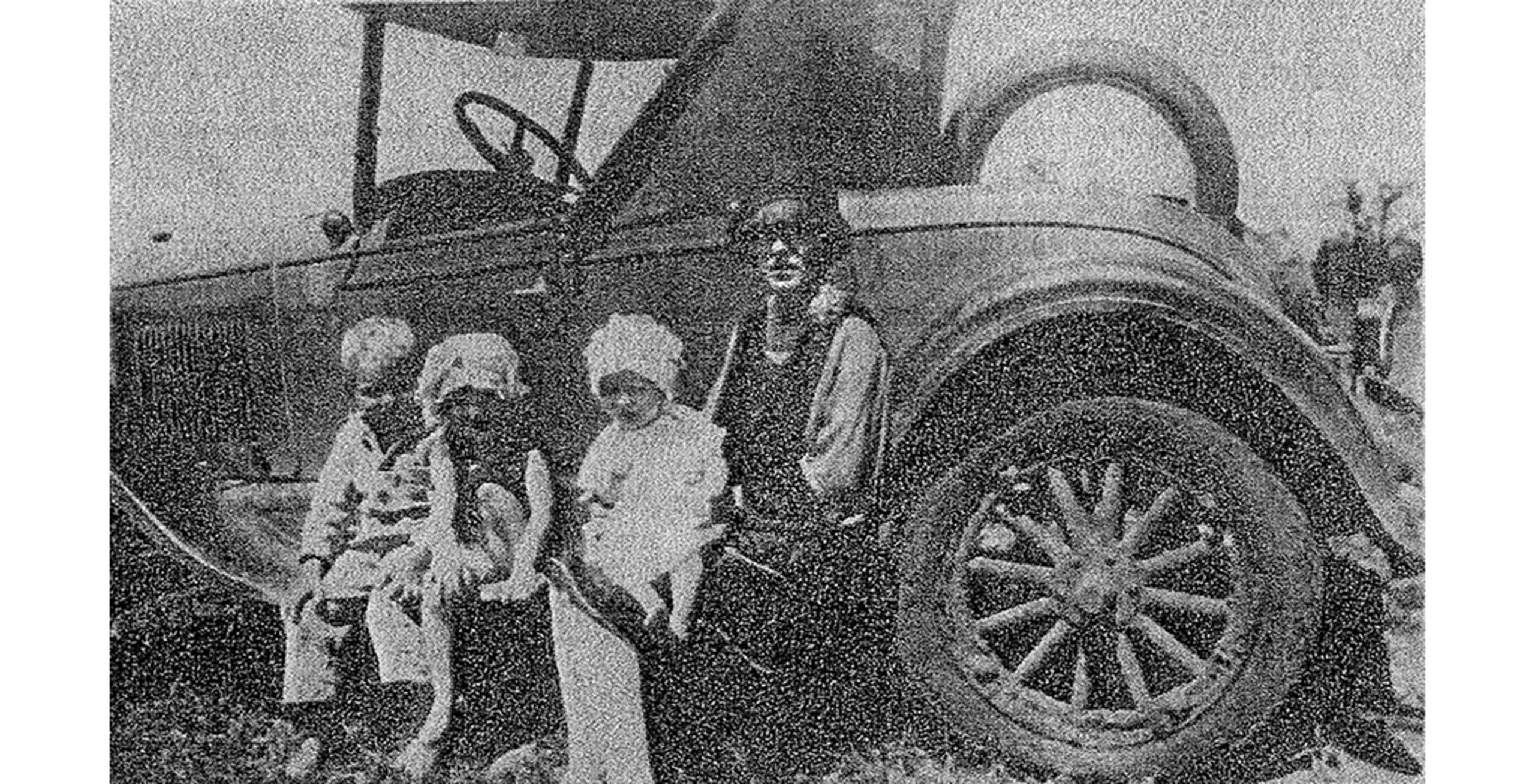
Above Photo: Left to right, James, Pauline, Lloyd, Berniece Randi Anderson, About 1926. Photo from The Story of Corporal James R. Anderson by Charles G. Anderson Sr.
East Texas Journal, Revised By AI Robot
By Hudson Old, Publisher
A Story Rooted in Cooper’s Chapel
To understand Corporal James Rudolph Anderson, one must first understand Cooper’s Chapel.
During the 1920s and 1930s, Cooper’s Chapel was a close-knit farming community in northeast Texas where families depended on one another. Most homes lacked modern conveniences. Roads were often little more than dirt trails. Families raised gardens, canned food, butchered livestock, and worked from daylight until dark.
It was in this environment that James Anderson was born on May 21, 1922, to John Raymond Anderson and Berniece “Randi” Anderson. He was the oldest child in a growing family that eventually included Pauline, Lloyd, Donnie, Charles, Beth, Lula Faye.
During the Depression, work was difficult to find. James Father, John Raymond Anderson traveled to Oklahoma seeking oilfield employment while Mother stretching every dollar and ensuring there was food on the table. As oldest son, working the farm fell to James.
His brother Charles “Choc” Anderson later remembered that James devoted himself to helping support the family. Even as a teenager, he was looking for ways to earn money and ease the burden on his parents.
Leaving Home
When opportunities became available through the Civilian Conservation Corps, James joined the program.
The program required sending most of his earnings home.
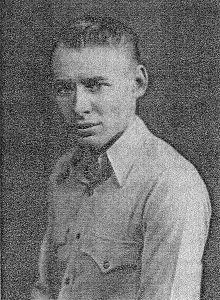
James Anderson CCC Camp
James went into military in 1942, during WWII.
News traveled slowly late in 1942. Families often relied on letters and telegrams.
When his brother died, his service prevented his being at the funeral.
He carried his grief with him across North Africa, Sicily, Italy, France, and Germany.
For a man raised in East Texas, the deserts of North Africa seemed like another world.
His letters reveal that home remained constantly on his mind.
Writing from North Africa in 1943, James said,
“Say, Mom, you can send me a package now if it don’t weigh over five pounds … I would like to have some homemade candy.”
On September 18, 1943, he recorded his landing at Salerno, Italy, during one of the war’s major operations. James drove supplies to the war front.
James spent countless hours transporting supplies and equipment.
He frequently drove roads that were exposed to enemy aircraft and artillery fire.
Letters home reveal his character more clearly than any military record.
He focused on family.
“Sure would like to be there to help you,” he wrote that October.
His letters worried about his parents.
They worried about younger brothers and sisters.
They worried about crops, bills, illnesses, and countless other concerns back home.
He joked about his younger brother Donnie:
“I believe Donnie is bigger than I am now. He may show me who is boss when I get back home.”
Through France and Into Germany
In August, 1944, he landed in France. Enemy aircraft attacked.
“The sky was lighted up like the Fourth of July. We spent the night in a foxhole for fear that shells would get us.”
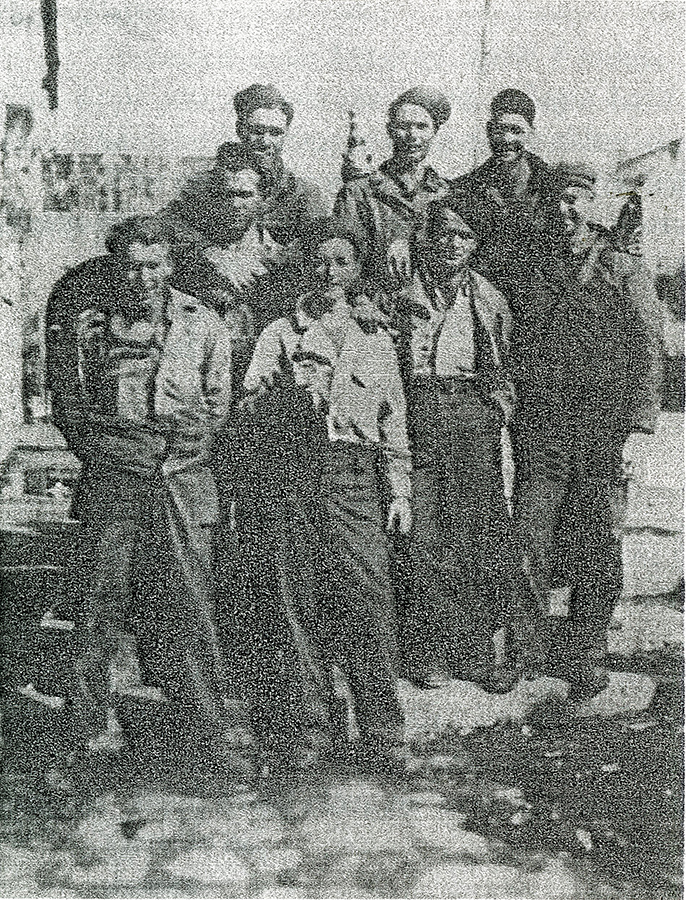
James Anderson (Lower Left) is show with some of his friends. Probably taken in Italy or Southern France towards the end of the war. Photo from The Story of Corporal James R. Anderson by Charles G. Anderson Sr.
Returning Home
When the war ended, James finally returned to Texas.
Friends had married.
Children had grown.
Two close friends, Nolan Carson and James Barnett, were killed in an automobile accident.
James escaped only because he had chosen to go fishing instead of riding with them.
Family, Faith, and Legacy
Life after the war was devoted to family.
James married, raised children, worked hard, and became part of the fabric of the community he had left years earlier.
On March 20, 1996, he died at the age of 73.
He was buried at Cooper’s Chapel Cemetery among family members, neighbors, and friends whose lives had been intertwined with his since childhood.
The boy who grew up working the fields of Cooper’s Chapel had crossed oceans, survived war, witnessed history, and returned home.
Based on the article’s focus on Corporal James Rudolph Anderson, his East Texas roots in Cooper’s Chapel, World War II service, family letters, and lifelong legacy, here are SEO elements optimized for both local history readers and broader WWII-interest searches.