Show girls sweeten Sugar Hill, Texas
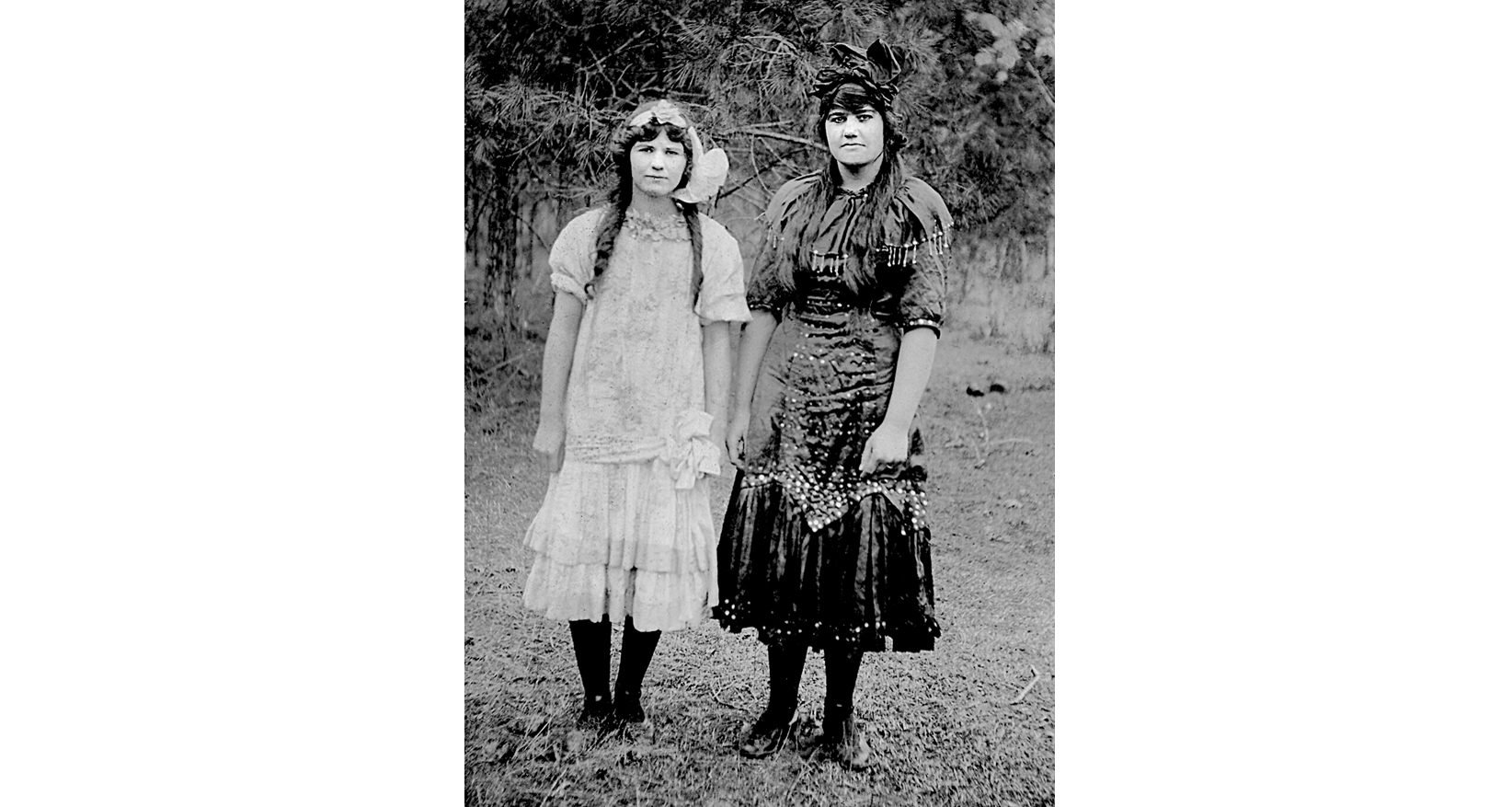
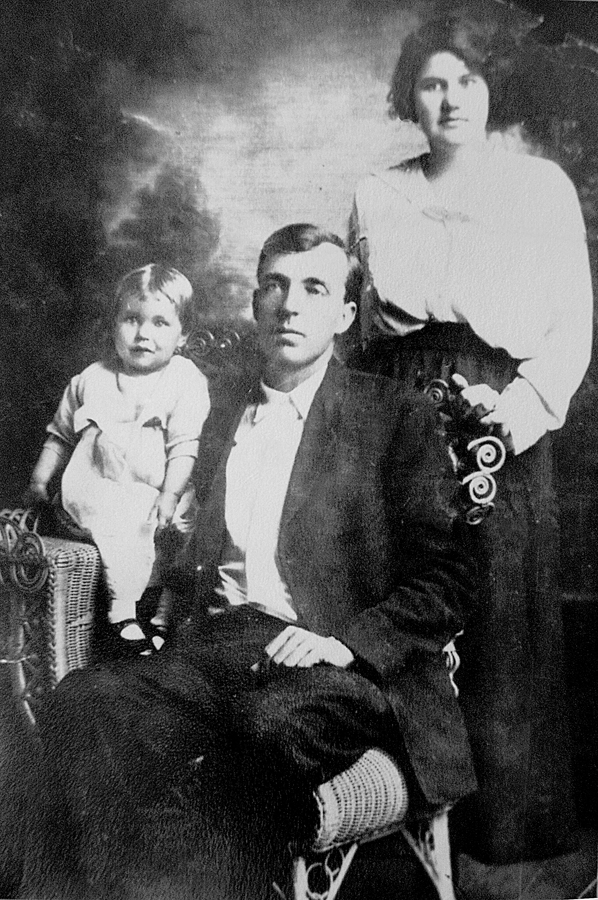
In the photo Above are Bennie Elder and Augusta Mae “Gussie” DeLockery, circa 1918. Bennie was
one of the three performing daughters of Pleas Elder, who brought the Elder Family Show to Sugar
Hill where their days on the road ended. Bennie married Febert Anschutz, a roustabout with the show and both remained here.
From The East Texas Journal, July 2015
By Huson Old, Journal Publisher
A swath of the stream of Blalocks either living in or coming from Titus County can be tracked back to the eight children of A.T. “Uncle Buck” Blalock, seven of whom were sons.
“He was of that generation that knew how to make its own fun and live off the land,” said a grandson, Jean Leo Blalock. “I remember watching him make fence posts – he’d cut a red oak in six foot lengths he’d split into four posts each using an axe and wedges. As hard as he worked, I remember the first time I saw his tender side. I was ten or so, old enough to know why a stud horse was mounting a mare in the pasture, but it confused a girl cousin who innocently enough asked him what was happening.
“They’re seeing which of them is taller,” Buck said.
“Growing up in our home was something like magic,” said Rose, his only daughter.
It was a week before Buck Blalock died in 1986 that the late Dr. John Ellis brought Rose when tracked me down with a picture of Buck behind an ancient plow mule her mother called Old Joe because she refused to call him what Buck called him.
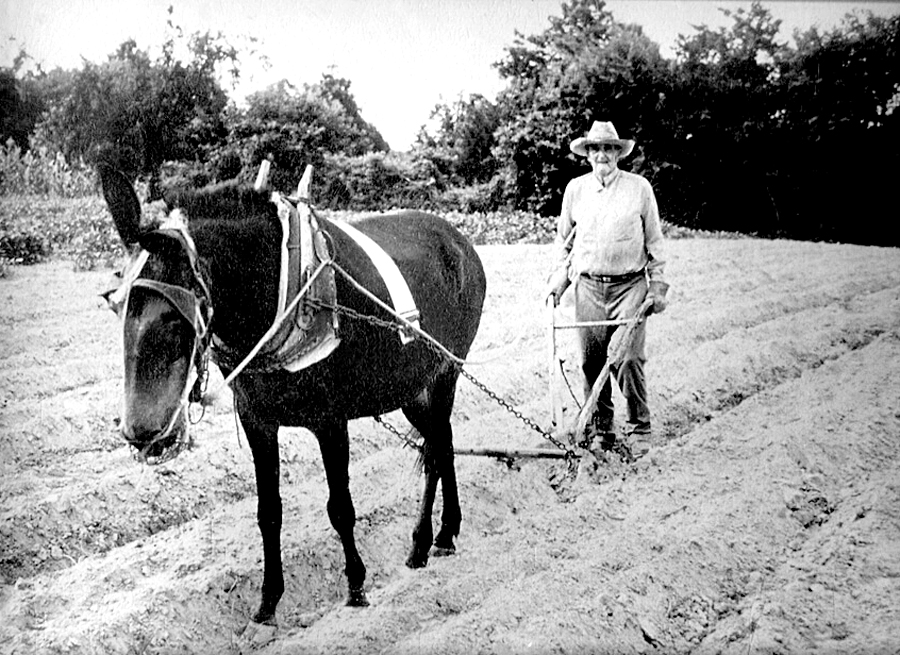
“He called him Febert’s Old Ass,” said Al Riddle, Rose’s son, “and I can tell you why. Grandpa had made a plow horse out of a big horse nobody could break to ride. When that horse was 20 it still pulled like a three-year-old. There was a storm one night and lightning hit him and killed him. Febert Anschutz had an old mule he’d put out to pasture so Grandpa brought him over to hook up to a fresno and dig a grave for his horse.”
The mule was smooth mouthed – no teeth, and the story was that Buck ground his mule’s feed, fed him by hand and plowed with him through the years that the man and his mule with two names became something of an inside joke in the tight-knit community of Sugar Hill.
This all comes to mind again with another photo turning up 30 years later, a shot confirming the long-told tale of the elephant with the traveling show that brought to Sugar Hill the musical whimsy of the dancing girl destined to be the long-ago bride of the widower Buck Blalock.

“That old man’s life,” Dr. John Ellis said the day he brought me the picture of the man with his plow mule, “has always been as clean as that garden.”
There was more to that day than telling a story; at the same time Dr. John was tending Buck on his death bed, I suspect he was likewise tending his already grieving daughter Rose, maybe just letting her know the story of her father was one important enough to tell.
She said Buck and her mother, Gussie, were married 65 years and that when she’d died two years before it took something out of Buck that had never been missing before, and she understood why.
“When we were all there, home was fun and music and dancing,” Rose said. “Daddy was on the school board and it seemed there was always a teacher boarding with us. We lived in a house he’d built and however tight it got, there was always enough room.
“I remember trips to Louisiana, mama riding in the back of the truck with all the kids, making up games we’d play about things we’d see along the road. When we got tired of playing she’d sing to us.
“We never stopped at cafes. We’d always have butcher counter cold cuts, cheese, crackers and onions. We’d stop and picnic on the road,” Rose said.
She remembered that when his big plow horse died and everybody said he could still get something for him for soap at the plant in Ladonia, Buck grunted with contempt.
“Nobody’s making soap out of my horse,” he said. He had his priorities. His own father’s history was always a mystery to his children, she said, as if he were a character that didn’t exist.
It might have been why kids were important to him, she reasoned.
“If there was some loose kid in the community headed for trouble, Papa took him under wing,” Rose said. “If there was such a thing as child labor laws, he never knew it. He’d hire a boy and treat him like a man and that’s how they responded.”
Buck was never rich, she said. Once, when times were lean, she said he decided he’d “humble” himself, go to town and draw a check working for the Depression-era public Works Progress Administration.
“He made it one day,” she said. “He couldn’t abide not able to take charge of whatever he was doing.”
His ways rubbed off on sons and grandsons, Dr. Ellis said.
“When his son Charlie came to Mt. Pleasant to start high school, he was a phenomenon of his own,” Dr. Ellis said. “He got a job as a janitor to pay rent for a room close to the school. He got up every morning of the winter at 4 a.m. to fire up the boilers and turn on the heat. He swept the floor before classes and played football after school. Somewhere in there, he made time to study.”
The last two years of her life, Gussie was in a nursing home. Buck was still up and able, but he was miserable, Rose said.
“He’d stay home a few days, then he’d go up to the nursing home and spend a few days. He finally just moved in with her there,” Rose said.
The week before he died, Rose was in the hospital room when Dr. Ellis came in on his morning rounds.
Dr. John checked over his patient, then took him by the shoulders and shook him, she said, shook his big frame hard, pulled his eyelids back, hollered in his ear.
“Buck!” Dr. John bellowed, “Do you know who this is? It’s time to break up the garden, get ready to plant cabbage.” Buck moved his hands, but nothing more.
The family doctor let his patient rest and brought the daughter to town to share a story.