Frontier history spans 180 years on Daphne Prairie
Daphne Prairie
From the East Texas Journal, August 1994
In 1767, a French explorer who traveled the Cherokee Trace from the Spanish settlement at Nacogdoches northward into Oklahoma described it as a wilderness road, wide enough for four horsemen to ride abreast. According to the map Louis B. Gohmert prepared for Traylor Russell’s History of Titus County, the trail intersected Ripley Creek near the present-day Franklin-Titus County line. The wilderness road continued northward across what’s today called Daphne Prairie. In the 1830s, the Indian trail was a route that led here, to the then Frontier of the Republic of Texas.
Shiloh, Texas – A Kansas cowboy squatted on his heels, using a stick to trace out the name and weathered date on a tombstone while local historian B. F. Hicks watched.
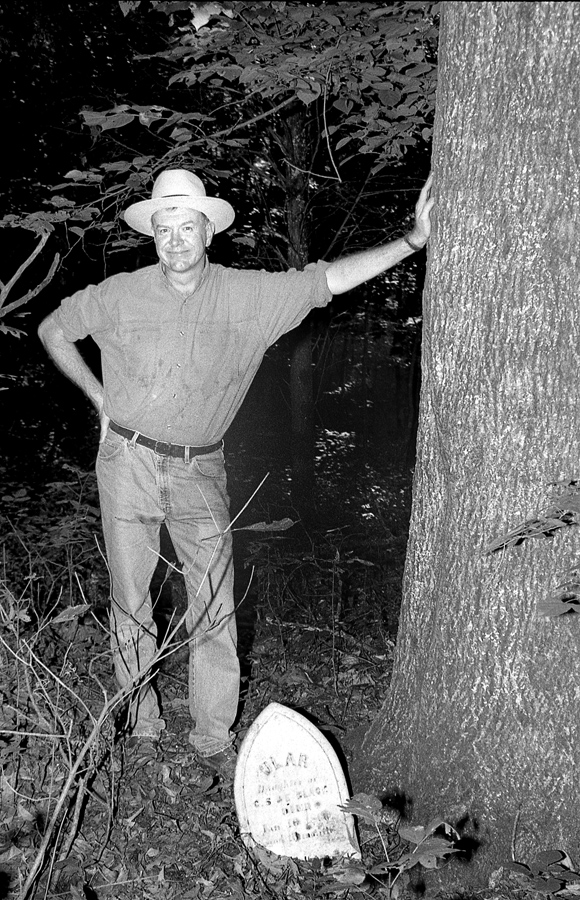
In his spare time, Mr. Hicks practices law in Franklin County. Hearing of Wes Holland’s discovery — or re-discovery of the Shiloh Cemetery, the counselor gave his afternoon schedule a quick check.
He instructed his secretary to hold his calls, and changed from his suit into boots, jeans and a straw hat.
The directions led north and east from Mt. Vernon, out onto Daphne Prairie, a geological hiccup, a natural expanse of grasslands meandering over several thousand acres through the forests along the Franklin-Titus County line.
Wes Holland’s home sits atop a breezy rise in the prairie, on what’s locally known as “The Old Beck Place,” some 3,000 acres put together as a cattle operation by the late John B. Stephens.
According to what Mr. Holland’s heard since coming here, Mr. Stephens pieced the ranch together from nine tracts of land. “It wasn’t the best land for farming,” said Mrs. Mildred Cage, whose family once owned land at the ghost town of Shiloh. “My dad lost crops to the floods along Ripley Creek. He bought another farm and left.”
Ripley Creek marks Daphne Prairie’s eastern edge on the northern end, where the prairie nudges up to U.S. 67. Just east of Mt. Vernon, a state historical marker notes the site of the Ripley Massacre, and looking north across the field from there, you can see a bit of what the prairie once looked like.
“Most of the native prairie grass has long since been plowed under,” observed Mr. Holland, “but there’s still several prairie hay meadows about. Mr. Frank Hunnicutt puts up hay off one of those meadows every year.”
Mr. Hunnicutts’s in his 60s, and he remembers his family farming the Ripley Creek bottom when he was a boy.
“We raised cotton, corn and a lot of grain crops to winter our cattle,” he said. The last of the farming played out sometime around War World II era. Nobody made precise notes — families just moved on.
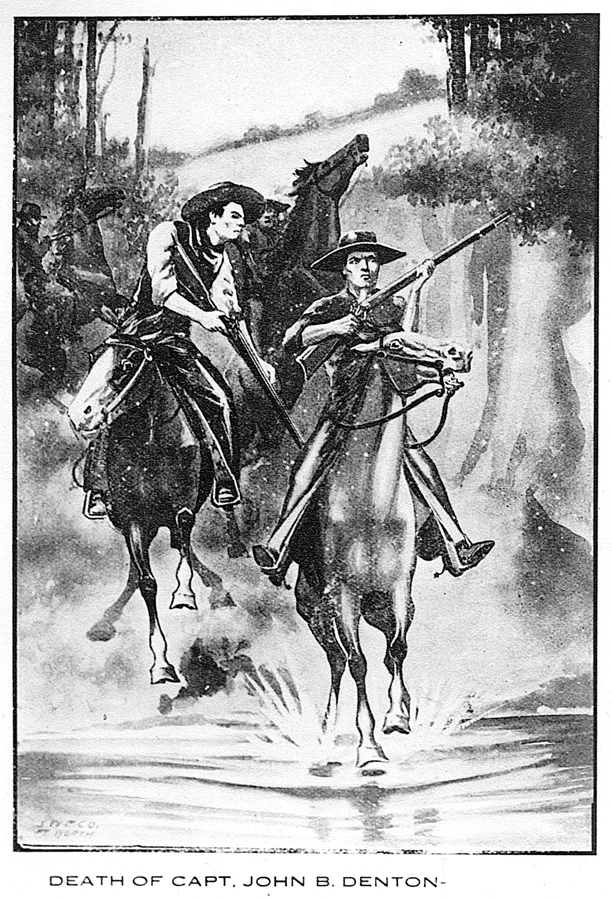
Published in E. B. Fleming’s Early History of Hopkins County, a biography of James Clifton, who came into the area in 1837, gives this account of a sad and grievous incident of the massacre of the Ripley family about seven miles below where Mount Vernon in Franklin County is now located. Mr. Ripley had moved from the Old States and settled with his family on this place. He had erected a small log cabin almost insufficient to afford comfort for his large family, which consisted of ten in number. On this occasion he had business of importance to look after in Red River County and was absent from his home and family when this deplorable affair occurred. About two o’clock in the afternoon his two oldest daughters were in the cabin and heard an unusual noise, the crack of a gun which fell upon their ears like the crack of doom. They both with one accord sprang to the opening in the cabin. To their horror and distress they saw a band of wild Indians advancing at a rapid pace toward their cabin. With a maniacal scream they jumped from the opening in the cabin, and with lightning speed, horrified and distressed, hid themselves in the dense wild woods near by. The Indians, with a demoniacal war whoop, rushed upon the cabin in the woods and massacred every one of the family, eight in number. The mother, who was sick in bed with an infant child, fourteen days old, was instantly killed by the savages. A sister, who had taken the child from its mother’s breast an attempted to shield and protect the little infant, was killed and the child was taken by the Indians and its head was thrown against a tree just outside of the yard and its brains were scattered in all directions. This tree was standing a few years ago when Mr. Clifton last saw it. Henry Stout and John Denton the following spring gathered a small company of men, getting some from the state of Arkansas, and followed the Indian trail. They came upon the Indians about half-way between Dallas and where Fort Worth is located at present. They had a small village. The men burnt the village and shot and killed a few of the Indians. While the village was on fire they pursued the Indians. The Indians ambushed the company of white men and killed John Denton and wounded Henry Stout.
Ambrose Ripley is believed to have come into the area via the Cherokee Trail in the late 1830’s, shortly after the Texas revolution.
Ten years later, Texas joined the union, and the flood gates of immigrants opened.
According to Traylor Russell’s History of Titus County, the families of John Brown and Garrett Young arrived on Daphne Prairie in 1847, six years after the last of the Indians were driven north into Oklahoma.
John Brown was an Irishman, born in 1784. His son, Dr. Alex Brown, was married to an Irish girl named Sarah Marshall and they came here with John Brown. John Brown’s wife, Nancy, is believed to be the first person buried in the cemetery at Shiloh.
Upon arriving here in 1847 with the Garrett Young family, Dr. Alex Brown and his father bought 2,000 acres of land near Shiloh, in what later became the West New Hope Community.
On her father’s side of the family, Lillian Black can run a line straight to Henry Thomas.
He was from Louisiana, fought until the bitter end in the War Between the States, surrendered with Lee at Appomattox.

“Oh, it was a tale,” Mrs. Black said, turning her face toward the Bay window that looks back north from her home in Winfield, three or five miles south of Shiloh.
She grew up here, living in her grandmother Young’s home until she was 11.
She laid aside her tatting — something you with a small metal tool called a shuttle. You start with string and after hours and hours you have enough lace for a small doily.
“My grandmother told stories about Mr. Thomas living off a ravaged land on the way home from the war, and the pickings were slim, the way it was told,” Mrs. Black said.
“When I was a little girl we used to beg to hear my grandmother’s stories of the old days. Oh, the fun they poked at themselves.
“Mr. Thomas married Sally Harper, whose father was a physician,” she said. “She’d grown up without having to do much of anything except learn how to be a southern lady — when they got out here, they’d never had to do anything for themselves, and here they had to cook and sew and make a new kind of life.”
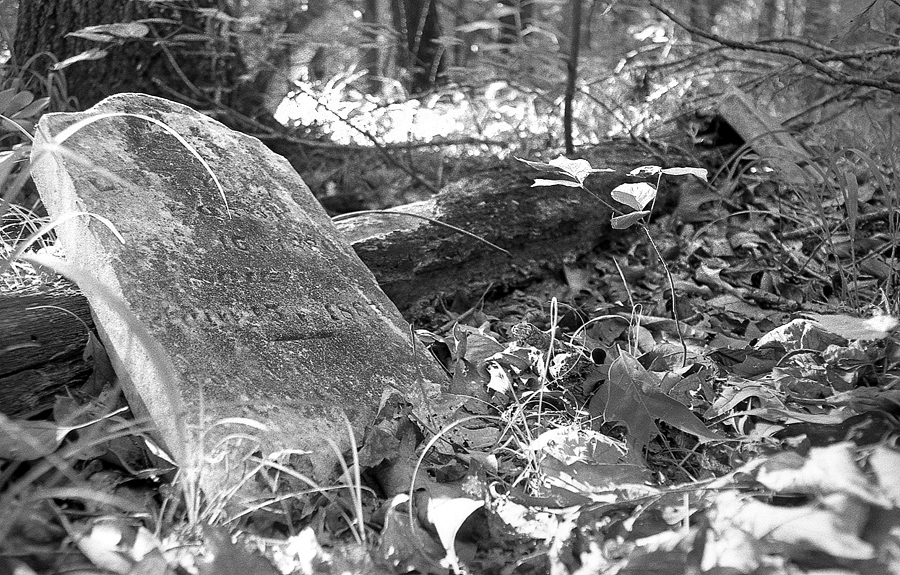
Garrett Young and his son Ben made it back to Shiloh after serving the Confederacy, but within months of the war’s end, Garrett Young died. His is the oldest remaining marked grave at Shiloh.
A hundred years ago, Shiloh was already gone.
“All my life I’ve heard of that cemetery, but I’ve never actually been there,” Mrs. Black said.
If Henry Thomas brought his bride here to escape the war it didn’t work.
In the stories of Shiloh’s end that Mrs. Black heard, its demise was a bitter thing, tied to the carpetbaggers who ruled southern politics during an era of U.S. Military occupation. It’s a hazy account, an oral tradition, ending with a murder.
Whatever the reason, the roads to the town returned to the prairie, covered under by the plows on the old farms. The church, for which W. R. Franklin gave three acres in 1854, melted away. The houses settled back into the earth, and the time-worn process of a cemetery becoming a thicket began.
It’s Traylor Russell again, who provides the best evidence that the pioneer citizens on Daphne
Prairie somehow became targets of the carpetbaggers.
In late summer of 1865, federal troops set up camp on the lawn of the Titus County Courthouse.
By that time, Dr. Alex Brown had set up his practice in Mt. Pleasant and opened a drug store at the corner of Jefferson and 1st Street.
“In some manner during the Reconstruction Period, Dr. Brown incurred the wrath of the Yankee soldiers and they and their carpet bagging friends completely wrecked the drug store,” Mr. Russell wrote.
The account says Dr. Brown salvaged what he could and returned to Daphne Prairie and that every family mentioned in this yarn served the Confederacy.
“One of Mr. Thomas’ brothers was killed in the war,” Mrs. Black said.
Everybody interviewed with family roots back to Shiloh echoed the tale of the killing, connecting it to Shiloh’s demise. And none offered details of who killed who or why, just that it was the product of bitterness connected to a sad war.
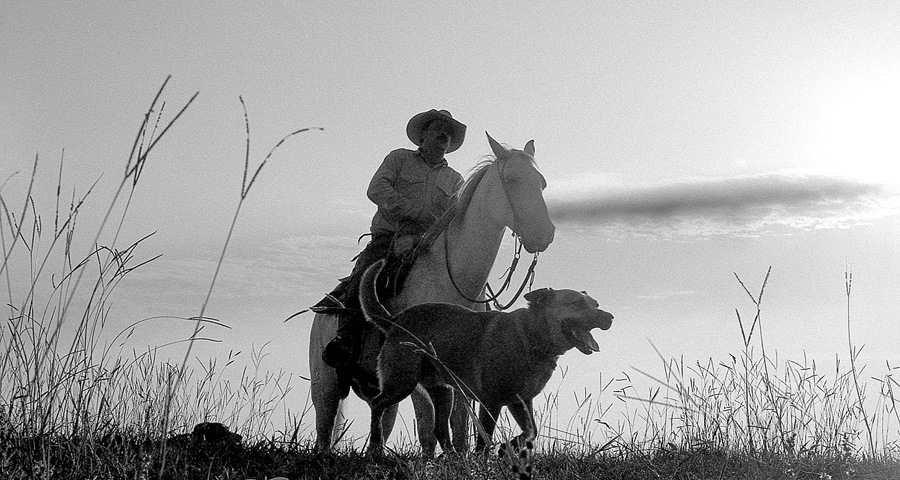
Wes Holland is a cowboy from Kansas with a resume in farming, rodeoing, and long-hauling cattle.
After John B. Stephens died, a genuine land magnate named Oscar Wyatt bought the sizable chunk of real estate Mr. Stephens put together on Daphne Prairie.
Somebody who works for Mr. Wyatt had in hand Mr. Holland’s cowboy resume and noticed that he was, at the time, training horses on a Smith County farm, 60 miles from Mr. Wyatt’s newest ranch.
” I got a call and the way I had it put to me was if I could have enough fence fixed to hold 300 head of cattle in a week, I had a job,”Mr. Holland said.
Several years have passed, and Mr. Holland’s responsible for something upwards from a thousand head of cattle on any given day.
“The day Mr. Wyatt bought this place, it’s my understanding that he put it back on the market.” Mr.
Holland said. “So far as I know, he’s been here once for about three hours — didn’t see everything he owns.” (The part of the property where the cemetery is now belongs to a private trust).
Mr. Holland’s crew — they’re caretakers, keeping up fences, building good meadows, turning a profit on the outfit’s cattle.
Mt. Vernon historian B.F. Hicks found Mr. Holland and company out on the hay meadow — a hundred acre sea of lush Bermuda.
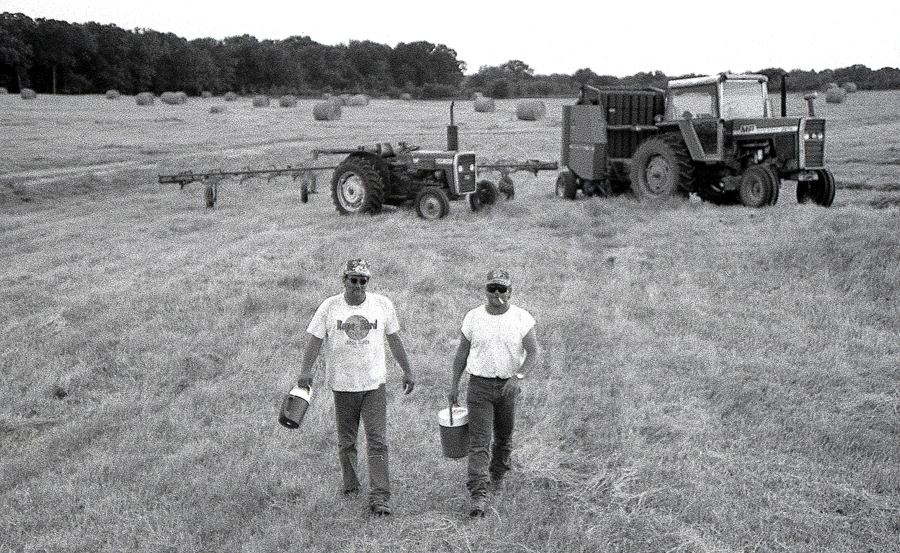
The big Massey Ferguson tractors were back on the far side, so distant they were toy size.
The tractors mowed and raked at the grass on the same prairie where the Browns and the Thomasses squinted their eyes at Southern visions of cotton fields, men and mules in another time.
Mr. Holland’s no-name ranch pickup, a thing of metal and dust, sat sweltering in the one patch of shade offered by an oak growing next to a gate leading into the next pasture.
An impressive array of tractor parts were spread out over a greasy tailgate — a sack covered some of the stuff, keeping dust at bay. The tractor with the baler sat idle in the sun, where it had broken down at mid morning. With a good field-guess diagnoses of the problem, Mr. Holland was leaning back in the cab of the pickup, barking terse conversation into his end of the pickup’s cellular phone. He was letting the tractor dealership know that time was money and he needed to be back up and running before midnight. Already, it was late afternoon.
He disconnected the call.
“The guy that answers the phone at the tractor place during the hay season earns his money,” Mr. Holland observed. “There’s no such thing as a man broke down in the hayfield in a good mood.”
Overhearing just one end of the conversation prodded Mr. Hicks’s curiosity.
“You work at night?” he asked.
“All night when it’s called for,” Mr. Holland said.
Besides himself, the hay crew consists of “Birddog ” Williams and Bob Amason.

Birddog’s a man who can ride or rope, drive a tractor, tinker with a carburetor.
“He might let some of his family call him by his first name,” Mr. Holland explained, but the rest of us don’t risk it.”
Bob Amason’s an Amarillo native, long-haul cattle driver, a friend from the past who visited to take a low-cost break from regular life and stayed on to help with the hay crop.
Hay season’s an annual strain. “Bob’s a top hand on baling,” Wes explained, “because he’s got that truck-driving mentality he can slip into — the man can just stay behind the wheel night and day.”
Birddog’s more temperamental in that regard, known at times to refuse to work more that daylight to dark.
“Sorta develop an attitude after twelve or sixteen hours,” Birddog explained. “It’s my nature.”
Mr. Holland has tried countering by denying him food.
If ‘Dog ever gets a break for any meal and it’s dark or close to it, he thinks he’s supposed to go to sleep, so my current theory is to not let him eat anytime around dark. Around midnight I’ll bring him an egg sandwich and tell him it’s morning.”
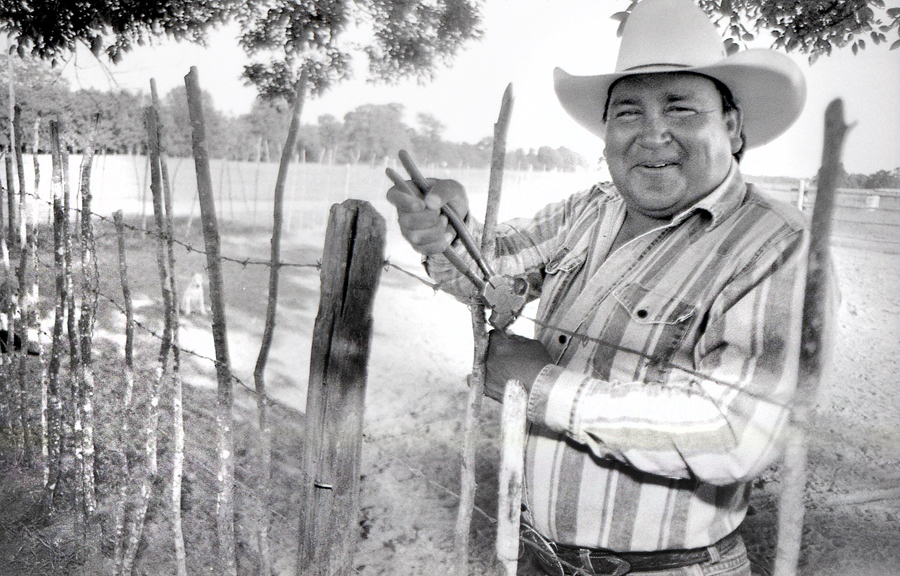
Jesse Chavez, a native of Chiwawa, Mexico, rounds out the cast on the old Beck Place on Daphne Prairie.
With summer help from his 15-year-old son, he spends his days making rounds, fixing fence, counting and shuffling cattle, doing needed chores while keeping an eye on the ranch.
With two tractors rolling on the far side of the meadow, the third waiting on a field call from the shop, and Mr. Hicks waiting to be shown a forgotten slice of history at the Shiloh Cemetery, Mr. Holland called a break for himself.
A mile from the hay meadow, they turned through a gate, dropped the pickup into four wheel drive and nosed down a rough-cut dozer trail winding into the creek bottom forest.
When the truck could go no further, they parked.
The last quarter mile, they pushed through the undergrowth, poking their way into the thicket with sticks.
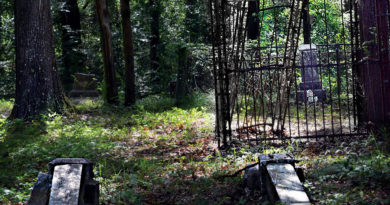
A wandering trail took them into the deep shade and silence of the woods. In the middle of nowhere, Mr. Holland stopped so that we began to peer through the shadows and dappled sunlight until we saw the headstones, ancient things, grey and green with velvet moss, blending like rock trees and stumps into the forest floor.
Using his stick like a pointer then, Mr. Holland began tracing the name of Ular Black on her headstone.
“And Garrett Young, right here,” Mr. Hicks poured over the writing on the cemetery’s oldest marker, “he, of course, fought in the civil war with his son, Benjamin Franklin Young, who was married to ….”
For half an hour then, Mr. Hicks recited the history of Daphne Prairie for a passing Kansas cowboy.
Biblical Shiloh tied to Israel’s loss of the Ark
The fate of the Biblical city of Shiloh was a sad one, tied to the Israelites’ loss of the Ark of the Covenant to the Philistines, 1 Samuel 2:12 – 5:12.
Here’s a capsule version of the whole sordid an affair.
Holy though it was, Shiloh speaks loudly concerning the wickedness of men.
From the loins of Eli, of the chosen priestly family, sprang two exceedingly wicked sons.
Priests by birthright they wronged the women who served at the entrance to the Tent of Meetings. They ate of the choicest sacrificial meats before God’s portion was satisfied. They served self above all and the Lord took note.
Dragging the Ark of the Covenant into battle against the Philistines hoping to turn the tide of events, Eli’s sons met justice. God chose to let the Philistines win, not because they were good, but because Israel had turned evil.
Eli waited by the road for his sons and the Ark to return. A crier arrived instead. When Eli was told of the Ark’s capture, he fell over backwards by the gate, dead of a broken neck.