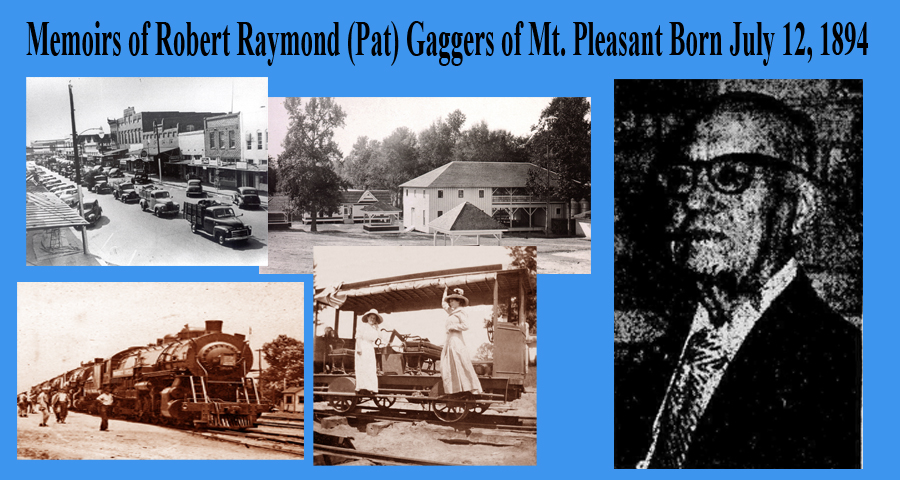
Memoirs of Robert Raymond (Pat) Gaggers of Mt. Pleasant
Robert Raymond (Pat) Gaggers
From East Texas Journal / Lynch Harper Files
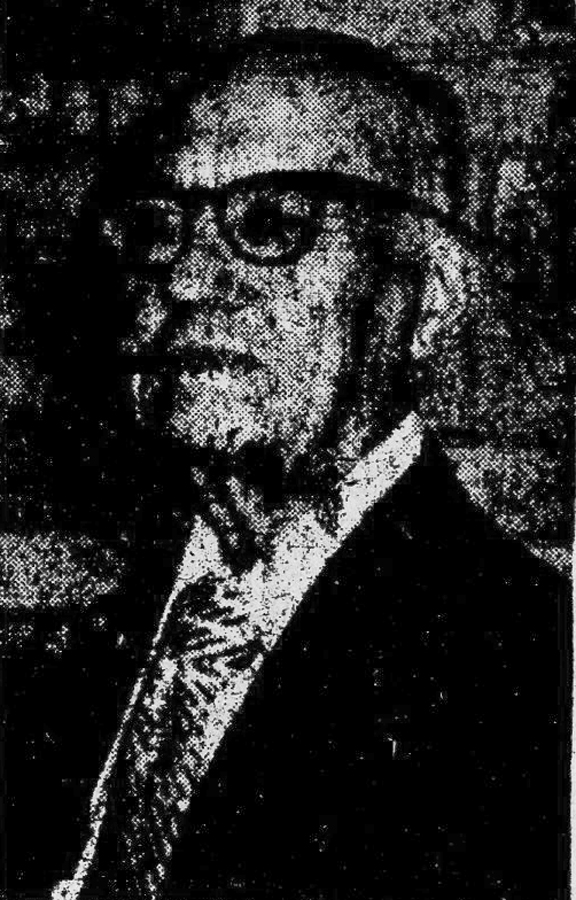
I was born where the North Jefferson church of Christ stands today. Mt. Pleasant was a thriving town of 4.000 people in the early l900s, not to have much money. Lots of money was spent.
The main crop was cotton, corn, peanuts, watermelons and cantaloupes.
At one time there was two big peach orchards. Black had a seventy-five-acre tract, north of town. Moore had fifty acres, south of town. Everyone had lots of fruit.
One-time hundreds of bushels of peaches were shipped North. They had a big shipping shed in the north part of town. It burned and was never rebuilt.
My father came from Cason, Texas. He lived there for several years. My mother and father had six children, four boys and two girls. Four of them died before I was born. Only two boys lived to be grown. I had a sister that had infantile paralysis and had to be pushed in a wheelchair.
A family named Pittman lived across to street. They had a boy about my sister’s age named Pat. He came over a lot to push her in the wheelchair. Before she died, she told my mother and father if they had another boy, she wanted them to name him Pat. I came along later and they named me Pat.
My father’s name was T. R. Gaggers, but everyone knew him as ”Rich.” He bought two hundred and fifty acres of land from Dick Panther for $2.50 an acre. He paid cash for half of it and Dick told him when he got the rest, he could pay it. My Father didn’t sign any papers, because back then, your word was your bond.
Father built a four-room house 2 1/2 miles south of town between the Monticello and Pittsburg Road. We moved in and my father and brothers went to work clearing the land. It wasn’t long before they had the land prospering. Later on, they built a six-room house, and he got a family in the first house to help work on the farm. Later on, they built a five-room house. He was a carpenter by trade.
By the time I was old enough to go to school, I went to Miss. Hettie Dillahunty. The school was across the street from Mrs. I.N. Williams. I walked 2 1/2 miles to school. On Monday’s and Friday’s. I had to take a gallon of sweet milk in a syrup bucket. I had lots of fun there. The next year I was old enough to go to public school. It was different there and I had to learn all over.
Mrs. Addie Wallace was my first-grade teacher, and my next teacher was Mrs. Aline Holman. She whipped me almost every day.
I remember she sent me to the town branch to get some switches. I got some real nice ones and notched all of them. Every time she would hit, the switches would break. The next day, she got some good ones and gave me a whipping I will never forget. I stayed in her room for two years.
My next teacher was Miss. Addie Stephenson. By then, I was in the sixth grade.
The meanest bunch of kids were in that room. When some were doing something, the rest were thinking up something to do.
In those days, when the teacher whipped you, you stayed whipped and made to like it. I remember a seventeen-year-old boy got a whipping. He went home and came back with a gun. The teacher Dave Swint, met him out in the yard, took the gun and whipped him again.
The last year I was in school, I played hooky most of the year. l went to the Gunter Bible College one year and went back the next year. We had a lesson every day in the Bible. I didn’t stay the full year, so my father had me come home where I had to go to work.
I was made a regular hand, cutting wood and making crossties and boards. Father sold Mr. McColley’s Gin one hundred cords of four-foot wood one summer, and I had to haul it two miles and load and unload it. He got $1.50 for it and had paid seventy-five cents to get it out.
We milked from three to ten cows twice a day and had from six to eight mules and horses to take care of twice a day. Every Saturday, my mother would load up the buggy with milk and butter, and I would take it to the customers.
She would have from fifteen to twenty pounds of butter, ten to fifteen gallons of milk. Butter was twenty-five cents; sweet milk was ten cents a gallon and buttermilk was 5 cents a gallon. She always had fifteen to twenty dozen eggs, which were fifteen cents a dozen. She would throw in several chickens for twenty-five cents each. We were selling something all the time.
We also had goats, turkeys, guinea hens and geese. We sold lot s of goats. There was nothing better than a barbecued goat. We killed seven hogs every year. We would keep five and give one each to the renters. We would make enough lard and sausage to do us most of the summer.
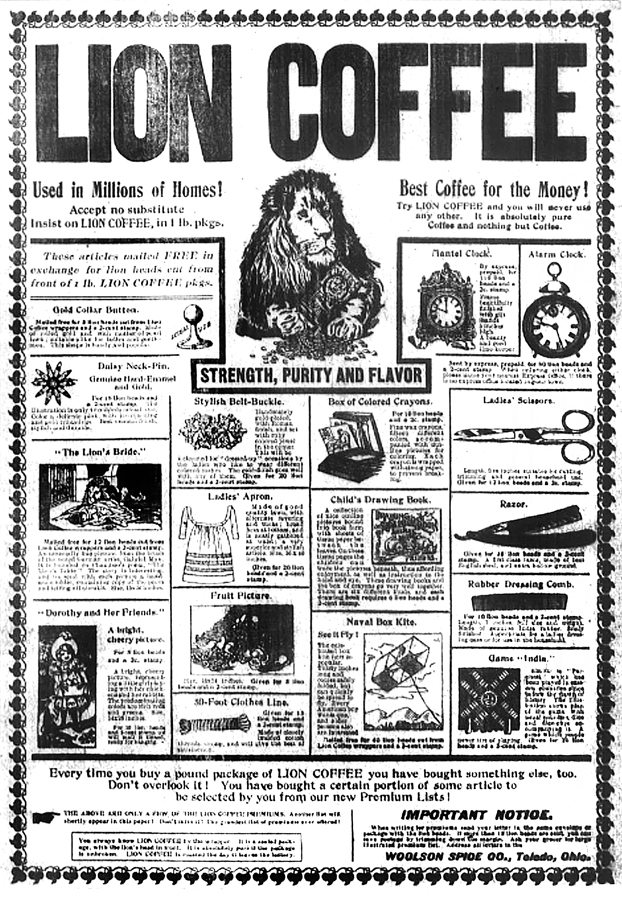
In the fall, my father would buy one barrel of flour, sugar, salt, and one hundred pounds of coffee. We had to roast the coffee and grind it. Later, the Arbuckle and Lion brands came out, and I would cut the names ”Arbuckle and Lion” off to send in for presents. I sold Clover Salve when I was about twelve years old.
When I got old enough to run around, there were no boys around for me to run with. I would go to town and there I starters to run around with Jim Duffel, Jack Miller, Weaver McColley (McCauley) and Raymond Riddle. We would make ice cream suppers, box suppers, and candy breakings. Sometimes, the local boys would call our hand when we bought their girls‘ boxes.
Father kept a hired hand most of the time. When we laid by the crops, Father would go to town and work through the summer.
The last house he built was for Tom Caldwell, Sr., in the west part of town. Tom had some pet deer, and in the bunch was a big buck.
One morning, my father starters to work and he put a plug of brown Mule tobacco in his pocket. The old buck kept rubbing up against him. Later, father saw the old deer on the ground. He had gotten the tobacco out of his pocket and was sick. He didn’t bother him anymore.
My father sold the farm. He couldn’t take care of it, because he was getting up in years. He bought Sonny Davis’s home on the street going to Pittsburg. He died there in 1927. My mother sold the house to Frank Henderson. I am the only one living from our family.
In 1916, father gave me twenty acres to work. I could have what it made, so I had one acre of Irish potatoes, ten acres of cotton, and nine acres of corn. I bought a cow and she had a calf. I bought a sow, and she had nine pigs.
That fall I went to Paris to work. My father sent me a check for seven hundred dollars after he sold everything. By this time, I was twenty years old and didn’t want to go through life with a three-letter name. I had a first cousin named Robert, and I was running around with Raymond Riddle, so I dropped the name of Pat and took the name of Robert Raymond.
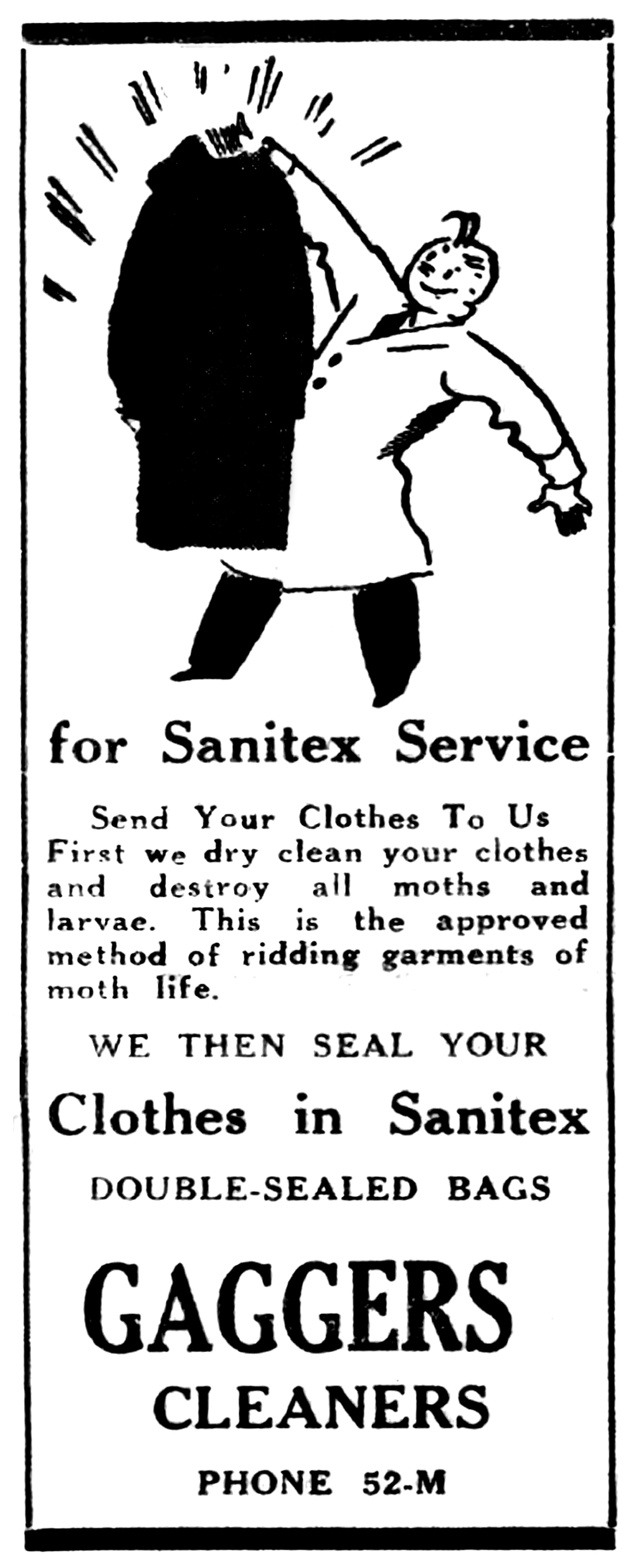
In November 1917, I was called up for service. I served for twenty-three months. While I was in the service, I married a girl I had been going with for six years. I came home and went to Marshall and then to Cooper. From there, we went to Paducah, Texas, where we lived for twenty years. I worked ten years in a dry goods store, and then ten years in a cleaning plant. We had a daughter who lived to be eleven years old. She was hit by a gravel truck and died. I sold my cleaning plant and moved to Dallas in 1941. Here, I put in another cleaning plant but sold it in 1949 on account of my health. In 1967, we celebrated our fiftieth wedding anniversary. I heard and saw lots as I was growing up.
The old timers came to Mt. Pleasant in 1860 to 1900. One of the first was the Lilienstern bothers.
They had a store that carried everything from toothpicks to wagons, along with dry goods and groceries. Joe Badt also had a first-class dry goods store.
C. O. Lide had one of the biggest dry goods store in town. He had two brothers, Russ and Sam Hays who were real salesmen. They would sell you something before you got out of the store. They sold suits and shoes. Bum Johnson was another.
George Lilienstern had a bag dry goods store and Oscar Lilienstern and Bart Cammack had a man’s store. There was the Coker Dry Goods Store, also.
These were all big stores for that time, and there were also several small stores. There were three big hardware stores, Bud Rogers, Will Wilson, and Tennison Brothers. You cold find anything in these stores that was made at that time.
There were six grocery stores, and all were good size. These were T. M. Holland, Hargrove Brothers, Perkins and Dillard, J. A. Black, T. V. (Tate) Vaughn, and T. O. Johnston. All groceries were deliverer to your home on thirty days, as everyone got
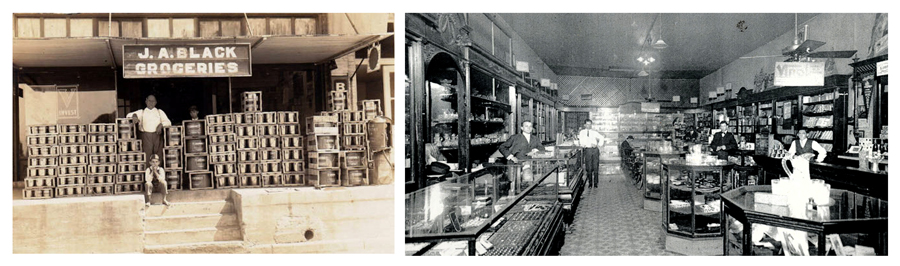
paid on the first of each month. There were also three drug stores: Wallace, Swint Brothers, and Stephens & Tabb. Each had a fountain and served all kind of drinks and ice cream sundaes.
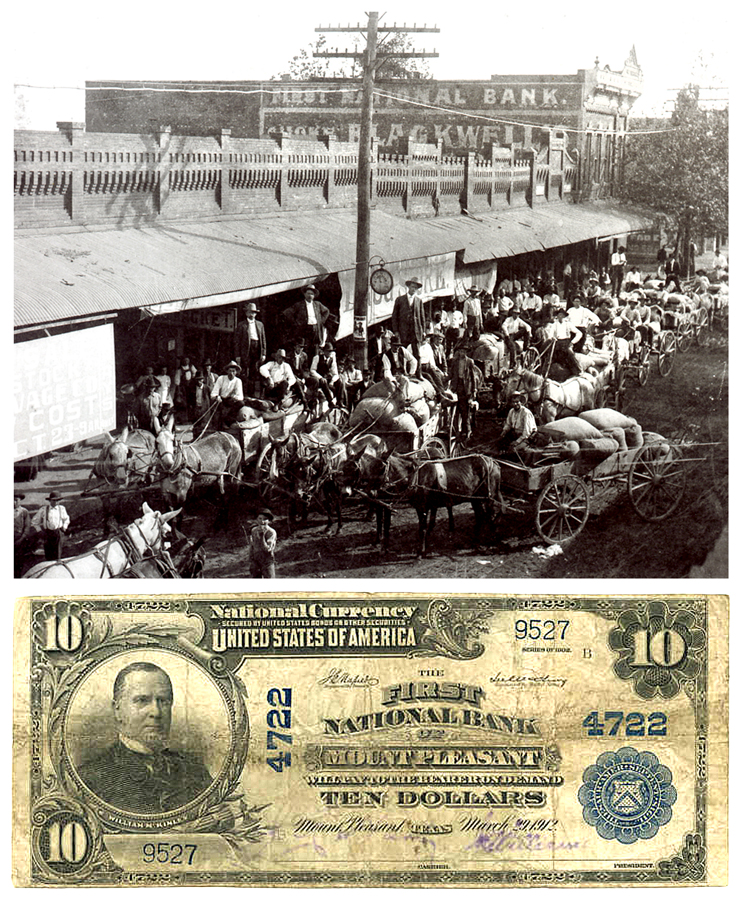
At one time, there were three good banks which had plenty of money in them. There was the First National, Lilienstern Bank, and a State Bank. It went out of business after several years.
Green B. Dixon (Dickson) was sheriff for sixteen years. He had some bad men to deal with, but he never carried a gun. He said that would get you killed. He wasn’t afraid of anyone, and everyone respected him. Everyone knew his word was law. He rode a big gray horse.
One Spring afternoon he came out of the courthouse. When asked where he was going, he said he was going to get Turkey Jim, who had killed a man named Copland at Cookville. Jim lived about fifteen miles between White Oak and Sulphur Creek. He rode up to his house and told him who he was. Jim told him not to come any closer or he would kill him. Green B. told him that he didn’t have a gun. He brought Jim back behind him on his horse.
There were two good barber shops. One was John Ray’s. It had eight chairs. There were two smaller shops. One was Linsey‘s Barber Shop; he contacted tuberculosis from a customer and died.
Jake Corprew was a Janitor at the courthouse for several years. He weighed around 250 pounds and was five feet six. Every child in the town and country was afraid of him. When they came into town, they starters crying. They were told that if they didn’t stop, Jake would eat them. He loved children, and I have heard him say that he wished the folks wouldn’t tell their children that.
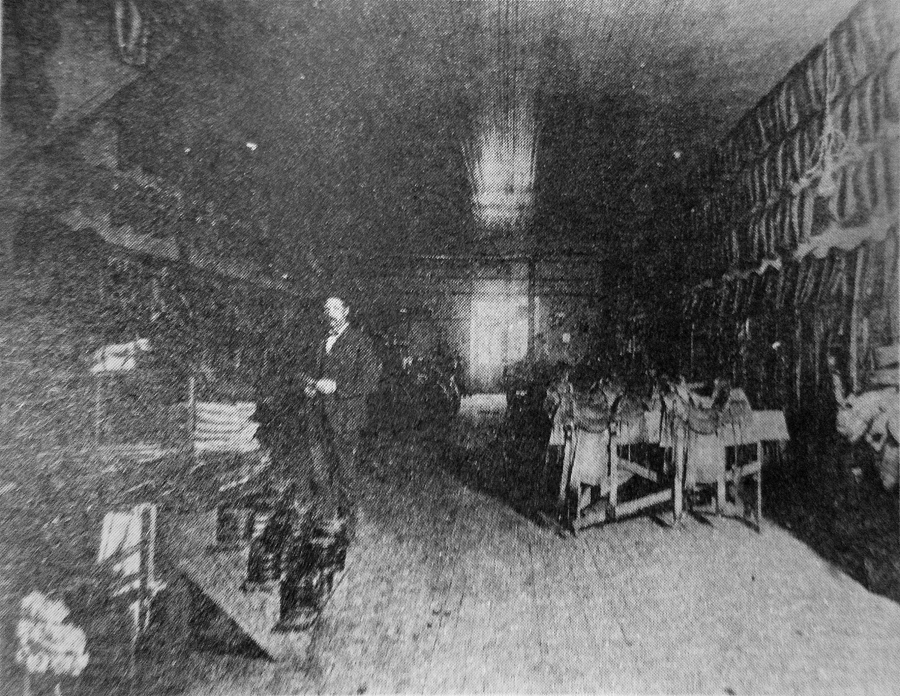
R. H. Fuller and Dave Swint had a saddle and harness shop. They made everything out of leather. If they didn’t have it, they would make it. They made Martingales. Everyone that had a horse had a set and, also, a pair of curb bits.
There was only one dray line. It was run by Kit Dixon and Duffel. They had four wagons and they drove mules. Everything that came into town by train, express, or freight, they would unload and put in your house. Feed and lumber had to be unloaded by hand.
Dr Blythe had the first automobile in town. It was an electric motor buggy. It had a stick that came over on your lap that you steered with. It wouldn’t get over 25 miles per hour. If you got in sand, you were stuck. The next car was a two-cylinder Brush given away by the Times review. Jeffie Broadstreet won it. It was a red Fire Chief. They drove it from Dallas, and it took two and one-half days. They drove on the square about 3 p.m. All the horses and mules on the Square tried to break loose and the dogs all started barking. It was like Millie Bailey had come to town.
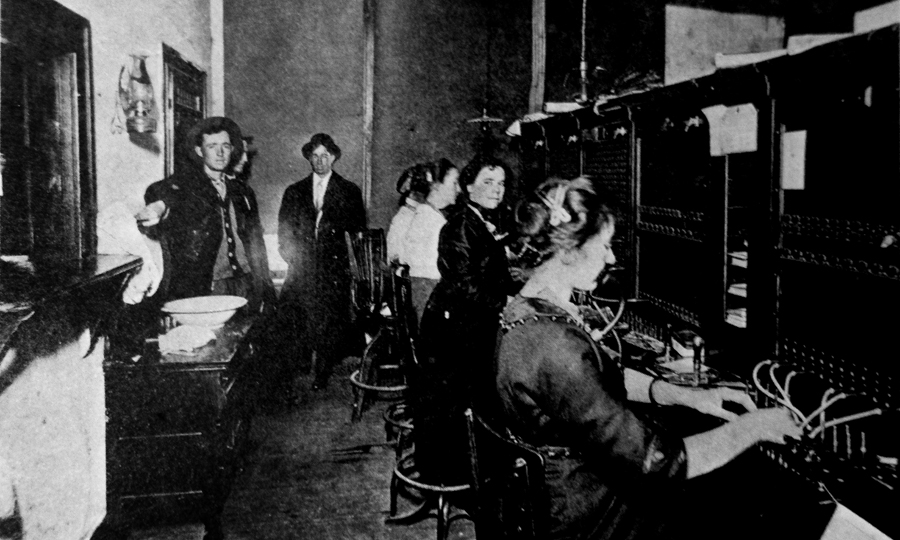
Dutch Greenspun had the first telephone exchange in town. At first it was in a home. Later, he built a two-story building on the corner and moved the exchange upstairs. The building burned.
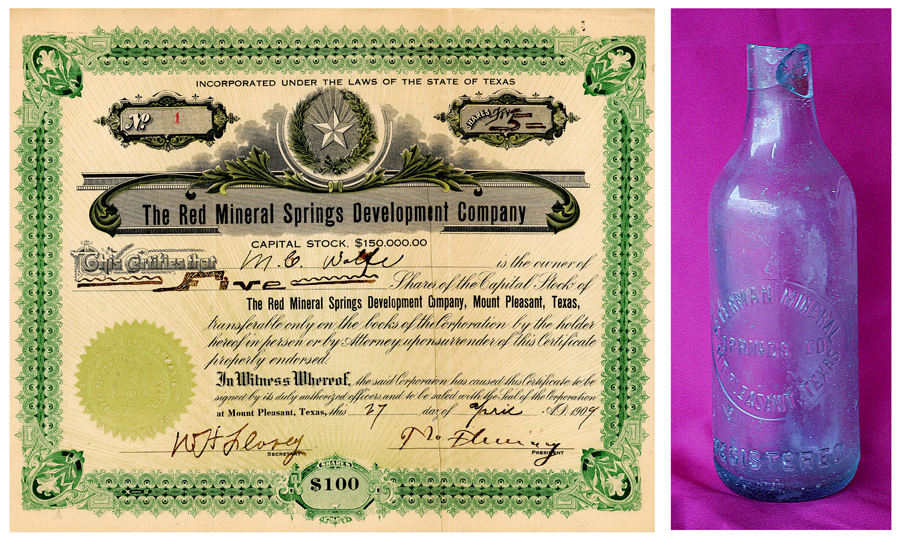
Max Greenspun, Dutch‘s brother, had the first Soda Pop plant. The old-time spring top is where it got its name ”pop”. I have one of the bottles. They only made about five flavors — lemon, strawberry, cream soda, grape and orange.
Mount Pleasant at one time had one of the best baseball teams in the country. Efton Fuller, Bob Keith, Roy Squirrel Keith, Lester, Zeke Holland (the Catcher), Clyde (Ace) Henderson (the pitcher), and Ray Rodgers. These were the regulars. others were picked up. They lost very few games. You could see just as good a game as you see today in the Big League.
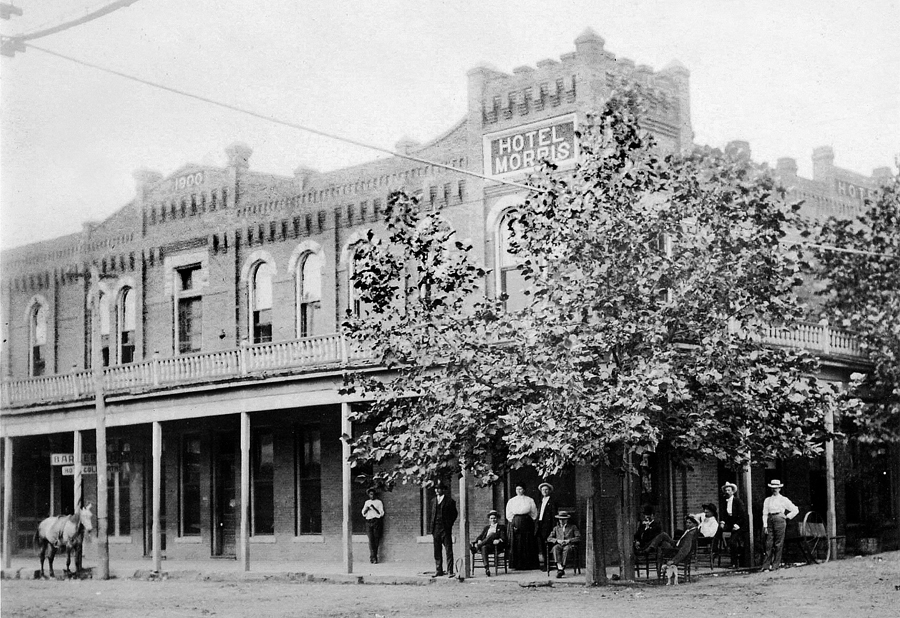
Ott Thrasher had the only press shop in town in the Morris Hotel. All pressing was done by hand irons heated by charcoal. He took orders for suits, and I ordered a blue serge coat and white peg-top pants. This was “all the go” back in 1910 or 1011. the go of back in 1910 or 1911. Ott was considered one of the best-dressed man in town. He was killed between Tyler and Waco in a car accident.
L. G. Myers (Meiers) had the only bake shop in town. He baked in a brick oven attached to the back of the shop, fired from the back with four-foot wood. That was really good bread. All the work was done by hand. There were no to dough-brakers. Only one type of loaf was baked. It sold for ten cents, and he shipped bread to small towns in baskets.
Harry Pappas (the Greek) had a candy shop on the corner known as the Palm-Garden. In the north corner was the Post Office and on the east corner was a Pool Hall.
Mr. Rosser had the first five and ten store, as it was called. It was on the corner under the Masonic Lodge. It burned about 1907. Davis who sold Nickel insurance for several years, put in a variety store about where the one is today. Mr. Black was Postmaster for several years. He lives in the West part of town and raised bulldogs to sell.
Mike Richards, who workers for the Cotton Belt Railroad for several years got the office. He had two daughters, Bridget and Burt, and two sons, Barry and Mike. He and his two daughters ran the office. He was there in 1917, when I went in the service. There were no FGD‘s. You got two papers a week, the Dallas Semi-Weekly, and the Mount Pleasant Times Review. Everyone, even the country folk had to come to the office to get their mail. The two papers came out on Thursday.
Mt. Pleasant was a division for the Cotton belt. The general office was there. Eight passenger trains came in and out of Mount Pleasant every twenty-four hours. They had a fast train, the Texas, which ran from Fort Worth to St. Louis. The mainline ran from St. Louis to Fort Worth. There was lots of freight in and out every day. Everything was shipped in carload lots. The Paris and Mount Pleasant Road did lots of business. There was one passenger train round-trip from mount Pleasant to Paris. It ran several years, then went out as many of the other roads.
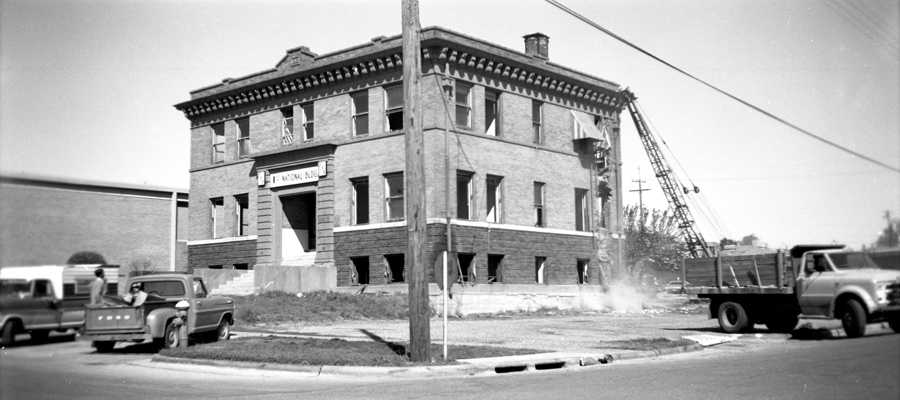
L. C. Libby was Principal of the Mount Pleasant schools at one time. Then he put in a big feed store on the corner where the drug store was. He handled all kinds of sack feed and hay. There was a vacant lot west of him, then a livery stable. The traveling men, called Drummers then, could rent a horse and buggy all day for three dollars. Two horses and buggy would be six dollars all day. That was the way they could get to the little town and country stores to sell.
Next to the livery stable was Mount Pleasant‘s first fire hall. They had two big horses and a hose wagon. Frank May was driver.
In the early 1900’s, Ben Parish had the only saloon in town. Then the country was dry. He was on the corner. Perkins & Dillard put in a grocery store and ran it several years. The Swint Brothers put in a drug store. John Holland was the watch repairman.
Charley Cleveland (Cleland) was a brakeman for the Cotton Belt running to Fort Worth and back.
One time he was coming home to get married. It was cold and icy that night. He got off the train to open a switch for the train to come back on the main line, and the train ran over him. They didn’t miss him until they got to Sulphur Springs, so they took the engine and went back and found him.
They rushed him to Fort Worth, but he lost both legs. His girl stayed with him and helped nurse him. After he got out of the hospital, they were married. The Cotton Belt Railroad mad him a watch inspector, and he and his wife took a course in watchmaking and engraving. He did this at Stephens and Tabb drug store.
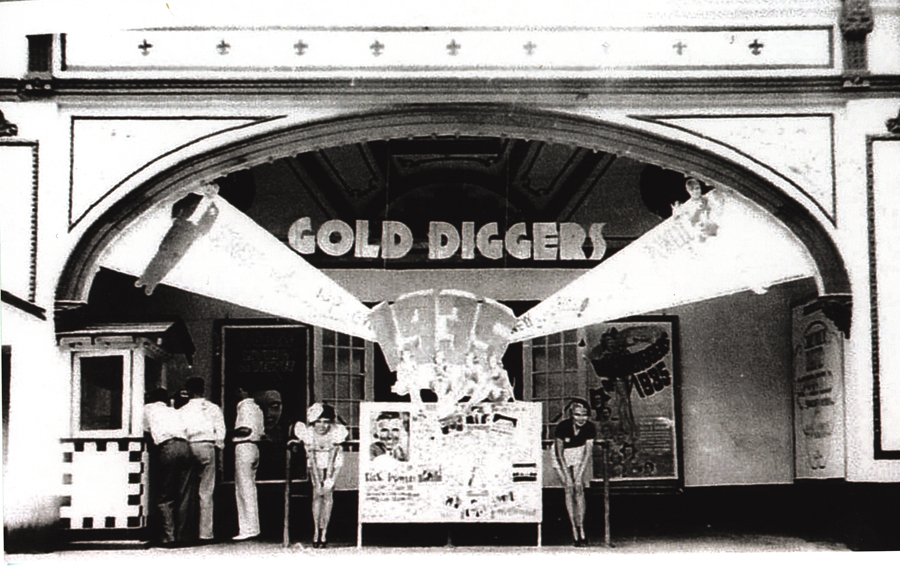
The Gray brothers, Clem and Joe, had the first Meat Market. Bob Keith cut meat for them. John Martin had the first and only Picture Show. He married Norma Fuller.
The Stephen House was first built by Dr. Blythe for an office. Dr. Gissom later came in with him. Then John B. Stephens, Jr. bought it and added to it to make a hotel.
There were two restaurants. One was run by Tob Austin; it was about where the Variety store is now. Josh Hopkins ran the other one by the Depot. All trains stopped for thirty minutes, and all railroad men ate there.
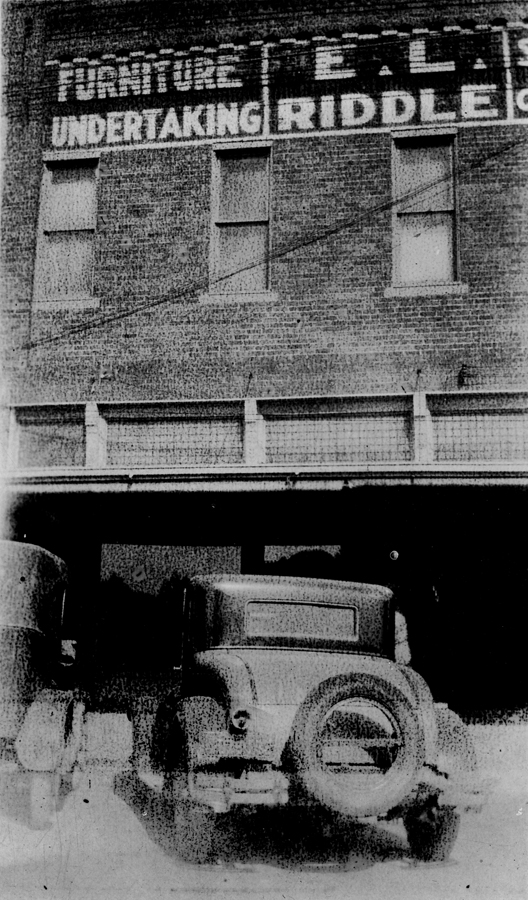
Mount Pleasant had one furniture store for a long time, called Riddle & Stephenson. They were also the undertakers. They would come and get the body and prepare for funeral, then take it back home. There was no funeral home in town; they did all the work in a room in the back of the furniture store. Later, Stephenson pulled out and put in a store.
W. C. Wolf came to Mount Pleasant from the North, in 1908 or 1909, he bought one hundred acres south of town about one and one-half miles, began beautifying it, and made a park out of it. It was known as Dellwood Park.
He built a hundred-room hotel overlooking the park. It was built in a “Y” shape, and every room was an outside room. He built a bath house that has twenty tubs and would accommodate twenty guests. There were three springs, one dark, one light, and one even lighter.
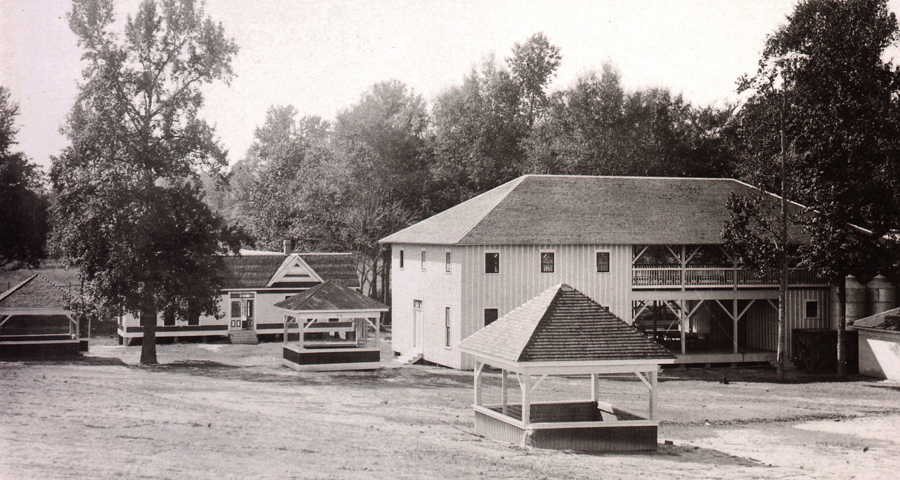
organized the Red Springs Development Co. and purchased about 116 acres of land including what is now Delwood Park. In this park portion were numerous mineral springs which were noted for their medicinal qualities. Especially the red water springs, which was especially good for kidney trouble.
The water was red, as it was iron, and was known by the natives as Red Springs. The springs were walled up about six feet, with wire on top of that. They were eight feet across and eight feet deep.
He had the water piped in the bath house to bathe in. He built a two-story pavilion one hundred feet long and sixty feet wide. There were six box ball alleys and pool tables on the first floor, and there was dancing upstairs.
Across a branch, there were three clear springs, you could see a dime on bottom, and they were about six feet deep. He also built a three-hundred by one-hundred-foot man-made lake. Half the bottom was concreted, and the rest was gravel. There were three diving boards.
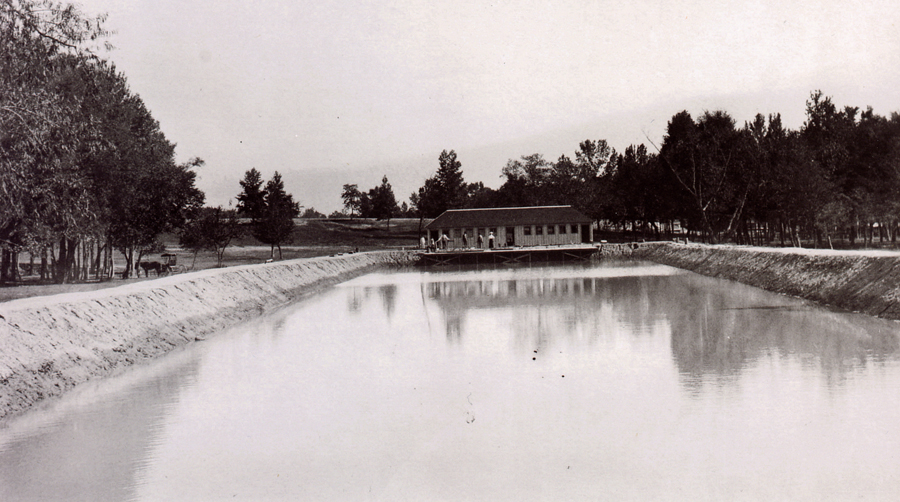
Johnny Ward, a young and upcoming attorney, dived off the twenty-foot board and broke his neck.
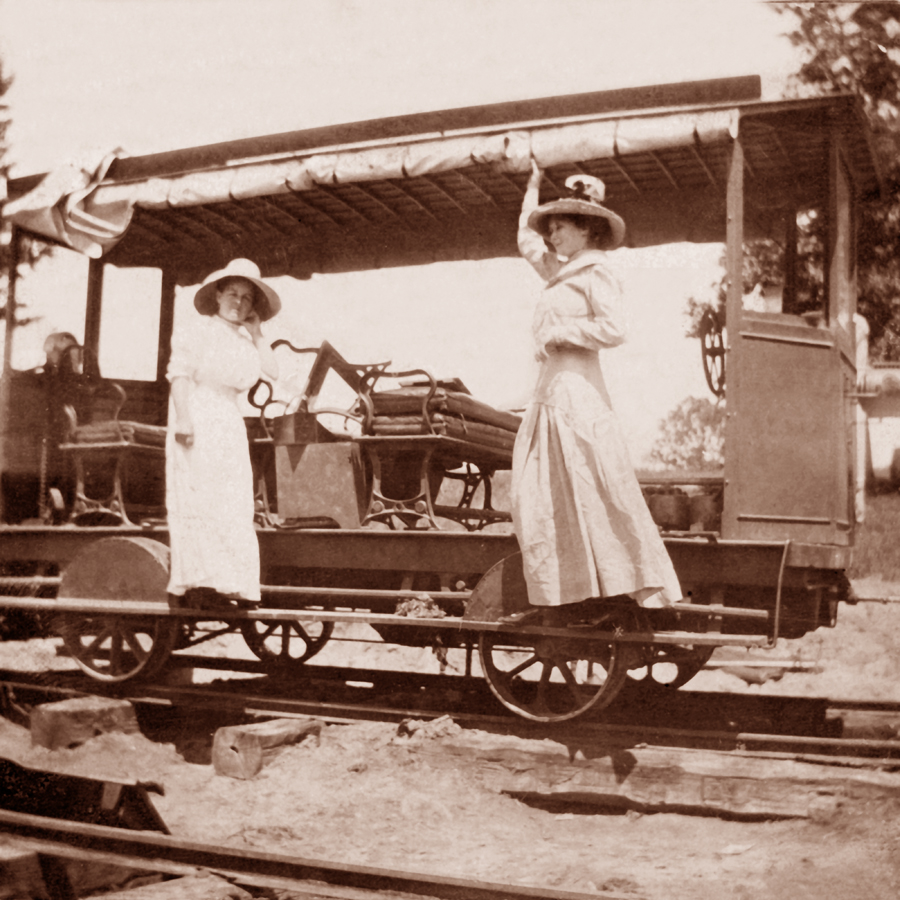
Wolf built a streetcar line from town to the park. It was a motor car, and back then, not too many knew about motors. It was fine for about eight or ten months, then the car went out.
At first, he shipped the water all over the country. It went over fine for about five years; then it went out. Speer College took it over and ran it two or three years. It was said that Wolf spent seventy-five thousand dollars but lost everything and returned to the North. Very few are living today that can remember and verify this.
Other things I remember from these days are tools that were used; heel sweep, cutting coulter, lap link, break yoke, double shovel, bull tung, single tree, double tree, middle buster, Georgia stock, turning plow, can hooks, scraper, and froe broad axe.
In addition, I remember the first mattress I slept on was made of shucks. The next one was straw and, later, we got cotton and made them. My Mother made some feather beds and pillows, and you could really stay worm in the winter on them.
I also remember the first pants my mother made. She made them from some of my father‘s old pants. I had a Buster Brown blouse bottomed on the pants. Boys wore dresses until they were five or six years old.
Boys wore knee pants until they were seventeen or eighteen years old and wore high-topped shoes and stockings. Men wore white shirts with line collars. You could also buy celluloid collars which were washable, and they would be ready to wear again.
Boys and girls, you take your father and mother’s advice. They may not see as you do. They have had more experience and have gone through what you have ahead of you. You will look back in years and find most of the time they were right.
Don’t be a dropout. Be sure you get an education — that’s something that no one can take from you. I didn’t finish school, and I found out many times a better education would have helped me.